Pro Login

Goolsbee Warns Inflation Could Rise If Fed's Independence Is Threatened

A stylized illustration of a cylindrical cup with blue arrows and lines indicating a swirling or rotational motion inside the cup.
Published Jan 15, 2026
Share:
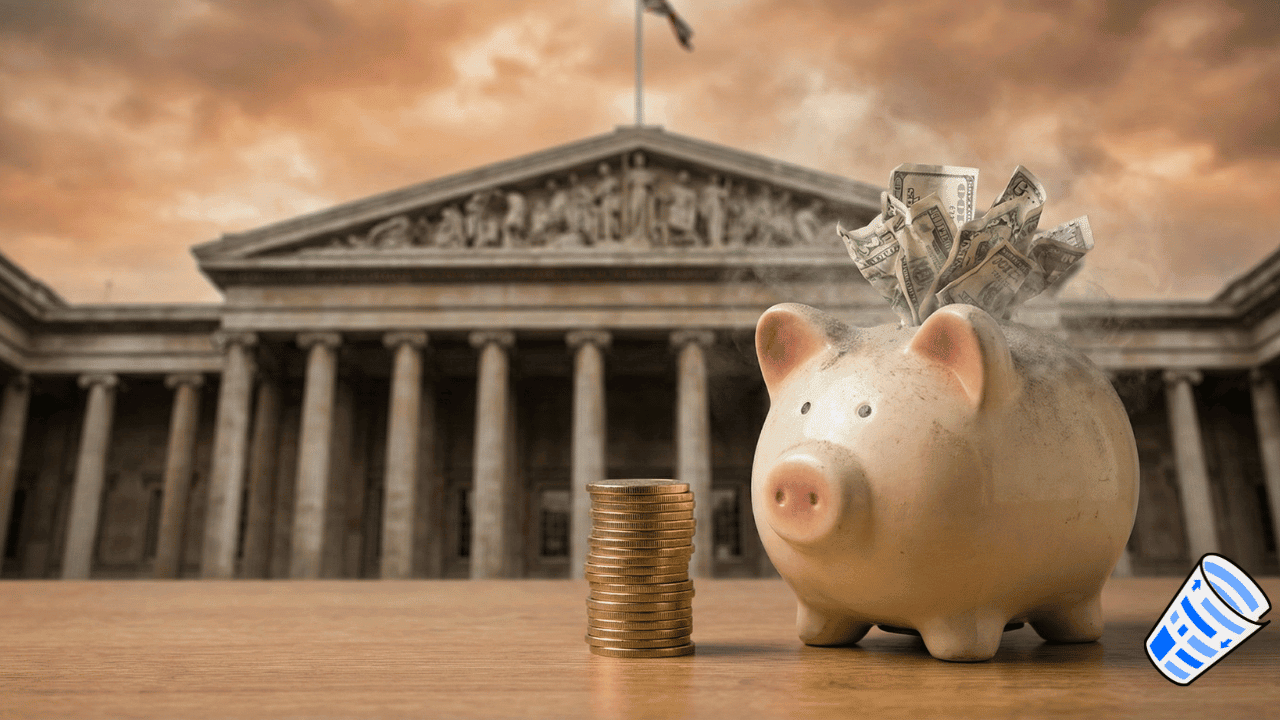
A piggy bank with cash and a tall stack of coins sits in front of a government building with columns under a cloudy sky.
Summary:

  • Chicago Fed President Austan Goolsbee cautioned that inflation may rise if the Federal Reserve's independence is compromised.
  • Goolsbee noted that attacks on the central bank and its Chair Jerome Powell could negatively impact inflation rates.
  • Jerome Powell has been subpoenaed by the Justice Department regarding a renovation project at the Fed's headquarters.

Goolsbee's Concerns on Inflation

Chicago Federal Reserve President Austan Goolsbee shared serious concerns on Thursday about the potential impact of attacks on the Federal Reserve and its leadership.

He warned that if the independence of the central bank is threatened, inflation could "come roaring back." Goolsbee's comments highlight the delicate balance the Fed must maintain to manage inflation effectively.

Implications of Attacks on the Fed

During his appearance on CNBC's "Squawk Box," Goolsbee stated, "Anything that's infringing or attacking the independence of the central bank is a mess."

He emphasized that any negative influence on the central bank can lead to detrimental effects on inflation rates. His remarks come amid a backdrop of political pressure and scrutiny directed at the Fed and its Chair, Jerome Powell.

Jerome Powell's Legal Challenges

Recently, Jerome Powell was subpoenaed by the Justice Department related to a multibillion-dollar renovation project at the Fed's Washington, D.C. headquarters. This project has faced criticism over cost overruns, leading to tensions between the Fed and the White House.

Although Goolsbee refrained from directly commenting on the legal matters, he supported Powell's assertion that the investigation could serve as a pretext for political motives concerning interest rates.

The Importance of Central Bank Independence

Goolsbee argued that the independence of the Federal Reserve is crucial for achieving its economic goals. He stated that having a central bank free from political pressure is essential for maintaining economic stability.

He compared the situation in the U.S. to that of countries like Zimbabwe and Russia, where central banks have faced criminal investigations, suggesting that such actions could be harmful to advanced economies.

Future of Interest Rates

Powell's term as chair of the Federal Reserve is set to end in May 2026. However, he has the option to continue serving as a governor until 2028.

The Fed has cut its benchmark interest rate three times since September 2025, despite ongoing criticism from former President Donald Trump. Trump has consistently called for further reductions in interest rates, even nicknaming Powell "Too Late" for his perceived delays in addressing rate cuts.

What This Means for Investors

Goolsbee's comments serve as a reminder of the intricate relationship between central bank policies and political influence. Investors should be aware that any threats to the independence of the Fed could lead to increased volatility in inflation rates, which may affect investment strategies moving forward.

Keeping a close eye on developments surrounding the Fed’s leadership and political pressures will be essential for making informed financial decisions.

Disclosure

Get Market Briefs delivered to your inbox every morning for free!

No fluff. No noise. No politics. Just finance news you can read in 5 minutes.

Blogs

April 15, 2026
What Is a Put Option? A Simple Guide for Investors
  • A put option is a contract that gives you the right to sell a stock at a set price before a set date.
  • Investors use put options to protect their portfolio against losses or to profit when they think a stock will drop.
  • The most you can lose when buying a put option is the premium you paid for the contract.
Read More
April 13, 2026
What Is Free Cash Flow? How To Find It & Why It's Important
  • Free cash flow is the cash a company has left after paying its bills and putting money back into the business.
  • Investors use free cash flow to figure out what a company is really worth - and if the stock is a good deal.
  • You can find free cash flow on a company's cash flow report, one of three key reports every public company files.
Read More
April 13, 2026
Non Taxable Income: What It Is and Why Investors Care

Non taxable income is money you earn that the IRS does not tax - like Roth IRA cash, muni bond interest, and certain investment gains. The U.S. tax code taxes workers, investors, and business owners at very different rates. Tools like Roth accounts, muni bonds, and real estate write-offs can help you keep more of what you earn.

Read More
April 11, 2026
Nasdaq Index Fund: A Beginner's Guide to Investing in the Nasdaq 100
  • A Nasdaq index fund lets you invest in the 100 biggest non-bank companies on the stock market all at once.
  • You can access the Nasdaq through index funds, mutual funds, or ETFs like QQQ - each with its own fees, trading rules, and style.
  • Picking the right Nasdaq index fund comes down to three things: who runs it, what is in it, and what it costs.
Read More
April 11, 2026
What Is Wealth? It's Not What Most People Think
  • Wealth is about owning assets that grow and pay you - not just earning a high salary.
  • In a capitalist system, there are two ways to get paid: from your labor and from your capital.
  • Building wealth takes a shift in mindset, a money system, and the habit of investing before you spend.
Read More
April 10, 2026
Micron Stock: The AI Memory Play Most Investors Are Missing
  • Micron (MU) is the only U.S. company that makes HBM chips - the short-term memory layer that AI systems need to run.
  • By early 2026, data centers were using about 70% of all memory chips made in the world, creating an 18-month backlog for new orders.
  • Micron's DRAM - or short-term memory chip - revenue jumped 69% year over year, and the company shifted away from consumer products to focus almost entirely on AI.
Read More
April 10, 2026
What Is Working Capital? What Investors Need To Know
  • Working capital is current assets minus current liabilities - it shows if a business can pay its short-term bills.
  • You find it on a company's balance sheet inside its 10-K report.
  • Changes in working capital show up on the cash flow statement and affect how much cash a business really makes.
Read More
April 9, 2026
What Is a Meme Stock? A Simple Guide for New Investors

You've probably heard the term "meme stock" thrown around on […]

Read More
April 9, 2026
Enterprise Value Formula: What It Is and How to Calculate It
  • Enterprise value (EV) shows what a company is really worth - debt and cash included - not just its stock price
  • The enterprise value formula is: Market Cap + Total Debt - Cash and Cash Equivalents
  • Investors use EV with metrics like EBITDA to compare stocks more fairly than market cap alone
Read More
April 8, 2026
Return on Equity: What It Is and How to Use It
  • Return on equity (ROE) measures how much profit a company earns for every dollar of shareholder equity
  • The formula is simple: net income divided by shareholder equity
  • A higher ROE can signal a company that is good at turning investor money into profit - but it is not the full picture
Read More
1 2 3 17
Share via
Copy link









