Investing is not a one size fits all approach. Some […]

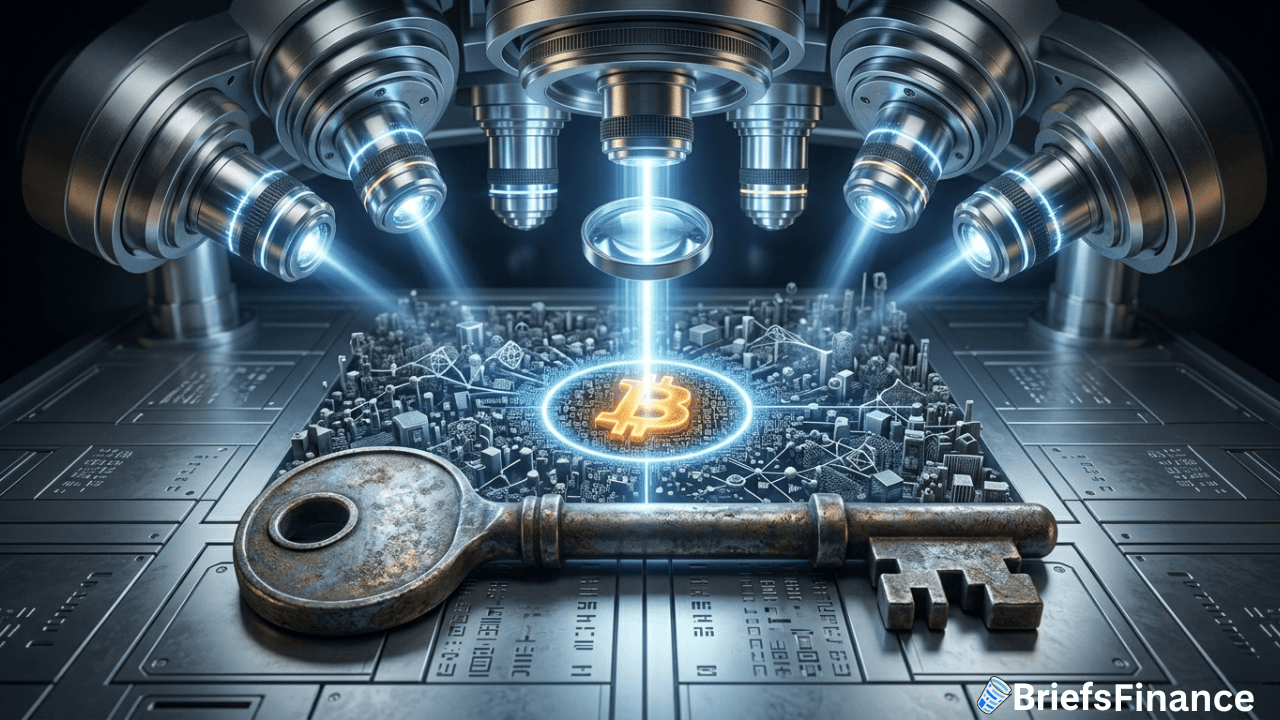
Bitcoin investors just lost a big chunk of their comfort zone.
Google's quantum computing division dropped a paper on Monday that rewrites the math on how soon a quantum machine could break the code protecting every bitcoin wallet on Earth. The old estimate said it would take millions of quantum processing units - called qubits - to pull it off. The new number is under 500,000.
That's not a rounding error. That's a 20x cut in the hardware needed to crack the lock.
No machine on the planet can do this right now. Google's fastest quantum chip runs on just 105 qubits - a tiny fraction of what's needed.
But the gap between "impossible" and "possible" just shrank faster than anyone expected.
Justin Drake, an Ethereum Foundation researcher and co-author of the paper, said his confidence in a near-term threat jumped after the findings. He puts 1-in-10 odds on a quantum machine extracting wallet keys from publicly visible data by 2032. Stanford's Dan Boneh and six Google scientists also contributed.
A second study from Caltech and a startup called Oratomic pushed the timeline even further - suggesting a machine running roughly 26,000 qubits could finish the job in under two weeks.
For investors, the risk boils down to one thing. Sending bitcoin means broadcasting your public key to the network. A strong enough quantum machine could work that data backward to the private key - and empty the wallet. Somewhere between a quarter and a third of all existing bitcoin sits in addresses where that key data is already out in the open.
Ethereum's developers have spent the better part of a decade laying groundwork for this. The foundation runs a dedicated tracker for its quantum-readiness work, stress-tests new protection methods weekly, and has sketched a transition plan across four upcoming network upgrades - all targeting 2029.
Bitcoin is moving at a different pace. A proposal called BIP-360, merged in February, introduces a new structure that keeps public keys hidden and opens the door to future quantum-resistant signing methods. But it stops short of replacing the current security model. Getting from here to there means more proposals, more rounds of community review, and buy-in from a network that has always moved with caution.
Google's own goal is to shift its services to quantum-safe standards by 2029. The NSA wants federal systems protected by 2030.
Bitcoin doesn't have a central body capable of setting that kind of timeline.
While most of the market dipped - bitcoin fell from above $68,000 to around $66,250 - one small project broke the other way.
QRL, short for Quantum Resistant Ledger, jumped 40% in a single day. Its market cap landed around $127 million. The project uses a signing method called XMSS - built from scratch to hold up against quantum-powered attacks.
Think of it like this: Bitcoin's lock was built to stop every tool that exists right now. XMSS was built to stop tools that haven't been invented yet.
Google's team took a rare step with this paper. Rather than release the full technical blueprints, they proved their results were legitimate using a cryptographic technique that lets outsiders check the math without ever seeing the underlying code. That alone tells you the researchers consider these findings sensitive.
If you hold bitcoin in a wallet that's ever sent a transaction, the most practical step right now is moving those coins to a brand-new address. It won't make them immune to future attacks, but it pulls them out of the easiest target group.
Google, Ethereum's developers, and the NSA are all racing toward 2029.
Bitcoin's decision-making process wasn't designed for that kind of speed.
Investing is not a one size fits all approach. Some […]
Everyone with an internet connection is using AI to better […]
You just opened your first brokerage account and you’re ready […]
Everyone knows AI needs chips. For a while, investment dollars […]
When you get your first, “real” job, it often comes […]
Most investors hear the word "options" and picture a Wall […]
Most of us grew up being taught the same thing: […]
Gold has been around longer than any stock market, any […]
Most people think the only way to make money in […]
The stock market is like any other business - it’s […]