Free NewsletterPro Login

Google Announces Ironwood - Its Most Powerful AI Chip Yet - With 4x Speed Boost

A stylized illustration of a cylindrical cup with blue arrows and lines indicating a swirling or rotational motion inside the cup.
Published Nov 7, 2025
Share:
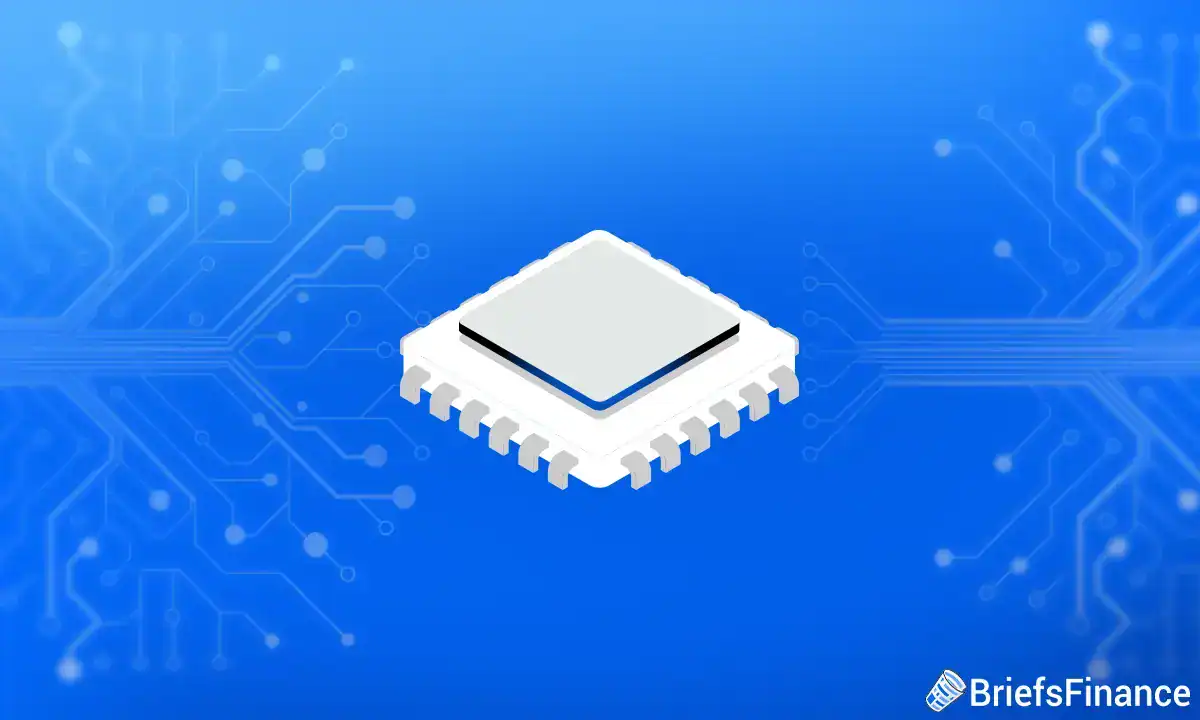
A white microchip on a blue background with circuit patterns, symbolizing the technology powering autonomous vehicles, and the BriefsFinance logo in the bottom right corner.
Summary:
  • Google announced Ironwood, its seventh-generation TPU chip that's 4x faster than its predecessor, with Anthropic planning to use up to 1 million units for Claude
  • Google leads hyperscalers in custom AI chips, deploying them in huge volumes since 2018 while AWS started in 2019 and Microsoft not until 2023
  • Analysts estimate Google's TPU and DeepMind AI business could be valued at $900 billion standalone, up from $717 billion in January

The New Chip

Google unveiled Ironwood Thursday - its most powerful AI chip yet. The seventh-generation Tensor Processing Unit will be widely available in coming weeks.

Ironwood is designed for the heaviest AI workloads, from training large models to powering real-time chatbots and AI agents. Google says it's more than four times faster than its predecessor.

AI startup Anthropic plans to use up to 1 million Ironwood chips to run its Claude model. That's a massive deployment showing enterprise confidence in Google's custom silicon.

The Competitive Edge

TPUs give Google an advantage as hyperscalers rush to build data centers and AI processors can't be manufactured fast enough to meet demand.

"Of the ASIC players, Google's the only one that's really deployed this stuff in huge volumes," said Stacy Rasgon, semiconductor analyst at Bernstein. "For other big players, it takes a long time and a lot of effort and a lot of money. They're the furthest along among the other hyperscalers."

Amazon Web Services made its first cloud AI chip, Inferentia, available in 2019, followed by Trainium three years later. Microsoft didn't announce its first custom AI chip, Maia, until late 2023.

Google has been developing TPUs for over a decade and made them available to cloud customers in 2018.

Why Nvidia Is Watching

Google's TPU success has caught Nvidia's attention. When OpenAI signed its first cloud contract with Google earlier this year, the announcement spurred Nvidia CEO Jensen Huang to initiate further talks with the AI startup and CEO Sam Altman, according to The Wall Street Journal.

Unlike Nvidia, Google isn't selling chips as hardware. It provides access to TPUs as a service through its cloud.

Google's cloud business has become a major growth driver. Third-quarter cloud revenue jumped 34% year-over-year to $15.15 billion, beating estimates. The company ended the quarter with $155 billion in business backlog.

"We are seeing substantial demand for our AI infrastructure products, including TPU-based and GPU-based solutions," CEO Sundar Pichai said on the earnings call. "It is one of the key drivers of our growth over the past year."

The Valuation

Google doesn't break out TPU business size within its cloud segment. But D.A. Davidson analysts estimated in September that a "standalone" business consisting of TPUs and Google's DeepMind AI division could be valued at about $900 billion.

That's up from a $717 billion estimate in January. Alphabet's current market cap exceeds $3.4 trillion.

The Efficiency Advantage

Customization is Google's major differentiator. TPUs offer efficiency advantages over competitive products.

"They're really making chips that are very tightly targeted for their workloads that they expect to have," said James Sanders, analyst at Tech Insights.

Rasgon said efficiency will become increasingly important because "the likely bottleneck probably isn't chip supply, it's probably power."

The Space Vision

Tuesday, Google announced Project Suncatcher - exploring "how an interconnected network of solar-powered satellites, equipped with our Tensor Processing Unit (TPU) AI chips, could harness the full power of the Sun."

Google plans to launch two prototype solar-powered satellites carrying TPUs by early 2027.

"This approach would have tremendous potential for scale, and also minimizes impact on terrestrial resources," the company said. It would "test our hardware in orbit, laying the groundwork for a future era of massively-scaled computation in space."

The Bottom Line

Google's decade-long TPU investment is paying off as custom chips become crucial in the AI race. While Google continues buying Nvidia GPUs, its custom silicon gives it advantages competitors can't match.

Being "the only one that's really deployed this stuff in huge volumes" puts Google years ahead of AWS and Microsoft in custom AI chip development. That head start matters as power constraints become the limiting factor for AI infrastructure.

Anthropic committing to 1 million Ironwood chips validates Google's approach. Major AI companies are willing to build on Google's custom silicon rather than relying solely on Nvidia.

The $900 billion standalone valuation estimate for TPUs and DeepMind shows how valuable this business has become. What started as internal workloads over a decade ago now drives significant cloud revenue growth.

Rasgon's point about power being the bottleneck rather than chip supply highlights why efficiency matters. Google's custom chips designed for specific workloads use power more efficiently than general-purpose alternatives.

The space satellite project might sound futuristic, but it addresses real constraints. If power becomes the limiting factor for AI computation, solar-powered satellites with TPUs could provide massive scale without terrestrial resource impact.

For investors, Google's TPU success shows the value of long-term hardware investment. While Microsoft and Amazon play catch-up on custom chips, Google's decade head start has created meaningful competitive advantage.

Disclosure

Get Market Briefs delivered to your inbox every morning for free!

No fluff. No noise. No politics. Just finance news you can read in 5 minutes.

Blogs

May 5, 2026
How to Create Multiple Income Streams: A Beginner's Playbook
  • Most people rely on a single income stream from their job - which is also the most heavily taxed.
  • Multiple income streams come from a mix of cash flow, dividends, side businesses, real estate, and royalties.
  • The fastest path for most beginners is starting with one extra stream - usually dividends or a side hustle - and stacking from there.
Read More
May 5, 2026
The 60/40 Portfolio Explained: A Beginner's Guide
  • A 60/40 portfolio holds 60% in stocks and 40% in bonds (or other fixed income).
  • It's designed to balance growth from stocks with stability from bonds.
  • Your "right" mix depends on age, time horizon, income needs, and how well you sleep when markets drop.
Read More
May 5, 2026
How to Invest in Silver: A Beginner's Guide
  • Silver is both a precious metal and an industrial metal, used in solar panels, electronics, and medical tech.
  • Investors can buy silver four main ways: physical bars and coins, ETFs, mining stocks, or futures contracts.
  • Most beginners are best served by allocating a small slice of their portfolio to silver - usually between 1% and 3%.
Read More
May 1, 2026
Asset Allocation by Age: The Right Portfolio Mix at Every Stage of Life
  • Younger investors should hold mostly stocks because they have decades to recover from crashes and benefit from compounding.
  • Allocations gradually shift toward bonds and stable income as retirement approaches, but stocks remain important even past age 65 to outpace inflation.
  • Annual rebalancing is essential - it forces you to buy low and sell high while keeping your portfolio aligned with your actual life stage.
Read More
April 30, 2026
Stablecoin Explained: Why Some Cryptocurrencies Actually Aren't Volatile
  • Stablecoins are cryptocurrencies pegged to stable assets like the US dollar, giving crypto-style speed and access without the volatility of Bitcoin or Ethereum.
  • Fiat-backed stablecoins like USDC are the safest option, while algorithmic stablecoins have failed spectacularly and should generally be avoided.
  • Stablecoins fit a portfolio as cash reserves with better yields, a hedge against crypto volatility, and a fast, cheap rail for international transactions.
Read More
April 30, 2026
Buy Now, Pay Later Risks: Why This "Easy" Payment Method Is Dangerous to Your Wealth
  • Buy now, pay later services like Klarna, Affirm, and Sezzle are debt products designed to feel harmless while keeping users in a cycle of overspending.
  • BNPL exploits psychological debt blindness, triggers late fees, and damages credit scores without helping users build positive credit history.
  • Building real wealth means waiting 30 days, paying upfront when you have the cash, and avoiding systems built to extract money from your future income.
Read More
April 30, 2026
Dividend Payout Ratio: The Secret Metric That Shows If a Stock Is Safe or Risky
  • Dividend payout ratio is total dividends paid divided by net income, showing the percentage of earnings a company returns to shareholders.
  • A 20-50% payout ratio is generally safe and sustainable, while ratios above 75% often signal a dividend cut is coming.
  • High dividend yields can be warning signs, not opportunities - safety and dividend growth matter more than the headline yield number.
Read More
April 30, 2026
Ethereum for Beginners: What It Is and Why Smart Investors Are Paying Attention
  • Ethereum is a blockchain platform that runs smart contracts, while Ether (ETH) is the cryptocurrency that powers the network.
  • Use cases include decentralized finance, NFTs, gaming, supply chain tracking, and digital identity - many still experimental.
  • Most investors should treat Ethereum as a small allocation hedge using dollar-cost averaging, not a get-rich-quick lottery ticket.
Read More
April 30, 2026
Dollar Cost Averaging Strategy: How to Beat Emotion and Build Wealth Steadily
  • Dollar cost averaging means investing the same amount at regular intervals regardless of what the market is doing.
  • The strategy automatically buys more shares when prices are low and fewer when prices are high, lowering your average cost over time.
  • DCA removes emotion, eliminates the need to time the market, and turns volatility into a mathematical advantage for long-term investors.
Read More
April 30, 2026
The BRRRR Strategy: How to Build Real Estate Wealth Without Big Money Down
  • BRRRR stands for Buy, Rehab, Rent, Refinance, Repeat - a five-step framework for scaling real estate without saving for big down payments.
  • The strategy works by buying distressed properties below market value, adding value through smart renovations, and pulling out equity through refinancing.
  • Tax advantages like depreciation and mortgage interest deductions make BRRRR a powerful tool for owners willing to manage tenants and contractors.
Read More
1 2 3 20
Share via
Copy link