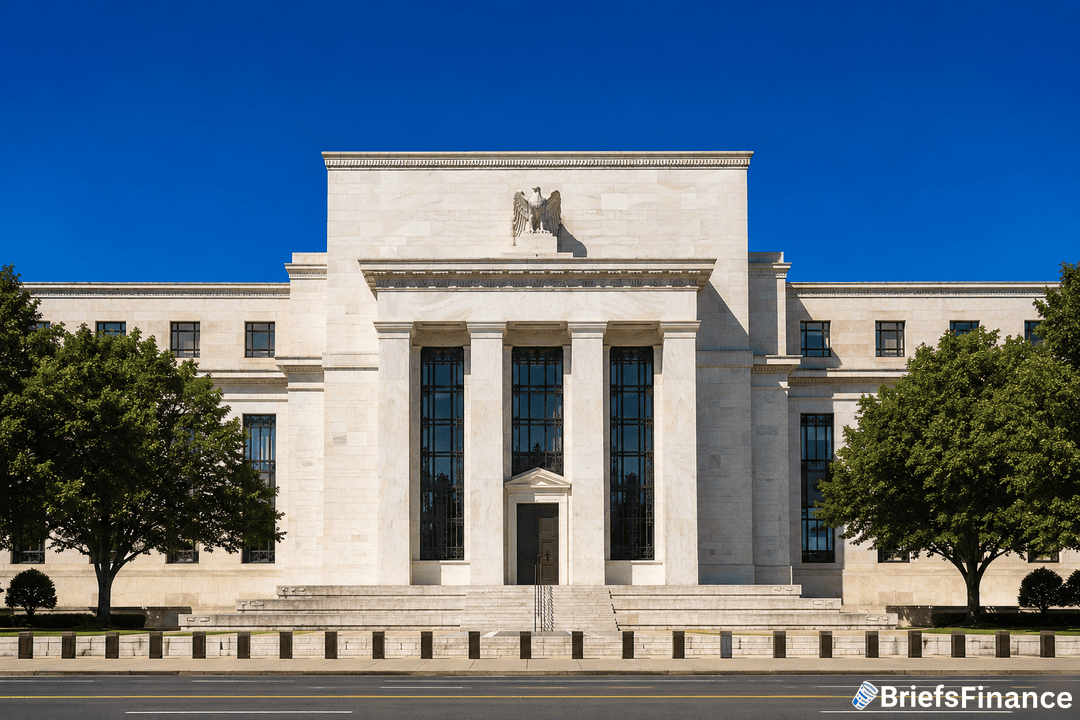
For most of this year, Wall Street's working assumption was that the Fed would cut rates by summer.
Goldman just pushed its call back to December, and they're not the only ones rethinking the timing.
Why The Delay
Goldman pushed its forecast for the next two Fed rate cuts back by one quarter, with the first now landing in December 2026 and the second in March 2027.
The reason is simple. Energy costs from the Middle East conflict are passing through to broader prices.
That's keeping core PCE inflation - the Fed's preferred measure - closer to 3% than its 2% target.
The labor market isn't doing the Fed any favors either, since April's nonfarm payrolls came in at 115,000 jobs added, healthy enough to remove any urgency to ease.
"The Fed will shift its focus to containing upside inflation risks now that the labour market appears back on track," said Goldman's Lindsay Rosner.
She thinks the FOMC could drop the easing bias from its June statement, which would signal a clear hawkish turn.
Goldman is keeping its terminal rate forecast at 3-3.25%, but they just think it'll take longer to get there.
For a clear, no-nonsense read on Fed moves like this, Market Briefs delivers it in five minutes every weekday - and you'll get a free investing masterclass when you join.
Wall Street Is Split
Goldman isn't even the most hawkish voice in the room.
According to forecasts tracked by the Wall Street Journal, BNP Paribas, HSBC, JP Morgan, and RBC all see no rate cuts in 2026 at all.
Bank of America thinks the next move waits until July 2027, while Morgan Stanley sees January 2027.
Citigroup and MUFG sit on the other end of the spectrum, still calling for 75 basis points of cuts before year-end.
The split inside the Fed itself is wider than at any point in over thirty years.
Three regional Fed presidents voted against the post-meeting statement at the April 29 FOMC, and the 8-4 split was the most divided vote since 1992.
What To Watch
The June statement is the next real signal, since dropping the language hinting at future easing would mean the hawks have effectively taken control of the room.
For investors, the math is simple. Higher rates for longer means tighter credit and slower growth.
It also means more pressure on companies that borrowed cheap money assuming this would all be over by now.
Half of Wall Street is now betting the Fed doesn't cut at all this year, and the other half is just waiting longer than they planned.
If you want the daily breakdown of moves like this delivered to your inbox in five minutes, join 350,000+ investors reading Market Briefs - sign-up comes with a 45-minute investing course as a bonus.