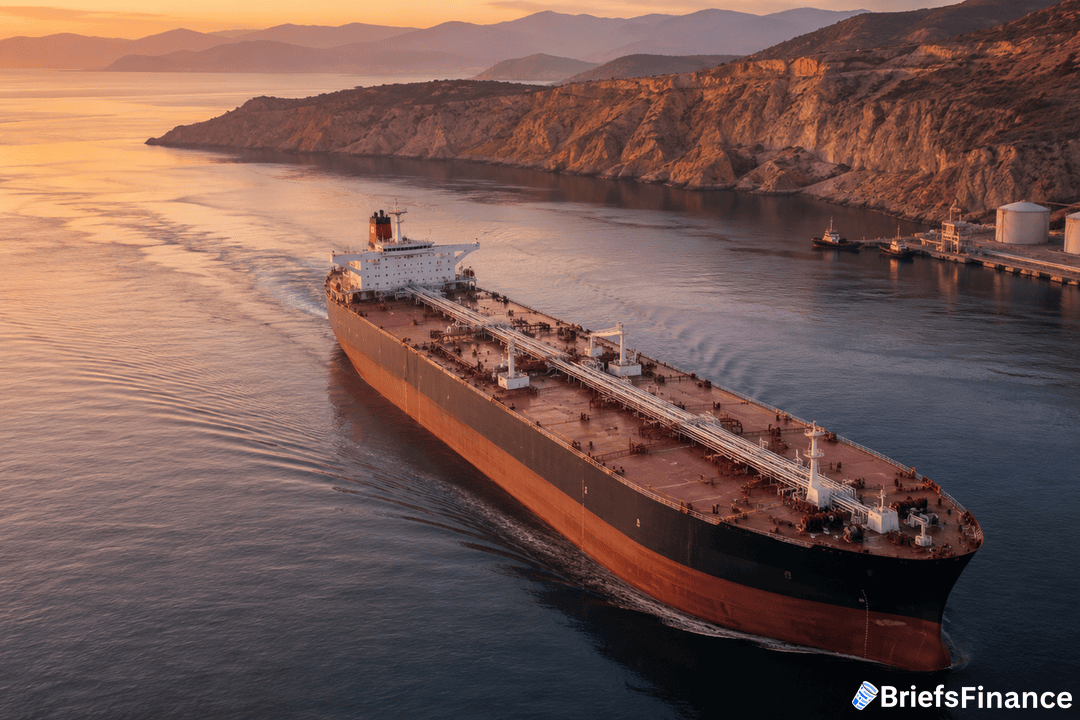
Oil is near $110 a barrel as bond yields climb across every major economy at once. The people who are supposed to fix it meet Monday in Paris with no obvious lever to pull, against the backdrop of an Iran war that's choking off oil flows through one of the world's most important shipping lanes.
That's the setup for the G7 finance ministers meeting, where the only point of agreement so far is that the Strait of Hormuz needs to reopen.
Oil Prices Climb Across The Board
Brent crude futures rose more than 3% Friday to close at $109.26 a barrel, while U.S. West Texas Intermediate jumped over 4% to settle at $105.42.
Brent is now up 74% year-to-date, though still below the $118 peak it hit in late April. Global oil inventories are falling at a record pace to fill the supply gap left by the Iran war.
Think of those reserves like an emergency gas can in the trunk - right now, the can is running low. The International Energy Agency warned last week that buffers could approach critical levels if Hormuz stays closed, and that prices may spike again as summer demand kicks in.
Wondering what these oil moves actually mean for your portfolio? Market Briefs breaks it down every weekday morning, and signing up gets you a free 45-minute investing masterclass too.
Long-Term Yields Surge In G7 Economies
Long-term borrowing costs across the G7 have surged in recent weeks as inflation worries from the Iran war ripple through markets. The 30-year U.S. Treasury yield jumped nearly 11 basis points Friday to 5.121%, the highest level since May 2025 and approaching levels not seen since October 2023.
Some of that move came after a messy week of inflation data, with traders trying to price what new Federal Reserve Chair Kevin Warsh will do next on rates.
In the U.K., 30-year gilts are trading at their highest since the late 1990s, with political instability and inflation worries pushing them up. Japan's bond yields, especially sensitive to energy import costs, have also climbed sharply.
Yields rise when investors demand more pay for holding government debt, which usually means worry about inflation, government finances, or both. With oil chokeholds at Hormuz feeding into prices everywhere, all three concerns are showing up at once.
What to Watch
Eurogroup President Kyriakos Pierrakakis, the Greek finance minister representing the euro area at the meeting, said in a statement that opening Hormuz is "of the utmost importance" to limit the damage to the global economy.
The G7's core members are the U.S., U.K., Canada, France, Germany, Italy and Japan, and the pressure is on Monday to coordinate a response that markets can actually feel.
No one yet knows what that response looks like, with bond traders pricing in tighter supply and weaker growth at the same time. The IEA's read on the situation was simple: the cushion is thinner than it looks.
For the morning read on stories like this, join 350,000+ investors getting Market Briefs - you'll also get a free investing course as a bonus.