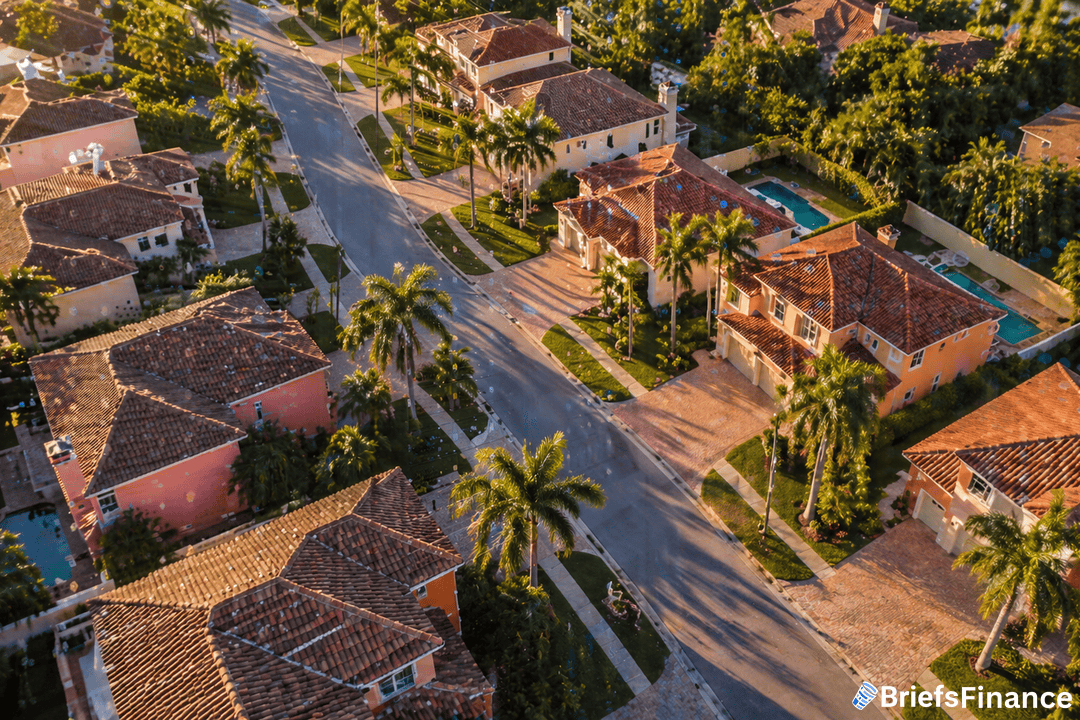
Florida's tourism and service economy runs on the people who staff its restaurants, hospitals, and classrooms, and they can't afford to live there anymore. About 10,000 retail trade workers left the Miami metro in 2024 alone, with most pointing to housing as the reason.
Wealthy buyers keep arriving, and home prices keep climbing. The squeeze on the middle class is now structural.
Where The Money Came From
Between 2019 and 2023, Florida absorbed a net $137 billion in income from people who moved in from other states. California lost $91 billion over that same window, while New York lost $76 billion.
The average income of new Florida residents was $122,530, the highest of any state, according to Gay Cororaton, chief economist for the Miami Realtors. She told Fortune that wealth migration has been the main reason home prices keep climbing, even with mortgage rates above 6.5%.
That money chased a limited number of homes. With supply tight, buyers with cash on hand pushed every other group out of the market.
What That Did To Prices
In Miami-Dade, median single-family home prices jumped 10.1% in 2020, 23% in 2021, and 11.1% in 2022, capping three of the strongest years on record. The share of homes worth $1 million or more then climbed from 8% in 2019 to 28% in the first quarter of 2026.
In Palm Beach County, nearly one in three homes is now valued at $1 million or higher. Cash is the other factor, with about 39% of Miami home purchases closing all-cash and 82% of Miami condos sold above $1 million in 2025 paid in full.
That puts buyers using a mortgage at a clear disadvantage, since cash offers tend to close at only a 5% to 10% premium.
Insurance Is The Tipping Point
The statewide median home price sits near $420,000, while the median household income is about $77,000. That's a price-to-income ratio above 5.4, well into what economists call obvious strain.
Then there's home insurance, which has become the breaking point for many buyers. The state's average annual premium is $8,292, which is 181% above the national average, according to Insurify.
Real estate agent Tara Benson told Fortune the squeeze is tightest on households earning between $75,000 and $125,000, since they make too much for help and not enough to absorb the full monthly cost.
What To Watch
Atlas Van Lines' 2025 migration study showed Florida shifted from a top inbound state to "balanced," a major break from years of one-way traffic. A November 2025 FAU poll then found nearly half of Floridians said they had thought about leaving over cost of living.
Orlando, Miami, and Tampa already rank near the bottom of the 25 largest U.S. metros for median household income. The state built its economy on the workers it now can't house.