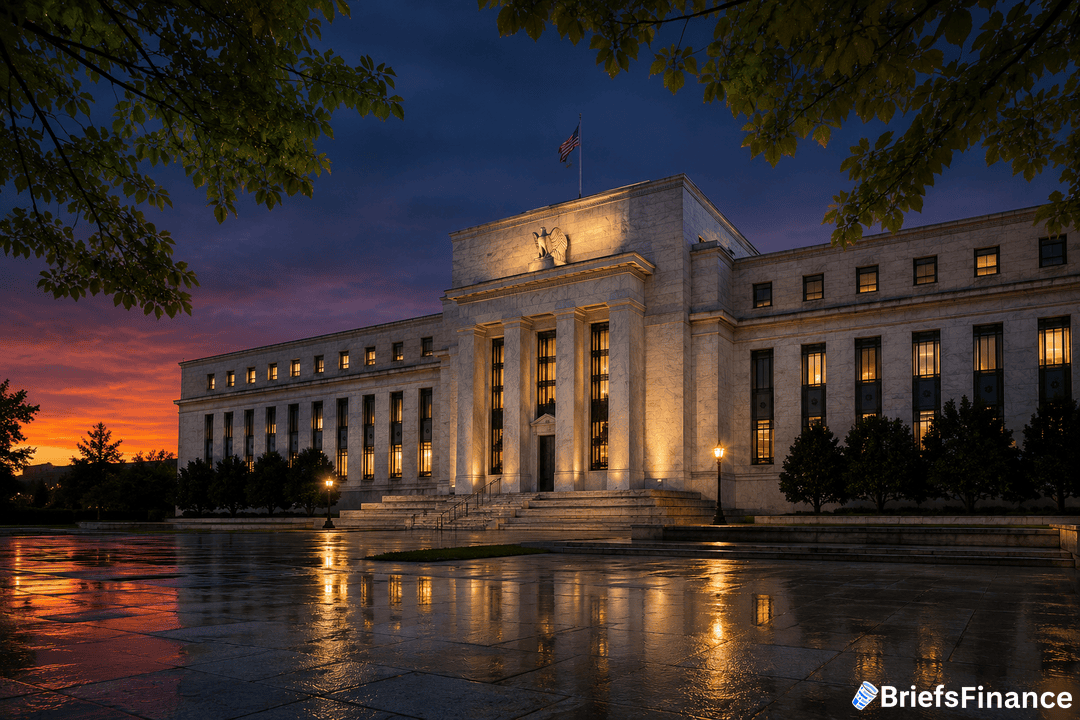
A few months ago, the only debate at the Fed was when to cut. That's not the debate anymore.
Chicago Fed President Austan Goolsbee, historically one of the more dovish voices on the committee, just told Bloomberg Television that he sees both rate cuts and rate hikes as possible. He said he can't view the current setup as one where the only thing on the table is a cut.
What Changed
Two things shifted. First, the Fed left rates unchanged at the end of April, and three officials dissented against a statement that hinted the next move would be a cut.
Those dissenters wanted the door open for a hike too. That kind of split inside the committee tells you the consensus is breaking.
Second, the war in Iran has driven energy prices higher, and Goolsbee says that price pressure is now showing up in things that have nothing to do with oil.
In English: inflation isn't just an energy story anymore. Once that spreads, cutting rates gets harder to justify.
Market Briefs breaks down what shifts like this actually mean for your portfolio every morning - in five minutes, plus a free investing masterclass when you join.
Why This Matters
Goolsbee doesn't vote on rate decisions this year, since 2026 isn't his year on the rotating Federal Open Market Committee schedule. But his voice still carries weight.
He's been one of the most-followed dovish members of the Fed. So when a historical dove starts talking about hikes, the rest of the market notices.
Investors had been pricing in cuts for months. If a few more Fed officials echo Goolsbee, that whole assumption could shift fast.
Stocks have rallied partly on the idea that easier policy is coming. Bonds have been priced the same way, which means a Fed open to hiking is a different setup entirely.
What To Watch
The next FOMC meeting is the one to watch. If more committee members openly back the "either direction" framing, the bond market will reprice quickly.
Until then, Goolsbee just put hikes back into the conversation - and that alone is a market-moving headline.
For the daily read on the Fed, the economy, and what it means for stocks, join Market Briefs - you also get a free 45-minute investing course thrown in.