Pandora is touting carbon-disclosed lab-grown diamonds, Gucci owner Kering is pitching circular polyester, and H&M and Zara keep stacking up resale apps. Shoppers, by their own behavior, mostly do not care.
The customer isn't buying the pitch in 2026, but the industry is leaning in harder.
The Audience For "Sustainable" Isn't The Shopper
Most consumers, squeezed by a long cost-of-living crunch, won't pay a "sustainability premium." Fashion executives at the Global Fashion Summit in Copenhagen admitted as much to CNBC, which raises the question of why the marketing machine is still cranking.
The audience changed. Former H&M CEO Helena Helmersson framed sustainability as a risk-mitigation issue and a competitive edge, since brands tied to volatile raw materials get punished when energy prices spike, like during the recent Strait of Hormuz blockade that lifted polyester costs.
Kering's chief sustainability and institutional affairs officer Marie-Claire Daveu put it plainly to CNBC: "It's not philanthropy, it's really business." Climate risk now shows up on the P&L (profit and loss statement), and institutional investors are scanning ESG (environmental, social, and governance) metrics during financial roadshows the same way they look at earnings.
Market Briefs covers the stories Wall Street actually trades on, delivered every morning in five minutes, with a free investing masterclass thrown in when you join.
The K-Shaped Shopper Problem
Wealthy buyers keep spending at the top end, where sustainability is baked into the price, while everyone else has migrated to fast fashion where the cheapest sticker wins. McKinsey calls this the K-shaped consumer, with two groups moving in opposite directions.
That makes the "middle path" of moderately priced sustainable fashion a tough sell on either end, which is why Pandora's pitch for cheaper, lower-carbon lab-grown diamonds bets that the squeeze pushes the wealthy down-market instead of pushing them out entirely.
What To Watch
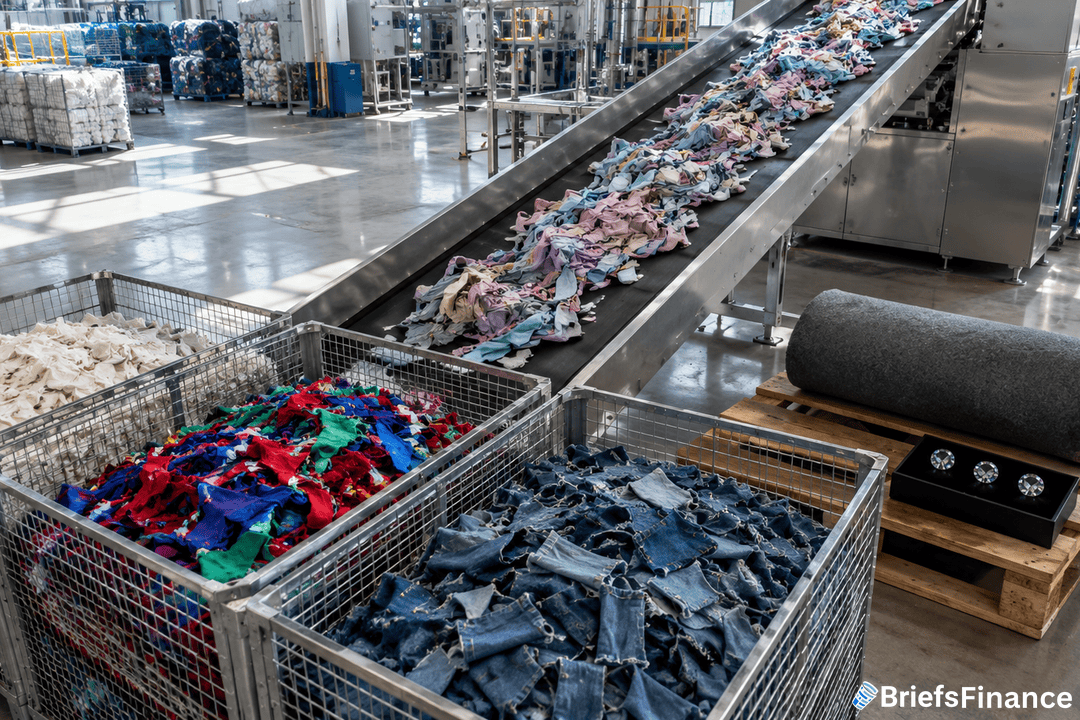
Textile waste hit 120 million metric tons in 2024, per Boston Consulting Group. Less than 1% of it gets recycled into new fiber.
The EU's Ecodesign for Sustainable Product Regulation is preparing rules aimed at ending greenwashing and inventory waste, with financial penalties for brands that don't comply. That moves sustainability from a marketing question to a compliance line item, which is where balance sheets get rewritten.
The pitch isn't to shoppers anymore - it's to the people who own the stock.
If you want a daily read on what's actually moving the market, Market Briefs lands in your inbox every weekday morning - and you get a free 45-minute investing course as a bonus when you sign up.