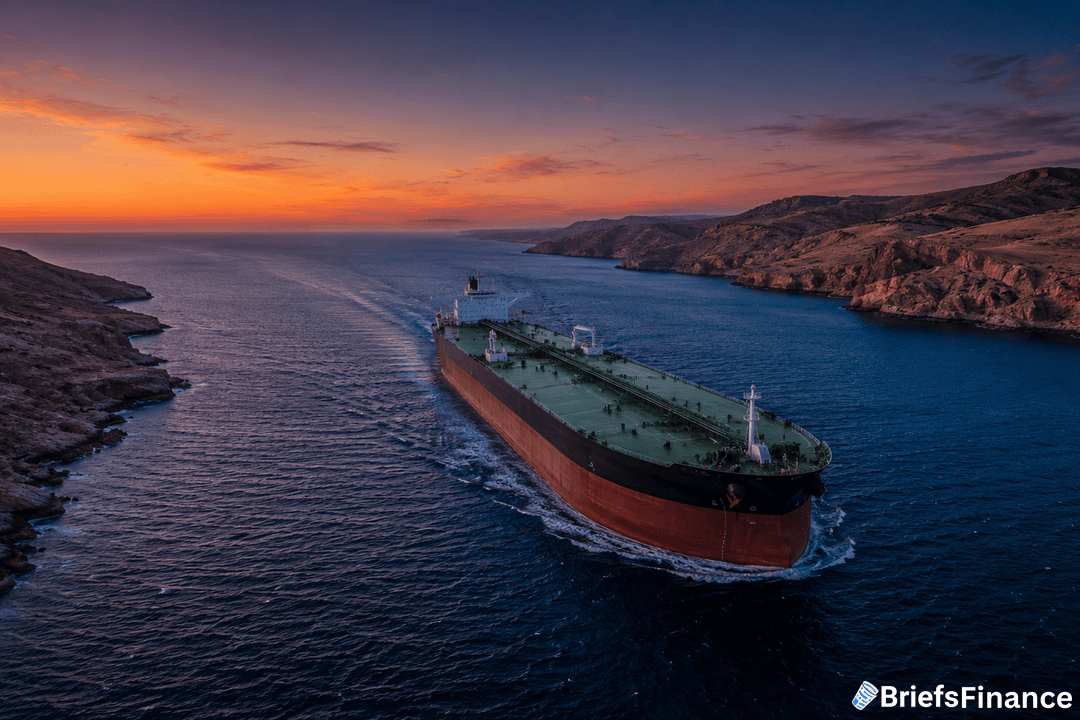
The oil market is calmer than it has any right to be. Stockpiles are draining fast.
The Strait of Hormuz is still cut off. The IEA just warned that the buffer is thinner than the spot price suggests.
The story underneath the chart is brutal. Even a deal tomorrow does not fix this in 2026.
Société Générale ran the timeline. If the Strait reopens in early June, the soonest real relief reaches Europe is roughly 52 days later.
Tankers have to load and transit. The crude then has to be refined and shipped to buyers.
Every step in the chain adds weeks. By the time relief shows up, the inventory hole is already much deeper.
A "Veneer Of Stability"
That is the phrase SocGen's commodity team used to describe what Brent crude is doing right now. The benchmark closed up 1.4% Monday at $110.73 a barrel.
U.S. West Texas Intermediate rose 1.3% to $106.86. The system underneath, the analysts wrote, is "acutely stressed."
The Strait of Hormuz normally moves about a fifth of the world's oil and gas. That flow has been hit hard since the U.S.-Iran conflict began on February 28.
Jeff Currie, the executive co-chair of Abaxx Commodity Exchange, told CNBC that real shortages in Europe could hit "any day now." The moment they do, he said, prices go "non-linear."
If you want the trades and policy moves that drive your energy bill, Market Briefs covers it every morning. You also get a free investing masterclass when you sign up.
Why The Timing Matters
The market is in its "shoulder months." That is the quiet window between heating season and driving season.
Currie warned that U.S. Memorial Day and the U.K. spring bank holiday are about to flip the demand switch back on. That pulls diesel, gasoline and jet fuel higher.
SocGen's math gets uglier the later the Strait opens. A late-June reopening pushes real relief to September.
Anything beyond that has Brent grinding toward $150 a barrel for the rest of the year. The bank's call for full stockpile recovery is now December 2027.
Talks between Washington and Tehran appeared to be at a standstill on Monday. The longer the standoff drags on, the harder the math gets for refiners, jet fuel buyers and anyone trying to plan a summer of travel.
What To Watch
The shortage already lives inside the system. The only real question is whether the relief valve opens in two weeks or two months.
The longer the delay, the deeper the hole. Prices stay where they are.
The headline number to track this summer is not Brent. It is how full European storage tanks are when the driving season hits its peak.
For a daily read on energy prices and what they mean for your portfolio, join Market Briefs, and grab the 45-minute investing course while you are at it.