- Blockchain is a digital ledger that records every transaction on a public network.
- Once a transaction is recorded, it cannot be changed or deleted.
- It is the foundation of Bitcoin, Ethereum, and thousands of other cryptocurrencies.

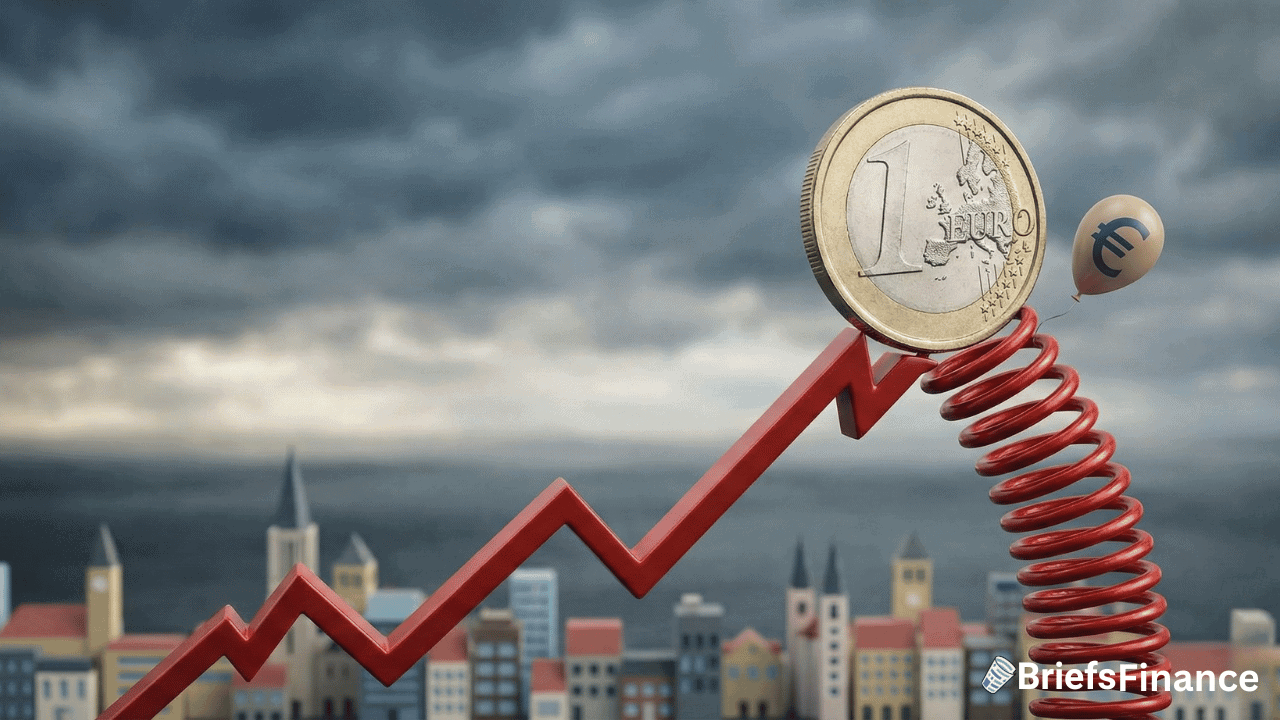
Europe had a clean inflation story heading into March. Then everything changed.
Eurostat's flash estimate showed eurozone inflation rose to 1.9% in February, up from 1.7% in January — an unexpected uptick that already caught economists off guard. Core inflation, which strips out food and energy, climbed to 2.4%. Services inflation ran at 3.4%.
The catch: all of that data was collected before the US and Israel launched strikes on Iran on February 28. The numbers don't capture a single day of the energy shock now unfolding.
The eurozone is almost entirely dependent on imported oil and gas. That makes it uniquely vulnerable when the Strait of Hormuz — the transit point for 20% of global oil and LNG — gets disrupted.
ING analysts called Europe "the most exposed major economy" to the conflict, noting that in an extended-war scenario, European natural gas prices could spike toward €80–100 per megawatt-hour. European gas prices were already up 50% by Monday. The Euro STOXX 50 fell 3.3% on Tuesday; Germany's DAX dropped to its lowest since December.
ECB Chief Economist Philip Lane told the Financial Times that a prolonged war could push eurozone inflation meaningfully higher while simultaneously weighing on growth — a textbook stagflation setup.
The ECB had been on a rate-cutting path as inflation cooled. Now it faces a scenario where cutting rates feeds inflation, but holding them steady chokes off a fragile recovery.
Europe was almost at the finish line. The timing couldn't be worse.