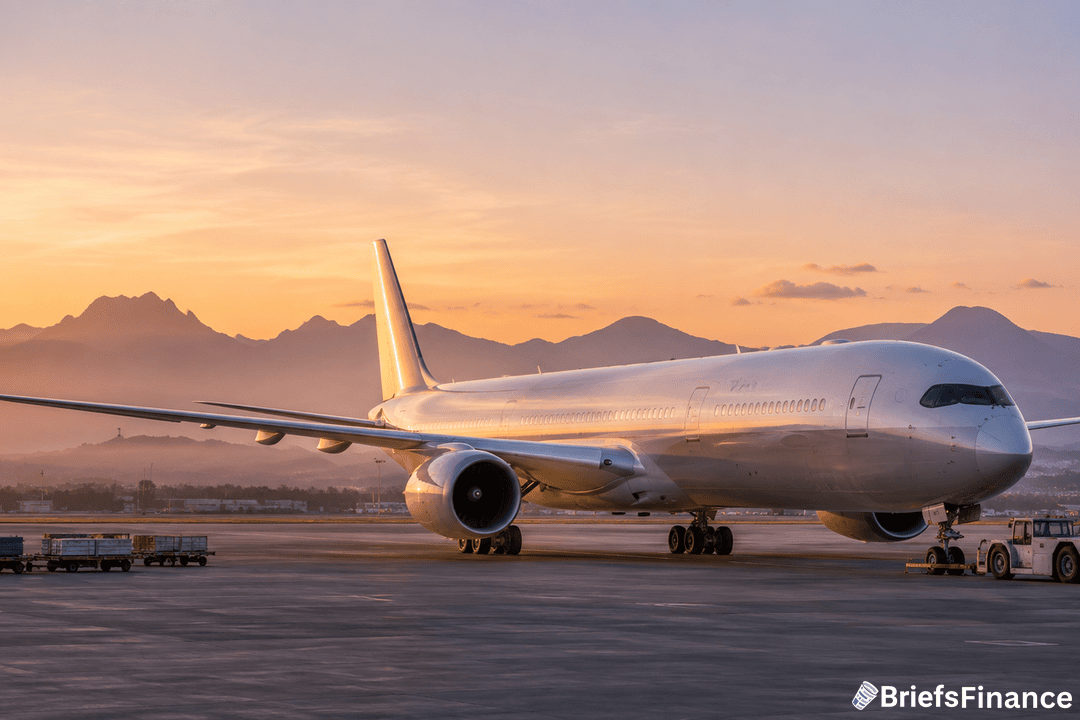
Ethiopian Airlines flies one of the most Boeing-heavy fleets in Africa, but that balance might be about to shift.
The airline, which is closing in on its 80th year, is in early talks with Airbus about buying roughly two dozen jets across two different aircraft families.
What's On The Table
Ethiopian is looking at six Airbus A350 widebodies, the long-haul jet it already flies on global routes, plus about 20 A220s, a smaller plane Airbus has been pushing hard to airlines around the world.
Talks are early. Both sides confirmed the discussions are happening, but neither would share numbers or timing.
For Airbus, this would be a real win, since Boeing currently dominates Ethiopian's fleet of about 150 planes, with 90 Boeing jets in service and 60-plus more on order. A confirmed Airbus deal would force the U.S. planemaker to share shelf space at one of Africa's most ambitious airlines.
If you want a clear daily read on the deals moving global markets, Market Briefs delivers it in five minutes every weekday - with a free investing masterclass when you join.
Why Ethiopian Is Buying Now
Ethiopian has bigger plans than just adding planes. The state-owned carrier is building a giant new airport designed to handle 60 million passengers a year, with a path to 110 million by 2036, with the goal of becoming a global hub on par with Emirates or Turkish Airlines.
Big ambitions need more aircraft.
There's also a regional opening, since the war in Iran has shaken up Middle East travel with airspace closures and higher fuel costs hitting Gulf carriers. African airlines like Ethiopian could pick up travelers who used to connect through Dubai or Doha.
Why Airbus Wants This Win
The A220 program lost orders in 2024, and Airbus has been working hard to rebuild momentum.
That push is starting to pay off. AirAsia just placed a 150-plane A220 order, the largest single deal ever signed for the jet, and a confirmed Ethiopian order on top of that would help cement the A220 as the go-to small jet for fast-growing airlines.
The A220 is built in Canada, which means a bigger order book also helps Airbus push back on tariff pressure tied to U.S. trade policy. Every new customer line lets Airbus argue the program is a global success story, not just a North American one.
What To Watch
Talks are still private, and there's no guarantee Ethiopian goes ahead or that the numbers stay where they are now.
For investors watching the Boeing-Airbus duopoly, the move is another sign Airbus is gaining ground in markets Boeing used to own outright.
Join the free daily newsletter and you'll also get a 45-minute investing course as a sign-up bonus.