Free NewsletterPro Login

Ethereum's Warning Sign: History Says More Pain Could Be Coming

A stylized illustration of a cylindrical cup with blue arrows and lines indicating a swirling or rotational motion inside the cup.
Published Oct 21, 2025
Share:
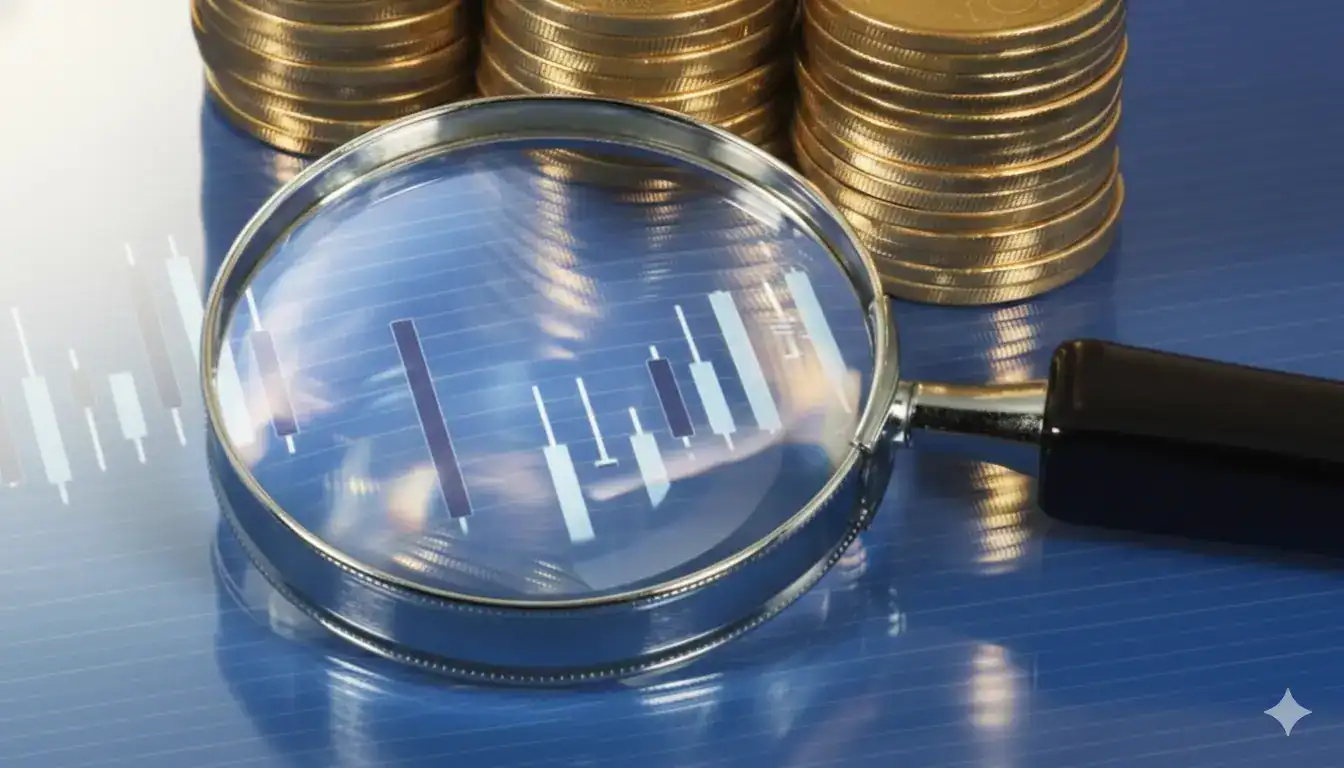
A magnifying glass focuses on a financial candlestick chart with a warning sign, hinting at price prediction uncertainty, while Ethereum coins and stacked gold coins appear in the background.
Summary:
  • Ethereum's MACD indicator just flashed a bearish "sell" signal on the weekly chart - the same pattern that preceded two previous major crashes
  • The last two times this signal appeared, ETH dropped 46% and 60% within weeks - and it's happening again in October 2025
  • Analysts say Ethereum needs to hold above $4,000 to avoid following the same pattern, but the technical setup looks worrying

What Happened?

A key technical indicator just flipped negative for Ethereum, and crypto traders are nervous because this same signal has predicted major crashes before.

The indicator is called MACD (Moving Average Convergence Divergence) - essentially a tool that tracks whether momentum is building or fading for an asset. On Ethereum's weekly chart, the MACD line just crossed below the signal line, which traders interpret as a "sell" signal.

Why does this matter? Because the last two times this exact pattern appeared, Ethereum got hammered. In mid-2024, ETH dropped 46% after the signal. More recently in early 2025, the same signal preceded a brutal 60% crash within just a few weeks.

Now it's happening again in October 2025, with Ethereum currently trading around $3,874 - already down about 20% from recent peaks.

Why This Matters

Technical analysis isn't magic, but patterns do repeat in markets because human psychology and trading behavior tend to follow similar cycles. The MACD indicator specifically tracks momentum - whether buying pressure is increasing or decreasing.

When the MACD line crosses below the signal line, it suggests momentum is shifting from buyers to sellers. Think of it like a car that was accelerating but is now slowing down - the trend is changing direction.

For Ethereum, this signal has been remarkably accurate at predicting major downturns. Twice in the past 18 months, it flashed right before steep selloffs. That's why traders are paying attention now.

The key level to watch is $4,000. Technical analysts say if Ethereum can hold above that price, it might avoid repeating the pattern. But if it breaks below $4,000, history suggests we could see another significant drop - potentially in the 40-60% range if the pattern holds.

What makes this particularly concerning is the timing. Ethereum is already showing weakness, and this bearish signal is appearing just as broader crypto markets face liquidity issues and risk-off sentiment. Multiple negative factors stacking up rarely ends well for prices.

The Bottom Line

Technical indicators aren't guarantees - markets can always behave differently than they did in the past. But when a signal has correctly predicted two major crashes in the past 18 months, it's worth paying attention.

For Ethereum holders, this is a warning shot. The pattern suggests more downside could be coming, especially if ETH breaks below $4,000. That doesn't mean you should panic sell, but it does mean being aware of the risk.

Some context: Ethereum has additional challenges beyond just technical signals. The crypto market is facing tightening liquidity, Bitcoin is struggling, and investor appetite for risk assets is weak right now. Technical signals tend to work better when they align with fundamental conditions - and right now, the fundamentals aren't great either.

What should everyday investors do? If you own Ethereum, watch that $4,000 level closely. A clean break below it could trigger more selling as traders who follow technical patterns start dumping.

Conversely, if ETH can hold above $4,000 and then rally, it might invalidate the bearish signal.
The uncomfortable truth is that catching falling knives is dangerous.

If this pattern plays out like the last two times, Ethereum could have significantly more downside ahead. That might create a buying opportunity eventually, but trying to time the bottom is risky.

For now, the technical setup looks bearish, the historical precedent is concerning, and the broader market conditions aren't helping. Caution seems warranted until Ethereum can prove it won't follow the same script as 2024 and early 2025.

Disclosure

Get Market Briefs delivered to your inbox every morning for free!

No fluff. No noise. No politics. Just finance news you can read in 5 minutes.

Blogs

April 28, 2026
Core-Satellite Portfolio: The Best of Both Worlds
  • A core-satellite portfolio splits investments into stable core holdings and higher-risk satellite picks.
  • The core is usually 60% of the portfolio, with satellites at 40%.
  • It blends passive index investing with active opportunity bets.

Read More
April 28, 2026
Bond Ladder Strategy: The Income Plan With Built-In Flexibility
  • A bond ladder is a series of bonds with staggered maturity dates, often one to five years apart.
  • It gives you regular access to cash, predictable income, and protection from rate changes.
  • It works for Treasuries, corporate bonds, municipal bonds, and CDs.
Read More
April 28, 2026
Silver vs Gold Investing: Which One Belongs in Your Portfolio?
  • Gold is the stable store of value, used as crisis insurance during recessions and conflict.
  • Silver is both a precious metal and an industrial metal, with more volatile pricing.
  • Most investors hold a mix in their alternative investment allocation, often 5% to 12% of portfolio.
Read More
April 28, 2026
What Is a Dividend Reinvestment Plan? The Wealth Snowball Explained
  • A dividend reinvestment plan, or DRIP, automatically uses dividend payments to buy more shares.
  • DRIPs power compound growth - dividends buy shares that pay dividends that buy more shares.
  • Most brokerages offer DRIPs free, and many include fractional shares so every penny goes back in.
Read More
April 28, 2026
How Tariffs Affect the Stock Market
  • Tariffs are extra fees on goods imported into a country, and they hit company profit margins.
  • The S&P 500 dropped over 3% in one day after the 2025 tariff announcement.
  • Tariffs reshape trade flows, creating both losers and unexpected winners.
Read More
April 28, 2026
What Is a 13F Filing? The Smart Money Tracker
  • A 13F filing is a quarterly disclosure of stock holdings from large institutional investors.
  • It shows what hedge funds and asset managers bought, sold, and held last quarter.
  • You can find any 13F free on SEC EDGAR.
Read More
April 28, 2026
Debt-to-Equity Ratio: The Number That Tells You If a Company Is Drowning
  • The debt-to-equity ratio compares what a company owes to what shareholders own.
  • The formula is total liabilities divided by total shareholder equity.
  • Lower ratios mean less risk - one of the value markers Warren Buffett looks for.
Read More
April 28, 2026
Non-Financial Analysis of Stocks: The 4-Step Method
  • Non-financial analysis evaluates a company's business, not its financial ratios.
  • It covers four things: business model, CEO, innovation, and moat.
  • It's how investors find companies with long-term staying power.
Read More
April 28, 2026
SEC EDGAR Tutorial: The Free Tool the Pros Use
  • SEC EDGAR is the official free database of public company filings.
  • You can pull 10-Ks, 10-Qs, 8-Ks, and insider trades by ticker or company name.
  • It's the source journalists and analysts use to write their stock stories.
Read More
April 28, 2026
How to Read a 10-Q (Without Losing Your Mind)
  • A 10-Q is a public company's three-month financial update, filed with the SEC.
  • It shows revenue, profits, debt, and cash flow between yearly reports.
  • You can find any company's 10-Q for free on the SEC's EDGAR site.
Read More
1 2 3 18
Share via
Copy link