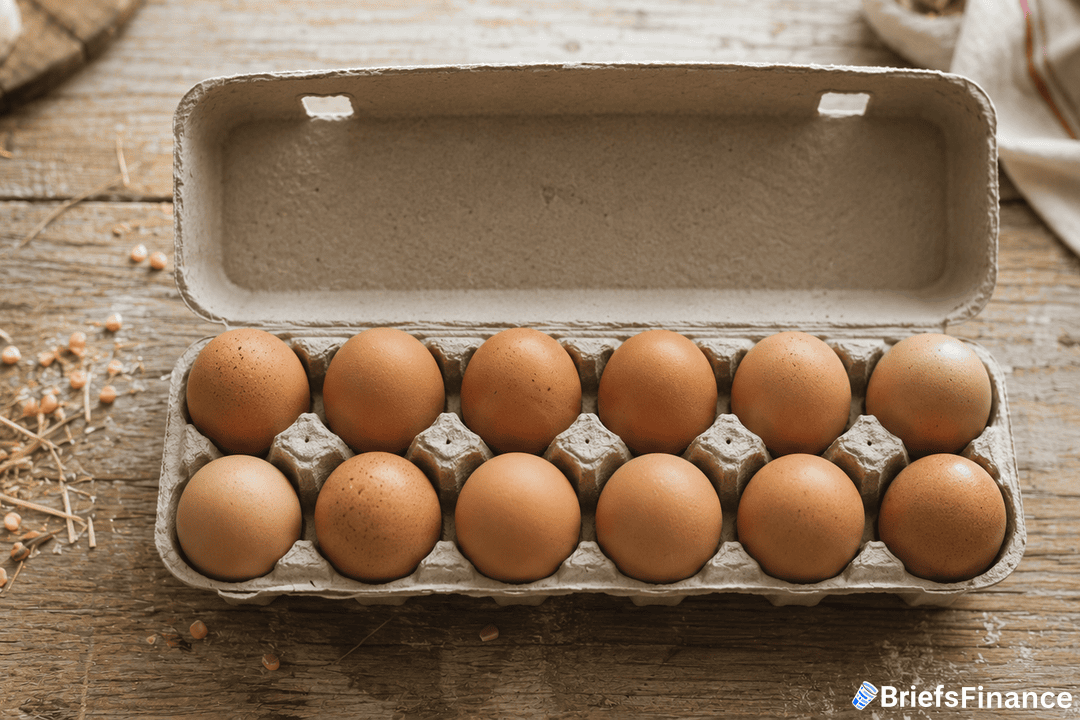
A year ago, the country was panicking about expensive eggs. Now a dozen sells for under a dollar in some stores, and the producers behind that drop say cheap eggs are now their problem.
Bird flu killed off a chunk of the U.S. flock last year and sent prices soaring. Now the birds are back, supply has caught up - and then overshot.
Cheap Eggs, Squeezed Producers
The price crash sounds great for shoppers. It looks brutal on the producer side.
Pete & Gerry's CEO Thomas Flocco said roughly half the cost of a dozen premium eggs is feed, and feed has been pricey since 2022. Diesel is now expensive too, thanks to the U.S.-Iran war driving up fuel costs.
That means the cost to make eggs is climbing while the price producers get for those eggs is dropping fast. Anyone who has run a business knows what that math feels like.
American Egg Board CEO Emily Metz put it plainly. She said feed, fuel and labor costs "did not disappear," and they're staying high while wholesale egg prices keep falling.
Want a five-minute morning read on stories like this and how they shape your portfolio? Join Market Briefs - and grab a free investing masterclass when you sign up.
Demand Is Fine. Supply Is The Issue.
Cal-Maine Foods CEO Sherman Miller, who runs the country's biggest egg distributor, said the price drop has nothing to do with shoppers eating fewer eggs.
In fact, demand is strong. A Pete & Gerry's survey found more than four in 10 Americans are more focused on protein than five years ago, and two-thirds eat eggs weekly specifically for the protein.
The issue is on the other side of the equation. As farmers rebuilt their flocks fast and small farms expanded, supply caught up - and then ran past demand.
Cal-Maine Foods runs the country's biggest distribution network for shell eggs, so when its CEO says the price drop isn't a demand problem, that's a useful signal. He pointed to supply recovery and timing shifts after avian flu losses as the real drivers.
Pete & Gerry's survey adds more color. The same research found many Americans now view whole foods like eggs as more nutritious than processed protein alternatives.
What To Watch
President Trump has been taking credit for the price drop ahead of the midterm elections this fall. "We got the prices down, way down," he said Thursday.
Whether the credit sticks depends on what comes next. If feed and fuel costs stay high, producers will cut output to protect margins, which tightens supply and pushes prices right back up.
That's the kind of cycle investors should watch closely. Sectors with razor-thin margins often look like winners until input costs reset - and defensive sectors usually hold up better when that happens.
Cheap eggs in May rarely last to October.
Get the daily Market Briefs newsletter for a five-minute read on stories like this every morning - plus a free 45-minute investing course thrown in.