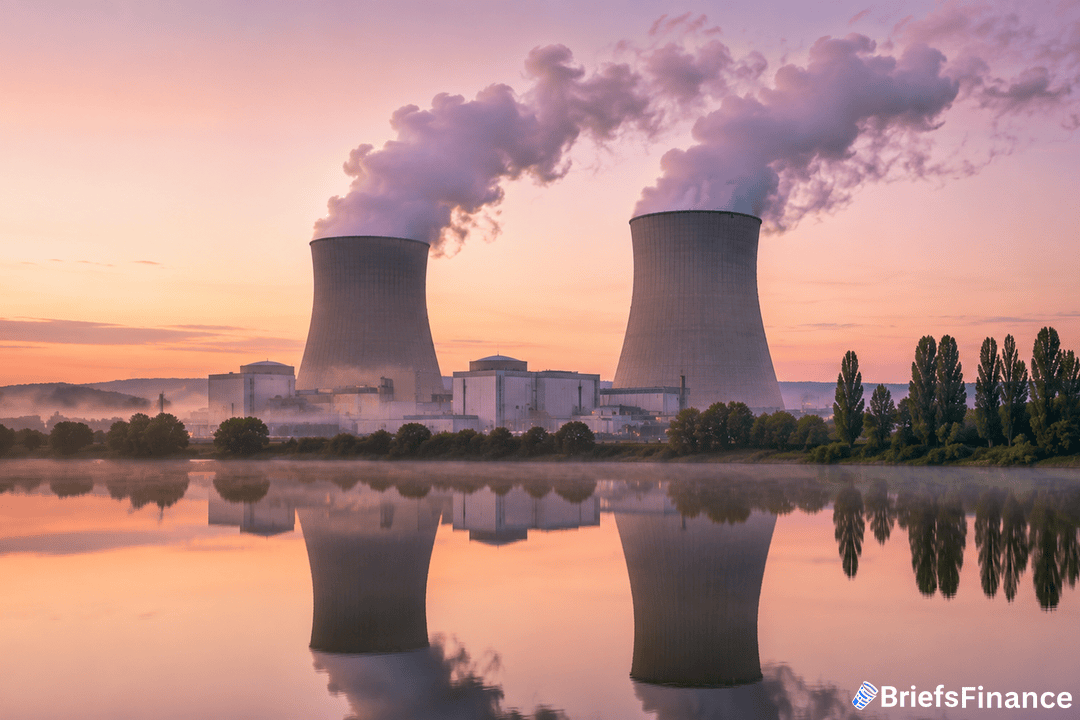
EDF runs more nuclear reactors than any single utility on Earth.
It's about to sell its wind and solar business in China to build more of them.
That's the simplest version of EDF's strategic shift right now, and it's a clear sign of where Europe's energy money is moving next.
The Sale
EDF (Électricité de France) has hired an adviser to find a buyer for its renewable energy portfolio in China, Bloomberg reported on Tuesday. The wind and solar assets could fetch more than $500 million.
The sale is in early stages. EDF is sounding out potential buyers, including Chinese firms, but there's no certainty a deal closes.
This isn't a one-off either. EDF is separately weighing the sale of up to 100% of its North American renewable subsidiary.
The China sale is part of the same playbook: cash out of renewables abroad, fund nuclear at home.
If you want every market move that matters delivered in five minutes a day, Market Briefs is the morning read, plus a free investing masterclass thrown in when you join.
Why EDF Is Pivoting Back To Nuclear
EDF already operates a 57-reactor fleet that supplies about 70% of France's electricity. France's government has committed to building six new reactors on top of that.
Someone has to pay for them. That someone is EDF, and the company is sitting on around €50 billion of net debt while it figures out how.
CEO Bernard Fontana has been blunt about the plan, telling Reuters that EDF would sell anywhere from 50% to 100% of its US renewable business to fund the French nuclear push.
Selling non-core renewables in markets where EDF isn't dominant is the cleaner way to raise the money. It avoids extra debt and equity issuance.
And it lets EDF focus on the thing it is already the best in the world at.
Europe's Nuclear Revival
Nuclear had been the unpopular choice in European energy policy for two decades. AI's hunger for power has changed the math.
Several European governments are now treating nuclear as a strategic priority instead of a political problem. Demand for steady, carbon-free power is making nuclear's economics look very different than they did five years ago.
Data centers and AI need that kind of power 24 hours a day.
Worth Noting
The other side of this story is who steps in to buy.
If a Chinese firm picks up EDF's China renewables, it tightens China's grip on its own clean energy infrastructure. That has been a quiet but steady trend across the global renewables industry for the past two years.
EDF gets cash to build reactors, and China deepens domestic ownership of its grid. Both sides walk away with what they want.
The next thing to watch: when, and at what price, the deal actually lands.
Sign up for Market Briefs for the daily five-minute read on what's moving markets, and you'll also get a free 45-minute investing course as a bonus.