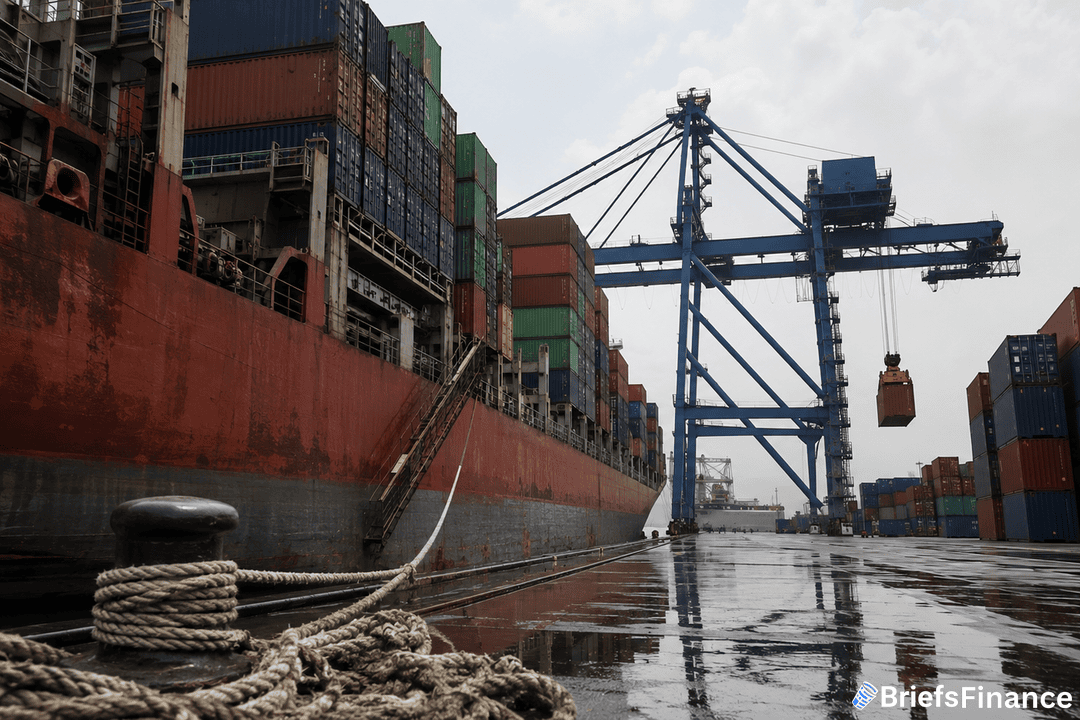
An African business buying from China today pays a hidden tax most people don't talk about. It isn't a tariff, but the cost of running the deal through the dollar.
Ecobank is trying to make that tax go away. The pan-African lender, which runs across 35 markets, is in advanced talks with Bank of China to launch direct yuan settlement by the end of 2026.
The Hidden Cost Of Dollar-Routed Trade
Right now, an importer in Lagos buying goods from Shenzhen converts naira into dollars, then dollars into yuan - and each conversion takes a cut.
Settlement delays can stretch for weeks, leaving working capital tied up while the deal clears.
Add it up and the round trip costs 2% to 4% per deal, before factoring in currency swings - which for a small business on thin margins is the difference between a profitable shipment and a break-even one.
Direct yuan settlement skips the dollar leg entirely, so the savings flow straight to the importer.
This is exactly the kind of structural shift our team digs into every morning in Market Briefs - it takes about five minutes to read, and you get a free investing masterclass when you join.
A Broader Pattern Across The Continent
Ecobank isn't moving in a vacuum, since South Africa's Standard Bank joined China's cross-border payment system, CIPS, in November.
Afreximbank is already on CIPS, while at least ten African nations now have currency swap lines with China's central bank.
Zambia is letting taxpayers settle in yuan, with mining royalties there now paid in renminbi. Kenya and Ethiopia have restructured parts of their Chinese debt into yuan to cut servicing costs.
The math is simple - China is Africa's largest trading partner by a wide margin, with trade hitting $348 billion in 2025 and Chinese exports to the continent up more than 25%.
As that flow grows, so does the case for cutting the dollar middleman.
The Trade-Off Investors Should Note
Deeper yuan exposure leaves African economies more tied to Beijing's policy choices and Chinese capital controls, a risk the IMF has flagged in recent reports.
If renminbi swings widen or China tightens capital flows, smaller African central banks could face currency mismatches on yuan-denominated debt.
For now, though, the immediate cost savings are too obvious for small importers to ignore.
Worth Noting
For small businesses trying to compete on price with Chinese suppliers, the choice is between a 2% to 4% drag today and a strategic question for tomorrow. Most are going to pick today.
If you want this kind of read on global money flows every morning, join 350,000+ investors reading Market Briefs - you also get a 45-minute course on finding investments as a bonus.