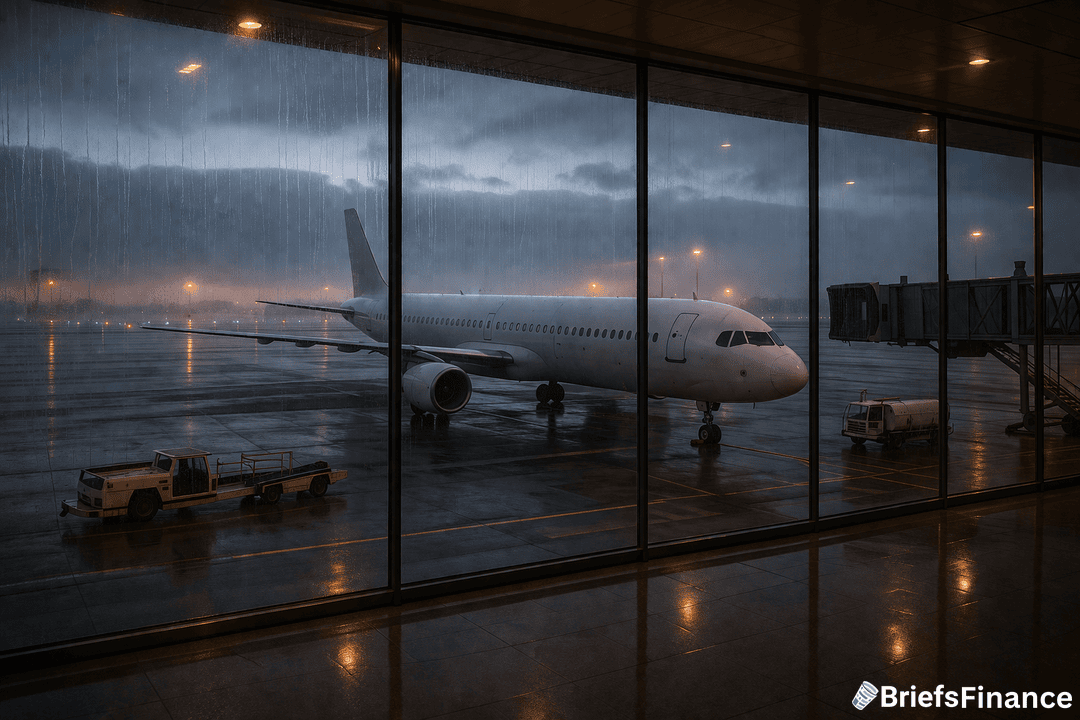
Spirit went under earlier this year.
Jet fuel costs roughly doubled.
Then a group of low-cost airlines walked into Washington and asked for $2.5 billion to keep flying.
Duffy's answer was simple: try the private markets first.
The Ask
A group called the Association of Value Airlines includes Frontier and Avelo.
The group met last week with Sean Duffy and FAA chief Bryan Bedford in Washington.
Their pitch was a $2.5 billion fund used only to offset higher jet fuel costs.
The plan would pay the U.S. back partly with warrants.
The U.S. could later swap those warrants into stakes in the airlines.
The group also wants Congress to drop the 7.5% federal tax on airline tickets and the $5.30 per-segment tax.
Together, those cuts would cover about a third of the extra fuel cost the carriers are eating this year.
The $2.5 billion figure was their guess of how much more these airlines now expect to spend on jet fuel in 2026 than first planned.
The Answer
"At this point, I don't think it's necessary," Duffy said at a Saturday press event at Newark Liberty International Airport.
"They do have access to cash."
"If they want to come to the U.S. government, we would be a lender of last resort. If they can find dollars in the private markets, I think that's better for them."
Duffy added that he saw the talk of a Spirit-style rescue as something some airlines viewed less as need and more as opportunity.
The CEOs of several budget carriers had pushed the case in person at the Washington meeting.
The $2.5 billion was meant to be a fuel offset, not a long-term lifeline.
For now, the answer from Treasury is that the airlines should test the private markets first.
The Big Airlines Are Not Sympathetic
Airlines for America is the trade group for major carriers like Delta and United.
It came out hard against the rescue.
Its argument was that budget carriers that didn't make tough calls shouldn't get a U.S. check.
Bigger airlines have eaten costs by raising fares, cutting routes, and trimming flights on their own dime.
The Association of Value Airlines fired back that the jet fuel surge "is not the result of poor decision-making."
It said the shock hits low-fare business models hardest.
Their riders are price-sensitive.
A fare hike that big airlines can absorb is the same hike that pushes a budget traveler to drive instead.
That's the rub of the low-cost model.
These carriers run on thin margins, and a fuel shock that doubles their biggest input cost cuts deeper than it does at Delta or United.
Fuel is the second-biggest line item at most U.S. airlines, right behind labor.
When jet fuel doubles, every dollar of margin a low-cost carrier had baked into a $79 fare gets erased.
Spirit hit that wall in March.
The Association of Value Airlines is trying to make sure no other low-cost carrier does the same in the back half of the year.
What To Watch
Spirit went down without a rescue, and Frontier and Avelo just got the same answer.
The next question is which low-cost carrier blinks first, and whether Congress is willing to do what Treasury won't.