Pro Login

Deutsche Borse Just Bought a $200 Million Stake in Crypto Exchange Kraken

Published Apr 14, 2026
Share:
Summary:
  • Deutsche Borse, which runs the Frankfurt stock exchange, bought a 1.5% stake in Kraken's parent company for $200 million.
  • The deal values Kraken at roughly $13.3 billion and is expected to close in the second quarter.
  • The two companies first partnered in December to bring institutional crypto trading to Europe.

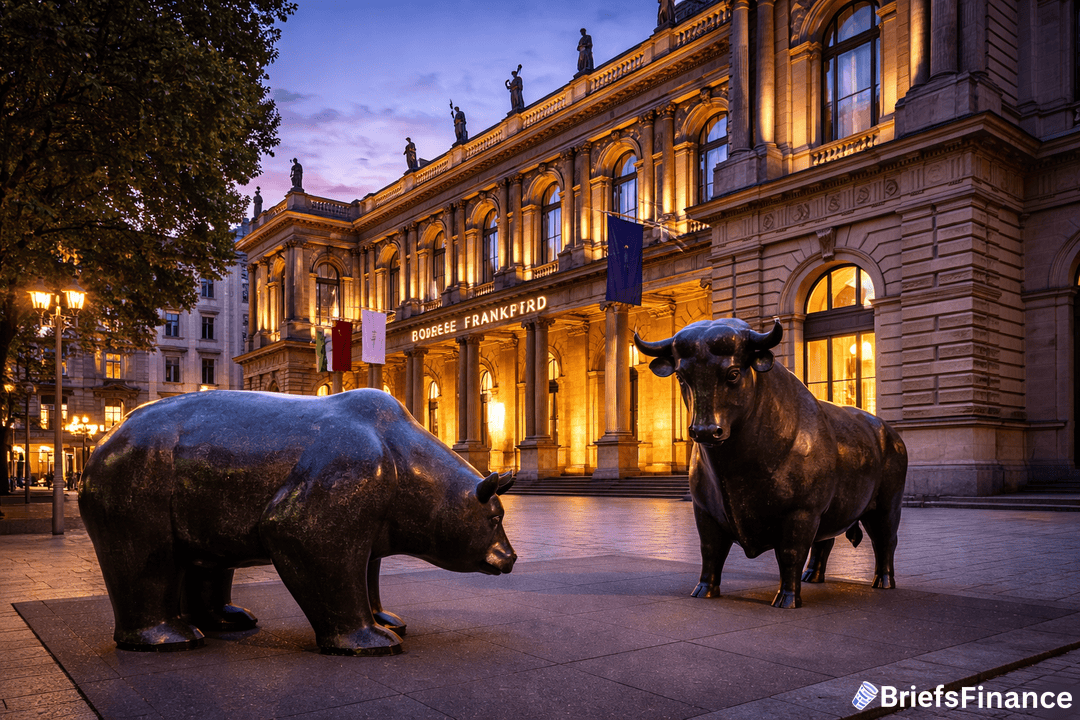
One of the oldest stock exchanges in Europe just put real money behind crypto. Deutsche Borse runs the Frankfurt stock exchange. It handles trillions of dollars in trades each year. And it just spent $200 million to buy a 1.5% stake in Kraken's parent firm, Payward. That deal values Kraken at about $13.3 billion. This isn't a small bet. It's a signal.

Why This Deal Matters

When a company like Deutsche Borse writes a $200 million check for a crypto exchange, it tells you where the smart money thinks the industry is going. This isn't some venture fund taking a flier. It's one of the most trusted financial firms in Europe saying: crypto is real, and we want in. The two firms first teamed up in December. The goal then was to help big European banks and asset managers trade crypto through safe, regulated channels. This new deal makes that partnership deeper and more lasting. Why Kraken: The exchange has made a name for itself as one of the more by-the-book platforms in the space. It follows rules. It works with regulators. That matters a lot to big investors who can't afford to trade on shady platforms. In plain terms: Think of it like this. Deutsche Borse is the adult in the room. Kraken is the crypto native. By teaming up, they're trying to build a bridge between old-school finance and the new world of digital assets.

The Bigger Trend

Kraken isn't the only one getting love from the old guard. Coinbase has been building ties with Wall Street banks. Several European exchanges have launched their own crypto trading tools in the past year. The line between "crypto" and "normal finance" gets thinner with every deal like this. Five years ago, most banks wouldn't touch crypto. Now they're investing in it, trading it, and building products around it.

What this means for crypto investors: More big money coming into the space is a good thing. It adds depth. It adds trust. And it makes it harder for regulators to shut things down.

What to Watch

The deal still needs a green light from regulators. That's expected in the second quarter. If it goes through, Kraken gets a powerful partner for growing in Europe. And Deutsche Borse gets a foothold in a market that's only going to get bigger.

What It Could Mean for U.S. Investors

If this model works in Europe, it could spread to the U.S. too. American exchanges like the NYSE and Nasdaq have been eyeing the crypto space for years. A success story in Frankfurt could push them to make similar moves. For U.S. crypto investors, more traditional money flowing in means more buyers, more liquidity, and less chance of wild price swings caused by thin order books. It also means more rules which cuts both ways. More rules make crypto safer. But they also limit some of the freedom that drew people to the space in the first place. The bottom line: The old guard is moving in. That's good for the long-term health of the market. Whether it's good for the wild-west energy that crypto fans love is another question.

Disclosure

Get Market Briefs delivered to your inbox every morning for free!

No fluff. No noise. No politics. Just finance news you can read in 5 minutes.

Blogs

April 13, 2026
What Is Free Cash Flow? How To Find It & Why It's Important
  • Free cash flow is the cash a company has left after paying its bills and putting money back into the business.
  • Investors use free cash flow to figure out what a company is really worth - and if the stock is a good deal.
  • You can find free cash flow on a company's cash flow report, one of three key reports every public company files.
Read More
April 13, 2026
Non Taxable Income: What It Is and Why Investors Care

Non taxable income is money you earn that the IRS does not tax - like Roth IRA cash, muni bond interest, and certain investment gains. The U.S. tax code taxes workers, investors, and business owners at very different rates. Tools like Roth accounts, muni bonds, and real estate write-offs can help you keep more of what you earn.

Read More
April 11, 2026
Nasdaq Index Fund: A Beginner's Guide to Investing in the Nasdaq 100
  • A Nasdaq index fund lets you invest in the 100 biggest non-bank companies on the stock market all at once.
  • You can access the Nasdaq through index funds, mutual funds, or ETFs like QQQ - each with its own fees, trading rules, and style.
  • Picking the right Nasdaq index fund comes down to three things: who runs it, what is in it, and what it costs.
Read More
April 11, 2026
What Is Wealth? It's Not What Most People Think
  • Wealth is about owning assets that grow and pay you - not just earning a high salary.
  • In a capitalist system, there are two ways to get paid: from your labor and from your capital.
  • Building wealth takes a shift in mindset, a money system, and the habit of investing before you spend.
Read More
April 10, 2026
Micron Stock: The AI Memory Play Most Investors Are Missing
  • Micron (MU) is the only U.S. company that makes HBM chips - the short-term memory layer that AI systems need to run.
  • By early 2026, data centers were using about 70% of all memory chips made in the world, creating an 18-month backlog for new orders.
  • Micron's DRAM - or short-term memory chip - revenue jumped 69% year over year, and the company shifted away from consumer products to focus almost entirely on AI.
Read More
April 10, 2026
What Is Working Capital? What Investors Need To Know
  • Working capital is current assets minus current liabilities - it shows if a business can pay its short-term bills.
  • You find it on a company's balance sheet inside its 10-K report.
  • Changes in working capital show up on the cash flow statement and affect how much cash a business really makes.
Read More
April 9, 2026
What Is a Meme Stock? A Simple Guide for New Investors

You've probably heard the term "meme stock" thrown around on […]

Read More
April 9, 2026
Enterprise Value Formula: What It Is and How to Calculate It
  • Enterprise value (EV) shows what a company is really worth - debt and cash included - not just its stock price
  • The enterprise value formula is: Market Cap + Total Debt - Cash and Cash Equivalents
  • Investors use EV with metrics like EBITDA to compare stocks more fairly than market cap alone
Read More
April 8, 2026
Return on Equity: What It Is and How to Use It
  • Return on equity (ROE) measures how much profit a company earns for every dollar of shareholder equity
  • The formula is simple: net income divided by shareholder equity
  • A higher ROE can signal a company that is good at turning investor money into profit - but it is not the full picture
Read More
April 4, 2026
Personal Finance Books That Actually Teach You to Build Wealth

Most investors grow up hearing the same financial advice. Study […]

Read More
1 2 3 17
Share via
Copy link












