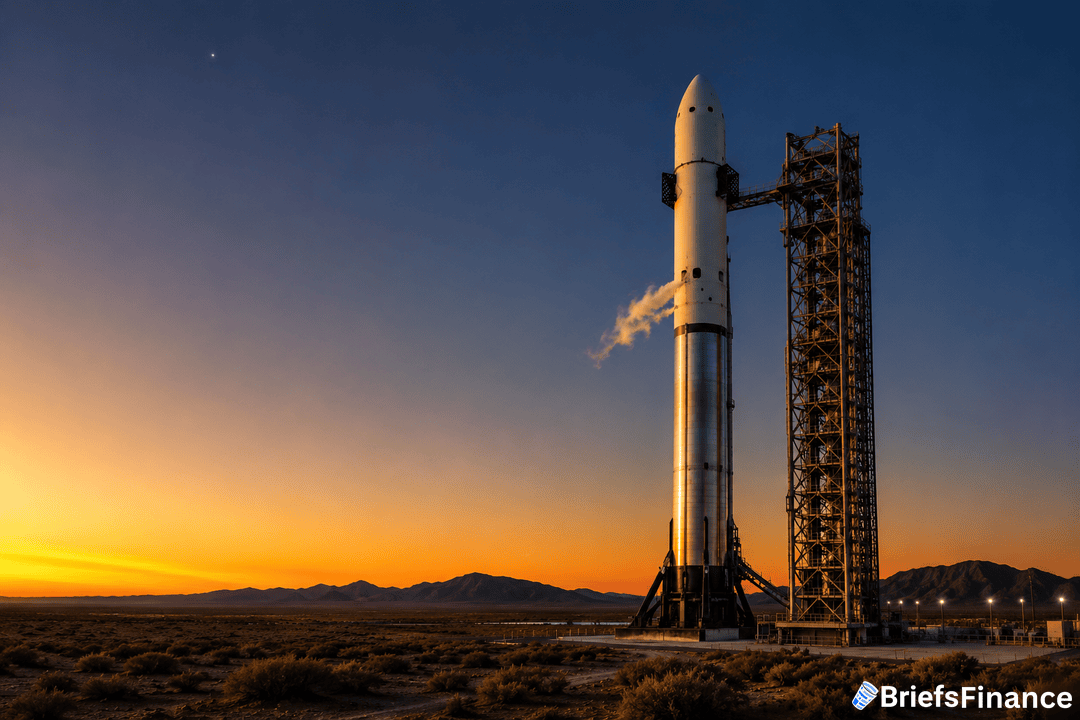
The pitch is wild: AI compute demand is so big that the cheapest place to run data centers might be space. The catch is there are not enough rockets to get them there.
Who Just Raised $275 Million
Cowboy Space Corporation closed a $275 million Series B this week at a $2 billion valuation, with Index Ventures leading and Breakthrough Energy Ventures, Construct Capital, IVP, and SAIC joining.
The startup used to be called Aetherflux, with CEO Baiju Bhatt (a co-founder of Robinhood) launching it in 2024 to beam solar power from space back to Earth.
The plan has changed, and Cowboy Space now wants to build the rocket and the data center that flies on top of it.
Why Build Both
Bhatt's first idea was simpler - collect solar power in orbit, send it down to Earth - and then he started doing the math on AI's electricity bill.
If you can collect that much solar power in space, the cheaper move is to skip beaming it home and run computers up there instead, since solar is constant in orbit, cooling is free, and there are no land fights or local grid issues.
But the math only works if you can actually get the data centers into orbit, and right now, you cannot.
We break down the deals worth your attention in Market Briefs every weekday, delivered with a free investing masterclass when you join.
The Rocket Problem
SpaceX and Blue Origin are the two big U.S. private rocket players, and both are running into trouble. SpaceX's Starship is still in test mode, and Blue Origin's New Glenn failed to deliver a satellite during its third launch in April.
Smaller rocket startups like Stoke Space, Firefly, and Relativity have spent years trying to get systems up and running.
Bhatt said he talked to multiple launch firms and could not get enough capacity to scale an orbital data center business, so he is building his own rocket.
Each Cowboy Space satellite is built to carry just under 800 GPUs and pull a full megawatt of power, with the rocket carrying it sized to be more powerful than SpaceX's Falcon 9 and smaller than Starship.
The first launch is targeted for late 2028, with hires already in place including a former Blue Origin propulsion engineer and a former SpaceX launch director.
Worth Noting
Bhatt admits part of the appeal is personal: "It gives me a reason to wear a cowboy hat and also grow this sick mustache."
The mustache is real, but the plan to put data centers in orbit by 2028 is still a question mark.
If you want this kind of breakdown every morning, Market Briefs is the daily five-minute read for investors, plus a free 45-minute course on finding investments when you sign up.