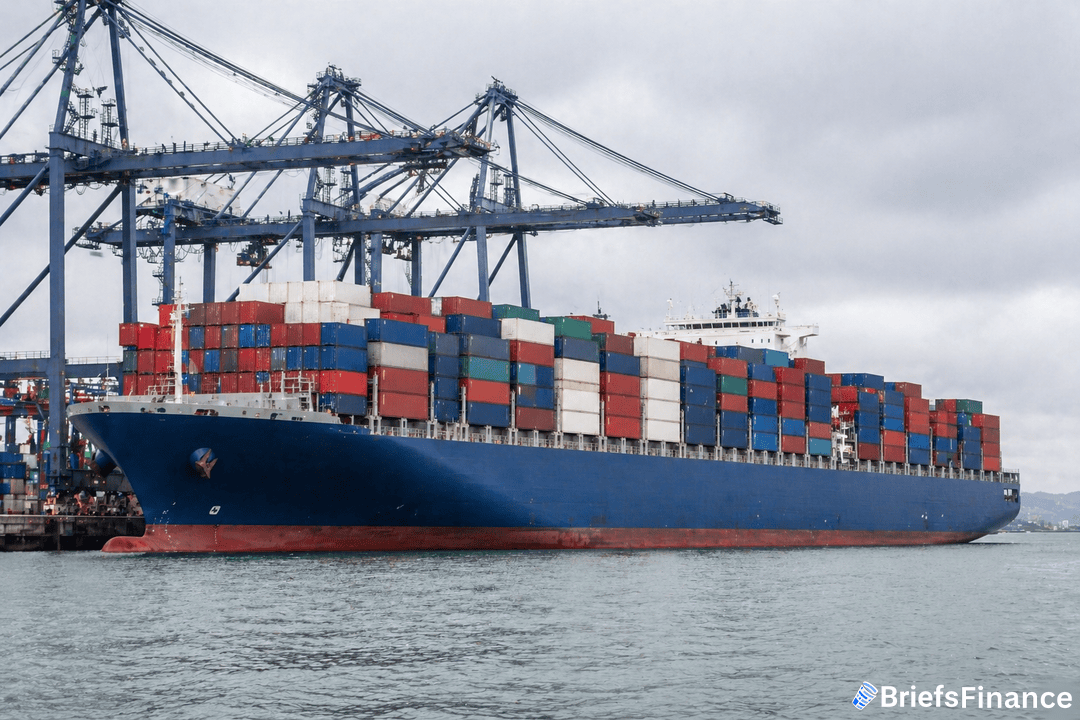
Container shipping was already a tough business going into 2026. The Iran war made it a worse one.
COSCO Shipping Holdings, China's biggest container shipping operator, said Wednesday that its Q1 profit fell roughly 50%. Container freight rates are averaging 14% lower year over year, the main pressure point on the quarter.
Where The Profit Drop Came From
The collapse in freight rates is the headline story. After a 2024-25 stretch where rates spiked on capacity tightness and rerouting around the Red Sea, the market has cycled the other way. Rates are still elevated versus pre-2020 norms, but well below the highs that drove the industry's record profits.
COSCO said the Iran war has created "significant challenges" for the industry, even though its own Mideast exposure is small. The war disrupted vessel traffic through the Strait of Hormuz, and the shipping industry has been working around the chokepoint for two months.
What The Outlook Looks Like
COSCO said its shipping capacity tied to the Mideast accounts for a small share of global volumes. The company has resumed new bookings for general cargo to destinations including the UAE and Saudi Arabia, signaling some normalization in those routes.
The bigger risk for COSCO is not the war itself but the underlying rate cycle. With global trade growth slowing and capacity coming back online, rates are likely to stay under pressure through the rest of 2026.
What To Watch
Other container lines, including Maersk and Hapag-Lloyd, have flagged similar margin pressure. The next data points are their Q1 results, which will tell investors whether COSCO's 50% profit drop is a peer-wide story or a COSCO-specific one. Investors should also watch any further changes to traffic through Hormuz, which would change the math again.