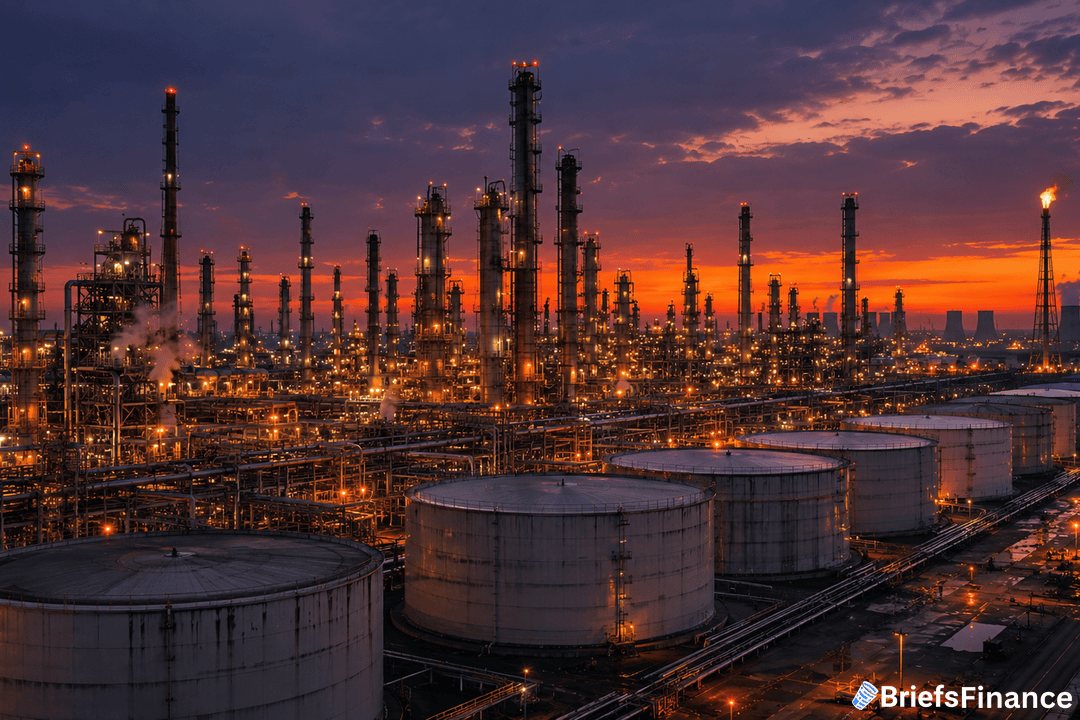
China is the world's biggest oil buyer. In April it bought a lot less, with crude imports plunging 20% to a three-year low and refiners cutting output to match.
The shipments that didn't show up were mostly Middle Eastern.
The Numbers Behind The Cut
Chinese refiners processed 54.65 million tonnes of oil in April, which is 11% less than March and 5.8% lower than the same month last year.
Refinery use rates sank to 63.59%, down 4.7 percentage points from a year earlier and 5.13 points from March. State-owned refiners cut runs the hardest, dropping to multi-year lows.
Crude imports came in at 9.25 million barrels per day, the lowest level since July 2022. Most of the missing barrels are Middle Eastern.
About half of China's crude usually comes through the Strait of Hormuz, the narrow shipping lane that handles roughly a fifth of the world's LNG. The Strait has been mostly shut since the war with Iran started in late February.
Hormuz crude flows to China dropped to about 648,000 barrels per day in April. That's down from an average of 4.07 million barrels per day in the first three months of the year.
That's a vital piece of plumbing for Asian energy markets, and it's clogged.
Market Briefs breaks down moves like this every weekday in five minutes, and you get a free investing masterclass when you join.
What China Is Doing About It
Beijing is rationing. Oil product exports plunged 38% to 3.12 million tonnes, the lowest in nearly a decade, because the government wants more diesel and gasoline kept at home.
That move is meant to keep domestic fuel stations supplied and prices from spiking. Refiners can't earn back margins by exporting if they're forced to keep product in country.
Coal imports also dropped 13% to 33.08 million tonnes, with China leaning on its own coal output instead of paying higher world prices.
The whole supply chain is rebalancing around one bottleneck. Refiners that depend on Middle East crude are scaling back, while those with access to Russian or domestic supply are filling some of the gap.
Crude prices are sitting near $107 a barrel, the highest level since 2022. Every dollar above last year's average shows up in Chinese refiner margins.
China stockpiled aggressively in early 2026, importing a record amount of crude in February before the war broke out. Those reserves have cushioned the April hit, but they won't last forever.
Independent Chinese refiners (known as teapots) have been hit even harder than state-owned firms because they have weaker access to long-term supply contracts and pricier spot crude.
Worth Noting
The Trump-Xi summit in Beijing this week could bring pledges to buy more American oil and commodities, which would help on the margin.
Watch the May refinery data due in early June for a sign of whether the cuts deepened or eased. If runs stay near 63%, the supply crunch is still in full effect.
It would not fix Hormuz.
If you want to stay ahead of stories like the Hormuz crunch, join Market Briefs every weekday and pick up a 45-minute investing course as a bonus.