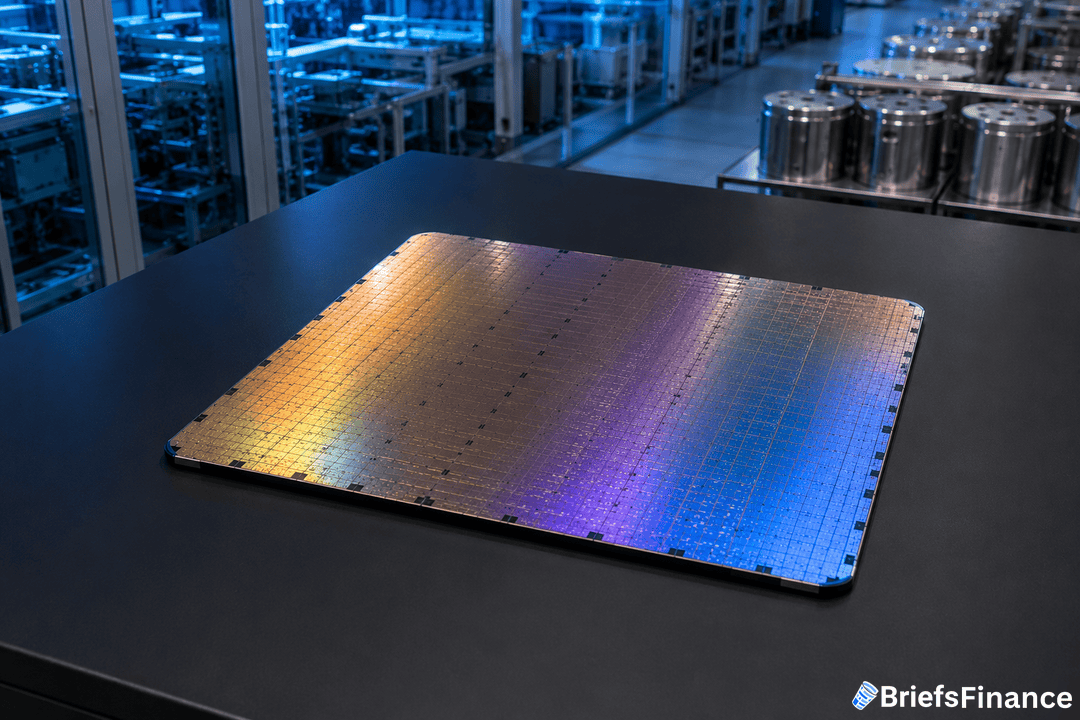
In February, Cerebras was a $23 billion company. By Monday, the same business was asking public market buyers to pay up to $48.8 billion for it. The chips, customers, and factories haven't changed in three months. Just the price tag has.
Cerebras Raised Its Range Twice In Eight Days
Cerebras lifted its IPO range on Monday for the second time in a week, with the chipmaker now planning to sell shares at $150 to $160 each. That's up from the $115 to $125 it floated last week, and at the top end the deal would pull in up to $4.8 billion in proceeds.
A jump that size usually points to one thing: investors are lining up faster than the company expected, and the bankers want to leave less money on the table. Nasdaq expects shares to start trading on May 14.
Why it matters: A strong Cerebras debut would crack open the IPO window for a long line of AI hardware startups that have been waiting on the sidelines.
Get the moves Wall Street is actually watching in Market Briefs every morning, plus a free investing masterclass when you sign up.
Why Buyers Are Lining Up
The pitch is simple. Cerebras builds chips that train and run AI models, and it says those chips work faster than Nvidia's GPUs - the graphics processing units that power tools like ChatGPT - while costing less.
That speed pitch helped Cerebras lock in a $20 billion-plus commitment from OpenAI for a model that writes code, giving the company years of revenue before the IPO even prices. In March, Amazon Web Services - the biggest cloud provider in the world - signed a deal to put Cerebras chips inside its own data centers.
Cerebras isn't just selling hardware either. It's stocking its own data centers and renting out compute time, which puts it in the same pool as the cloud giants buying its chips. That's an awkward seat to occupy, and it's part of why the offering is being so closely watched.
What To Watch
The Cerebras name has been surfacing in Elon Musk's lawsuit against OpenAI CEO Sam Altman. In a California courtroom last week, OpenAI co-founder Greg Brockman said Cerebras' planned chips were "the compute we thought we were going to need." Brockman also testified that OpenAI once discussed merging with Cerebras, and that Musk was open to a deal.
Three things investors will watch when shares start trading Thursday:
- Whether the stock pops or fades in the first session, which sets the tone for the next wave of AI IPOs
- Whether Nvidia bulls treat the debut as a real threat or a sideshow
- How much of the float gets snapped up by long-only funds versus traders flipping for a quick gain
The market will decide whether $48.8 billion is the floor or the ceiling.
If you want this kind of read every weekday morning, join 350,000+ investors reading Market Briefs and get a 45-minute investing course thrown in as a bonus.