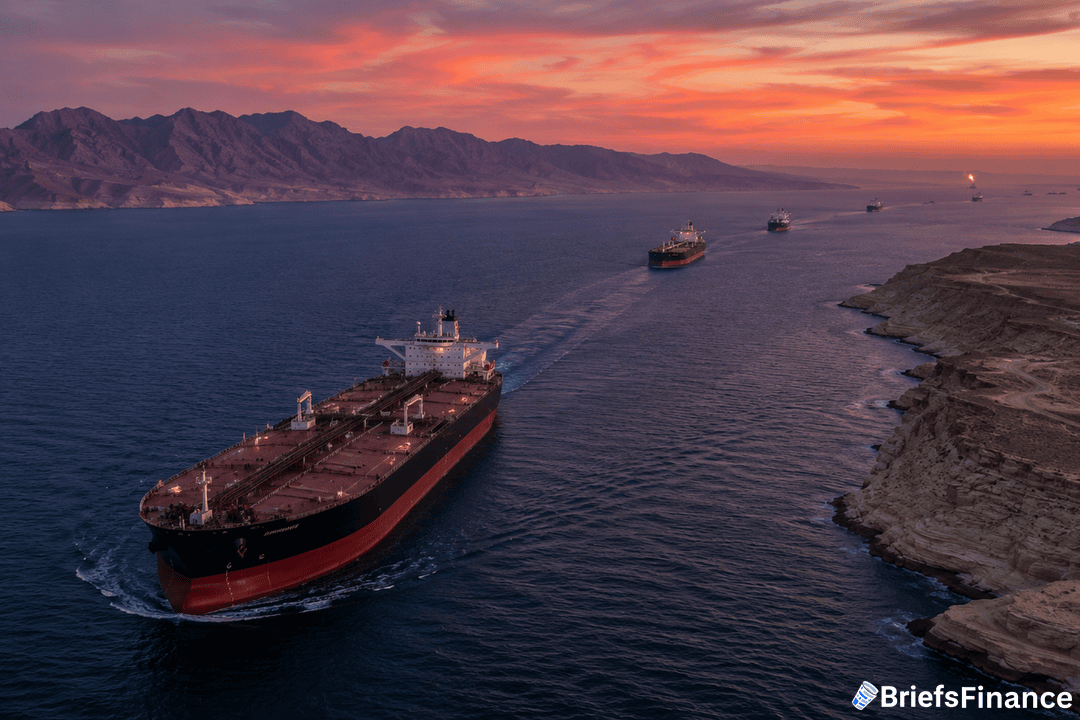
Brent crude has surged 74% this year, with the Iran war doing most of the work.
Now the second-most powerful country in OPEC just left the group, and the UAE says it isn't political. The timing says otherwise.
The Pitch From Abu Dhabi
UAE Energy Minister Suhail Mohamed Al Mazrouei posted Saturday on X to explain the exit, framing the decision as economic rather than political.
The move is "based solely on the national interest of the United Arab Emirates," he wrote, calling out the country's role as "a reliable energy supplier" with an "unwavering commitment to maintaining market stability."
He also said the exit isn't a sign of "any divisions" between the UAE and its OPEC partners.
The UAE has been an OPEC member since 1967, which is before the country existed as the UAE in its current form. Walking away from a 59-year membership is a structural move, however the minister frames it.
We break down moves like this every morning in Market Briefs - five minutes a day, plus a free investing masterclass when you sign up.
The War Is Doing The Real Talking
Before the Iran war, the UAE was pumping just over 3 million barrels per day, broadly in line with OPEC+ targets, and Abu Dhabi had been aiming for a long-term capacity of 4.9 million barrels per day.
Now the country is producing between 1.8 and 2.1 million barrels per day, and that drop isn't a choice.
Repeated attacks on energy infrastructure and shipping have curtailed UAE output, and flows through the Strait of Hormuz, the world's most important oil chokepoint, are severely limited.
Inside an OPEC built around production quotas, that's a hard situation to manage. Outside, the UAE has more room to recover on its own terms.
Jorge León at Rystad Energy told CNBC the UAE matters more than its quota suggests, calling it one of the few countries (along with Saudi Arabia) with real spare production capacity.
Spare capacity is the idle output that can be brought online fast to handle a crisis, and the UAE and Saudi Arabia together control most of the world's 4-million-barrel-plus cushion.
The Long-Term Play
Abu Dhabi is also accelerating construction of a new West-East pipeline to Fujairah, with the project set to come online in 2027 and double the export capacity of Abu Dhabi National Oil Company (ADNOC).
The point of the pipeline: skip the Strait of Hormuz entirely. That's a long-term bet that the chokepoint will keep being a chokepoint.
It's also the kind of infrastructure decision that says more about the future than any press release does.
Worth Noting
Brent crude July futures closed Friday at $109.26 a barrel, up more than 3% on the day, while WTI June futures jumped more than 4% to $105.42.
Brent is up 74% year to date, even after pulling back from a late-April high of $118.
The UAE just left OPEC, oil is near triple digits, and a new pipeline is being built to skip the Persian Gulf. The energy map is being redrawn in real time.
Join 350,000+ investors reading Market Briefs for the daily read on oil, geopolitics, and what they actually do to your portfolio. You'll also get a 45-minute investing course thrown in.