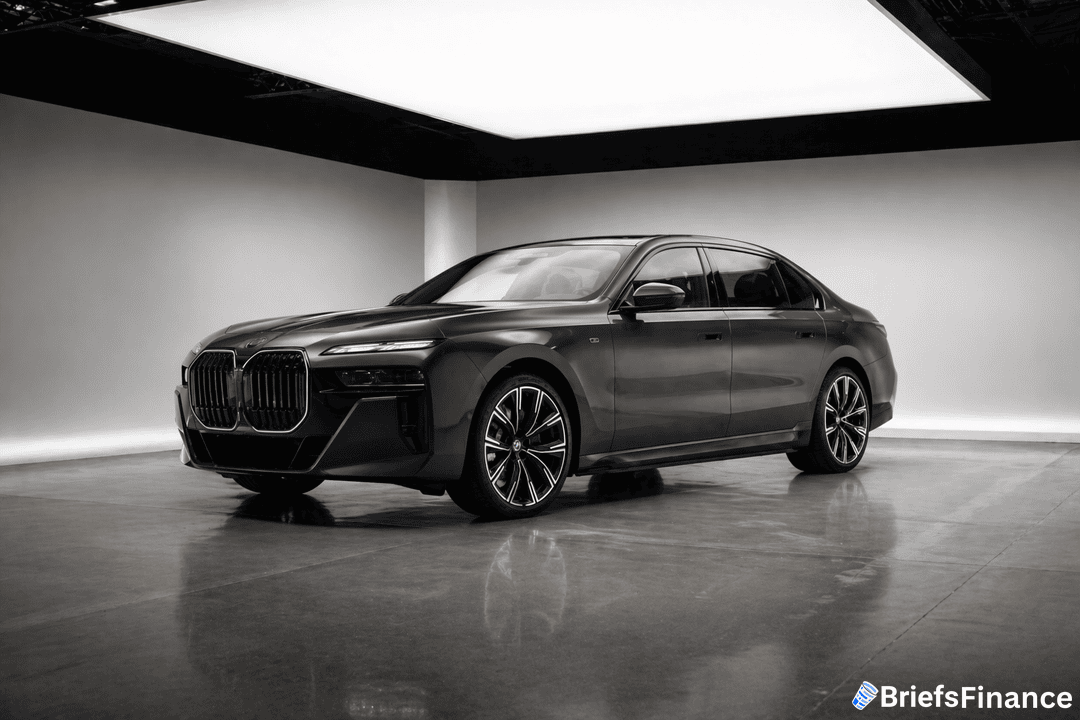
BMW premiered the new 7 Series flagship sedan on Wednesday, April 22, 2026, with simultaneous events in Beijing and New York. The automaker held the Asia debut at Auto China 2026 and the Western debut at Grand Central Terminal.
That dual premiere is unusual for BMW and underscores how much the company sees at stake for the flagship sedan segment.
What Is New
BMW is calling this the most extensive 7 Series update in its history. The seventh generation inherits several key technology and styling features from the iX3, which was the first car built on BMW's Neue Klasse platform.
Tech highlights:
- A new iDrive system with a central touchscreen.
- Panoramic Vision, a pillar-to-pillar projection at the base of the windshield.
- Interior design pulled forward from the Neue Klasse generation.
Start of production and worldwide market launch are planned for July 2026, about three months after the reveal.
The Dual Debut
Choosing Beijing and New York tells you where BMW sees the luxury sedan market in 2026. China is the largest and fastest-growing market for flagship sedans, while the U.S. remains the key brand-status market for BMW.
Holding both premieres on the same day puts equal weight on both regions, which is a message as much to dealers as to buyers. It also hedges political risk, since a big China-only reveal would read differently in Washington.
Why It Matters for BMW
Flagship sedans are losing share to SUVs and EVs every year, so the 7 Series has to prove that a traditional luxury sedan still matters. If Neue Klasse tech can make the car feel fresh next to the Mercedes-Benz S-Class and Audi A8, BMW keeps its halo vehicle relevant for another cycle.
For BMW investors, the 7 Series is less about unit volume and more about brand positioning. A successful refresh supports pricing power across the entire lineup, including high-margin SUVs and the M performance range.
The Electric Mix Question
BMW is launching the new 7 Series across combustion, plug-in hybrid, and fully electric variants, which lets dealers match regional demand. That flexibility is more important now than during the last cycle, because EV demand curves have diverged sharply between China, Europe, and the U.S.
In China, the fully electric i7 variant will carry most of the volume, while U.S. buyers still lean toward gas or plug-in hybrid. BMW is betting that a single platform serving all three drivetrains gives it more agility than rivals betting hard on EV-only flagships.
What to Watch
Early Chinese order data will be the first signal of whether Neue Klasse tech resonates with flagship buyers. U.S. dealer feedback at July launch will be the second.
If either market pushes back on the new design language, BMW has a bigger brand problem than the 7 Series alone.