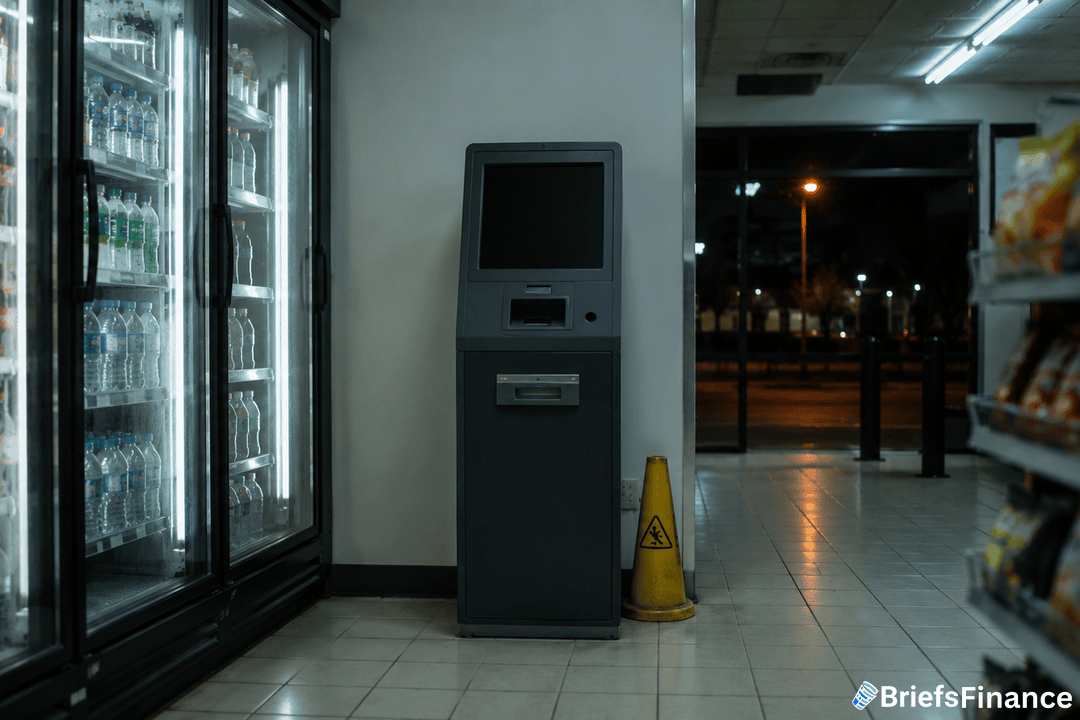
The biggest bitcoin ATM network in North America just went completely offline. Bitcoin Depot filed for Chapter 11 bankruptcy in Texas on Monday and unplugged its entire fleet of more than 9,000 kiosks across the US, Canada, and Australia.
The company ran roughly 28% of the US crypto ATM market at its peak.
Regulations, Lawsuits, And A Wallet Breach Stacked Up
Bitcoin Depot's CEO, Alex Holmes, said the regulatory environment made the business "no longer viable."
State regulators have been tightening rules on crypto ATMs for two years, lowering transaction limits, raising compliance costs, and in some places banning the machines outright.
Connecticut suspended Bitcoin Depot's money transmitter license in March after finding the company charged fees above the state's 15% cap and failed to fully refund fraud victims.
Then came the lawsuits, with attorneys general in Massachusetts and Iowa leading legal action over claims that the kiosks helped facilitate crypto scams.
Bitcoin Depot also disclosed a $3.7 million crypto wallet breach earlier this year and warned investors of weaknesses in how the company handled and counted cash.
The financials told the rest of the story, with Q1 revenue coming in at roughly $83.5 million, down 49% from a year earlier.
The company posted a $9.5 million loss versus a $12.2 million profit the year before, and gross profit fell 85%.
Bitcoin Depot hired Vinson & Elkins as its bankruptcy counsel and Portage Point Partners as restructuring adviser, and the company filed standard first-day motions to keep the wind-down orderly.
For more on the regulatory wave reshaping crypto investing, Market Briefs breaks it down every morning - and you get a free investing masterclass when you sign up.
The Crypto-ATM Model Was Already Breaking
The crypto ATM was always a strange middle ground, with most retail crypto investors having moved to apps like Coinbase or Cash App years ago.
The kiosks ended up serving a much smaller customer base, and that base attracted heavier scrutiny from state regulators worried about scams targeting older and less tech-savvy users.
The math stopped working as compliance costs went up, transaction limits went down, lawsuits piled in, and revenue collapsed. Bitcoin Depot was the biggest operator in a US crypto-ATM industry that has been shrinking for two years under regulatory pressure.
Founded in 2016 and headquartered in Atlanta, the company at its peak had cash-to-bitcoin terminals in retail locations across 47 US states plus Canada and Australia. That entire footprint is now offline.
What To Watch
The Chapter 11 process will fold in Bitcoin Depot's Canadian business, with formal restructuring proceedings there expected to follow shortly.
Smaller US operators that have been holding on through the same regulatory squeeze are now operating in a market without its biggest player.
Roughly 28% market share in the US is now in play, but the rules that broke Bitcoin Depot apply to every competitor still standing.
For investors holding the stock, a meaningful recovery looks unlikely given the net loss, the wallet breach, and the ongoing lawsuits.
The 9,000-plus kiosks are now offline as the company winds down.
If you want to see where regulation is actually hitting crypto next, join 350,000+ investors at Market Briefs - the daily newsletter comes with a 45-minute investing course as a bonus.