A trade deal between the EU and the UAE was never urgent for Austria.
Then a $60 billion chemicals merger closed in March, with Vienna at the center of it.
Austrian officials are now pushing Brussels to move faster on the EU-UAE trade deal, which opened in 2025 and has been moving at the usual EU pace.
The reason for the push: Austria has a lot more skin in the game.
What The Merger Did
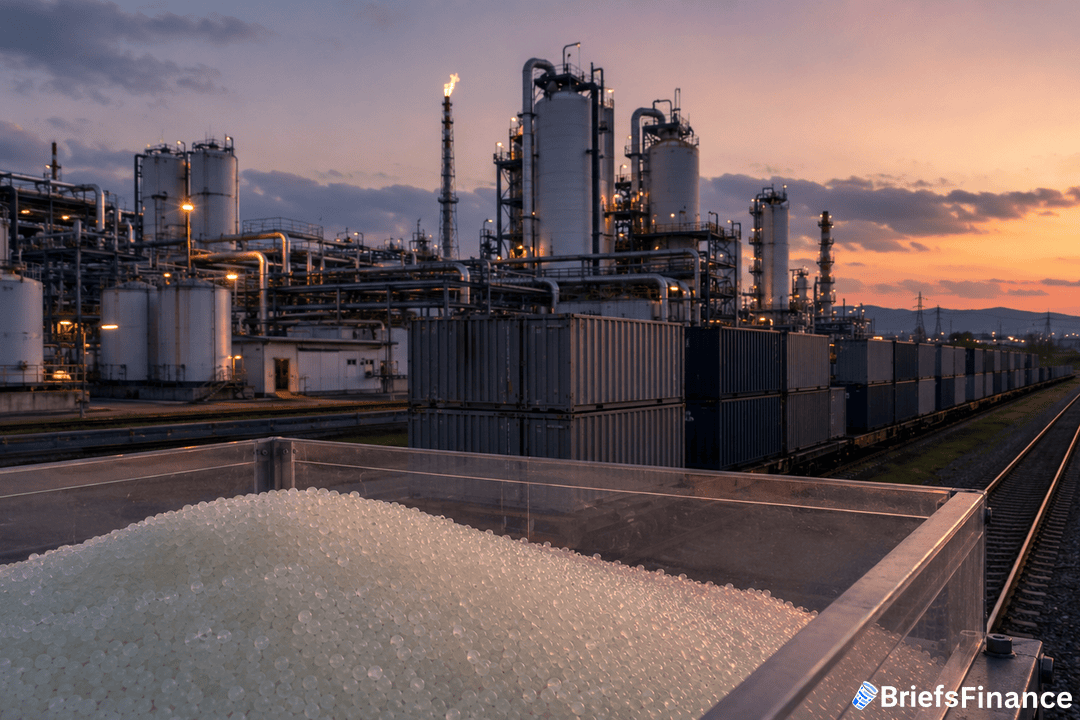
In March, Austria's OMV and Abu Dhabi's ADNOC closed a deal to form Borouge International.
The new firm is now the world's fourth-largest maker of polyolefins.
Polyolefins are the most common type of plastic, used in things like food wrap, pipes, and car parts.
The firm is based in Austria for tax, with a regional hub in the UAE.
It also folded in Canada's Nova Chemicals as part of the same deal.
In plain terms, Austria now owns a slice of a roughly $60 billion plastics giant.
Its biggest growth markets are in the Middle East and Asia.
Lower tariffs and clearer rules between the EU and the UAE go straight to that firm's bottom line.
If you want the simple version of trade deals like this, Market Briefs covers what they really mean for investors - and you get a free investing masterclass when you sign up.
Why The EU-UAE Deal Matters
The talks aim to cut tariffs on goods and open up services and digital trade.
They also aim to deepen ties on green power, hydrogen, and key minerals, with the UAE already the EU's biggest trade partner in the Gulf and Austria's top Gulf trade partner too.
Non-oil trade between the two hit $2.1 billion in 2025, up about 16% on the year, which Austrian Foreign Minister Beate Meinl-Reisinger has used to frame the push around being open.
She has said that with rising walls in other places, Europe needs to open doors instead of close them.
That framing is partly about optics, but it also lines up with what Austrian firms actually want.
Worth Noting
The first round of talks happened in June 2025, with more rounds since then, but no one is saying when the deal might close.
Most EU deals take years, and Austria's pull in Brussels is limited, though the country now has a homegrown $60 billion reason to keep the topic on the agenda even as the corporate deal closed in two years while the trade deal it's pushing along may take longer.
For now, Borouge ships its plastic into Europe under the EU's standard tariff lines, and a new deal would also help smaller Austrian firms in cars, food, and tech that want to sell into the Gulf.
Vienna says a wider win is on the line, not just one big firm, with more talks expected later this year and investors with stakes in EU chemicals and Gulf trade names watching for any sign of a faster path.
If you want the daily news on global trade and what it means for your portfolio, join 350,000+ investors reading Market Briefs - and pick up a 45-minute investing course as a free bonus.