Free NewsletterPro Login

Amazon to Invest $12 Billion in AI Data Centers in Louisiana

A stylized illustration of a cylindrical cup with blue arrows and lines indicating a swirling or rotational motion inside the cup.
Published Feb 23, 2026
Share:
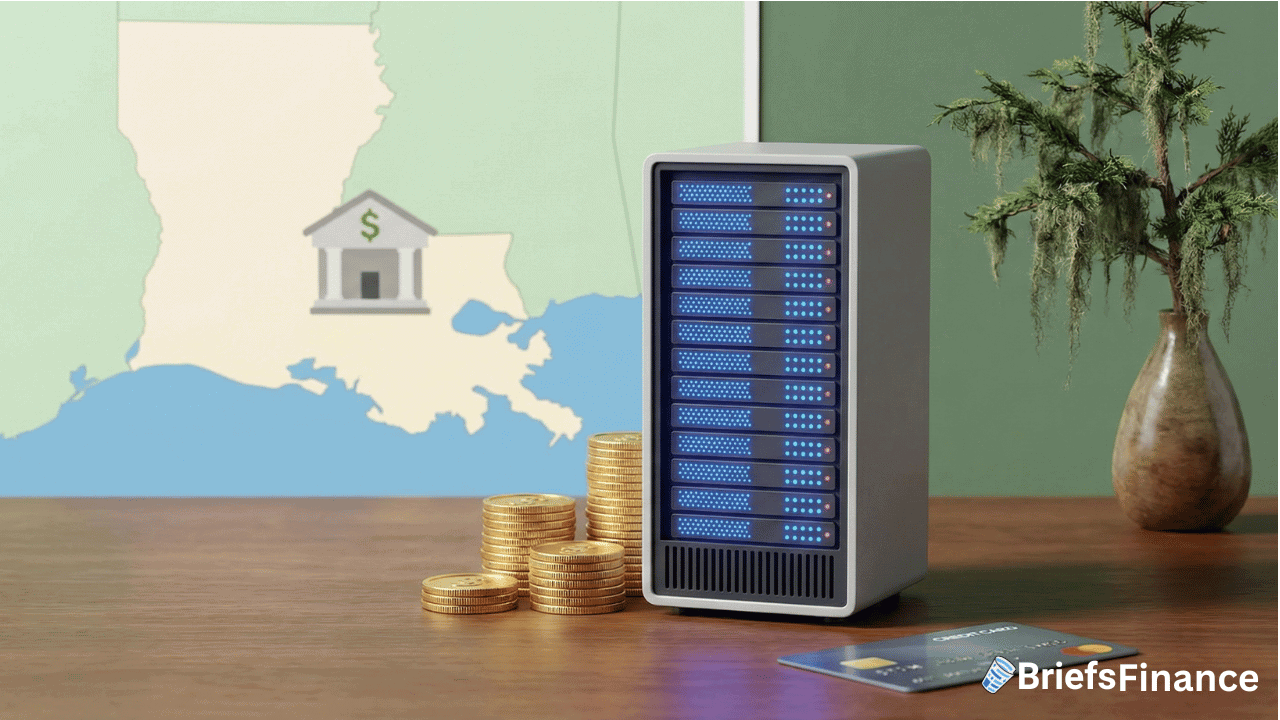
A small server, stacked coins, and a credit card are on a desk with a map and bank illustration in the background. "BriefsFinance" logo appears in the corner.
Summary:

  • Amazon plans to spend $12 billion on AI data centers in Caddo and Bossier Parishes, Louisiana.
  • The investment is expected to create 540 full-time jobs and support around 1,700 additional roles.
  • Amazon's total capital expenditures for 2026 are projected at $200 billion, surpassing other tech companies.

Amazon's Major Investment in Louisiana

Amazon has announced plans to invest $12 billion to develop artificial intelligence data centers in Louisiana.

The new campuses will be located in the Caddo and Bossier Parishes in northwestern Louisiana. This investment is part of Amazon's larger strategy to expand its data center capabilities to support AI and cloud computing initiatives.

Job Creation and Economic Impact

The company expects the development of these data centers to create 540 full-time jobs.

Additionally, around 1,700 other roles will be supported, including positions for electricians, HVAC technicians, and security specialists. This job creation is seen as a positive economic boost for the local communities.

Amazon's Capital Expenditures for 2026

Amazon's total capital expenditures for the year 2026 are projected to reach $200 billion. This figure is notably higher than the combined forecast of nearly $700 billion from other major tech companies, known as hyperscalers.

This significant spending is primarily focused on AI-related projects, including data centers, chips, and networking equipment.

Partnership and Infrastructure Investments

To develop the data centers, Amazon is collaborating with Stack Infrastructure.

The company has also committed to investing up to $400 million in public water infrastructure to support the campus. Amazon has pledged to use only surplus water from the surrounding area, ensuring that local water supplies are not strained.

Challenges and Community Concerns

Despite the investment's potential benefits, local communities have expressed concerns about the environmental impact of data centers.

Residents have noted that these facilities can place a strain on electricity and water resources. In the past, Microsoft faced backlash in Wisconsin, leading them to abandon a planned data center site due to similar concerns.

In response to these challenges, Amazon stated that it worked closely with the local utility, Southwestern Electric Power Company, to ensure they cover all costs associated with the campus, including upgrades to energy infrastructure.

The company also plans to utilize natural air for cooling the data centers whenever possible to reduce electricity demand.

Wall Street's Response to Amazon's Spending Plans

Amazon's ambitious spending plans have faced skepticism from Wall Street. Following its February 5 earnings report, the company's shares fell for nine consecutive days, resulting in a loss of over $450 billion in market value.

Despite the doubts, the push for AI data centers continues as tech companies race to expand their capabilities in this growing sector.

What's Next for Amazon's AI Data Centers?

As Amazon moves forward with its investment in Louisiana, the company aims to bolster its infrastructure to meet the increasing demand for AI services.

The development of these data centers is part of a broader trend in the tech industry, where companies are heavily investing in facilities to support advanced AI models and applications. The outcome of this investment will be closely watched as it may set a precedent for future tech developments in the region.

Disclosure

Get Market Briefs delivered to your inbox every morning for free!

No fluff. No noise. No politics. Just finance news you can read in 5 minutes.

Blogs

April 29, 2026
What Is Blockchain? A Plain English Guide For Investors
  • Blockchain is a digital ledger that records every transaction on a public network.
  • Once a transaction is recorded, it cannot be changed or deleted.
  • It is the foundation of Bitcoin, Ethereum, and thousands of other cryptocurrencies.

Read More
April 29, 2026
How To Negotiate Bills: The Script That Saves You Hundreds A Year
  • Most monthly bills are negotiable, even though most Americans never try.
  • A simple phone call with the right script can lower your phone, internet, and utility bills.
  • The key rule is to be nice. Customer service reps have more flexibility than most people realize.
Read More
April 29, 2026
75 15 10 Rule: The Budget That Builds Wealth On Autopilot
  • The 75 15 10 rule is a budgeting plan: spend at most 75% of your income, invest at least 15%, and save at least 10%.
  • It works by making sure you pay yourself before you spend.
  • Once your savings target is hit, you shift the 10% over to investing, becoming a 75/25 plan.
Read More
April 29, 2026
How To Rebalance Portfolio: The Strategy That Forces You To Buy Low And Sell High
  • Rebalancing means adjusting your portfolio back to your target allocation when it drifts too far.
  • The two main methods are time-based (rebalance once a year) and threshold-based (rebalance when allocation drifts more than 5%).
  • If you are still adding money, you can rebalance by directing new money instead of selling.
Read More
April 29, 2026
How To Buy Treasury Bonds: A Beginner's Guide
  • Treasury bonds are loans you make to the U.S. government. They are considered the safest investment in the world.
  • You can buy them at TreasuryDirect.gov directly or through any major brokerage.
  • There are three main types: T-Bills, Treasury Notes, and Treasury Bonds. The longer the term, the higher the interest rate.
Read More
April 29, 2026
Forward Vs Futures Contracts: What's The Real Difference?
  • Both forward and futures contracts are deals to buy or sell something at a set price on a future date.
  • Futures trade on exchanges. Forwards are private deals between two parties.
  • Most regular investors do not use either. They are mostly tools for businesses and big institutions.
Read More
April 29, 2026
Alternative Investments Explained: What They Are And Why They Matter
  • Alternative investments are anything that is not a regular stock or bond.
  • The most common types are precious metals, crypto, real estate, commodities, and collectibles.
  • Most investors should hold 5% to 25% of their portfolio in alternatives, depending on risk tolerance.
Read More
April 29, 2026
How To Buy Bitcoin For Beginners: 3 Simple Ways
  • There are three main ways to buy Bitcoin: directly on an exchange, through a Bitcoin ETF, or through a Bitcoin miner stock.
  • Each has its own pros, cons, and tax setup.
  • Most beginners do best starting small and using dollar cost averaging.
Read More
April 29, 2026
How To Follow Smart Money: The 5 Market Shifts Framework
  • "Smart money" means big investors with deep research teams and fast information.
  • You can follow them by watching for 5 types of market shifts.
  • The goal is to spot where money is moving before it shows up on CNBC.
Read More
April 29, 2026
Insider Trading Meaning: What It Really Is (And Why Some Of It Is Legal)
  • Insider trading means buying or selling a stock based on facts the public does not know yet.
  • Some insider trading is legal. Some is a federal crime that can send people to prison.
  • The SEC tracks every legal insider trade in a public file called Form 4.
Read More
1 2 3 19
Share via
Copy link