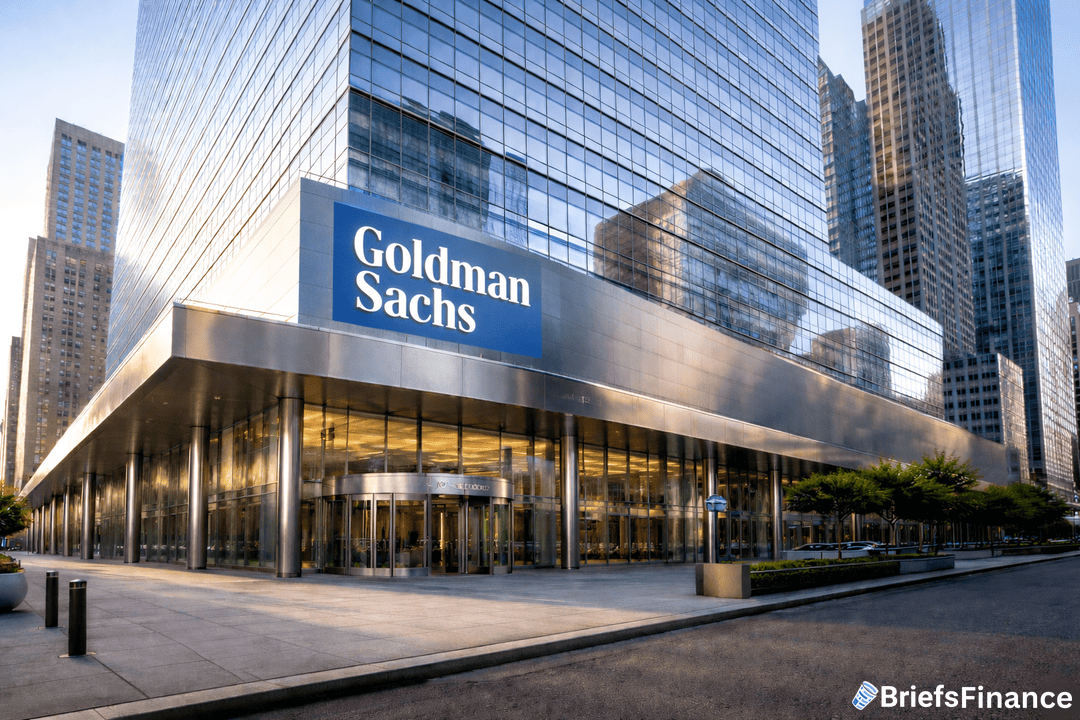
Goldman Sachs dropped its Q1 numbers Monday morning and beat Wall Street on almost every line, setting the tone for a week packed with bank earnings that will show how the biggest financial firms in America are handling a war, rising oil, and growing uncertainty about the second half of the year.
Goldman's Quarter
Goldman posted $17.55 in earnings per share - profit per share of stock - crushing the $16.47 estimate by nearly 7% as net revenue came in at $17.23 billion. It was the strongest first quarter for Goldman since 2021, when a surge in SPAC deals and IPO activity drove record results.
The star: Investment banking fees jumped 48% from a year ago, driven by a surge in mergers and acquisitions and strong equity underwriting activity as companies rushed to get deals done before the war widened. Equities trading revenue rose 27%, powered by the kind of market swings that create big opportunities for Wall Street trading desks.
The Global Banking and Markets unit brought in $12.74 billion, up 19%. Asset and Wealth Management added $4.08 billion in revenue, up 10%, as assets under management hit a record $3.65 trillion.
Goldman also returned $6.38 billion to shareholders through buybacks and dividends during the quarter.
CEO David Solomon said the results showed "resilience" in a tough environment, noting that Goldman's diversified revenue streams helped offset the drag from fixed income markets, where trading revenue fell 8% as bond market volatility spiked erratically.
Goldman's return on equity came in at 19.8% for the quarter, well above the firm's 15% target and a sign that the business model is generating strong returns even in a difficult environment.
The stock still fell about 3% in early trading despite the beat - with war shaking markets and oil above $100, investors looked past the numbers and focused on what comes next.
What's Coming This Week
JPMorgan and Wells Fargo report Tuesday, with Wall Street expecting JPM to post EPS of $5.44 (up 7%) and Wells Fargo to show revenue of $21.79 billion with EPS of $1.58. Citigroup also reports Tuesday morning.
Morgan Stanley and Bank of America follow Wednesday, while Taiwan Semiconductor and Netflix report Thursday - giving investors a full picture of how the largest companies in finance and tech are handling the current environment.
The KBW Bank Index dropped 6% in Q1 - its worst quarter since the 2023 regional banking crisis - after the Iran war and private credit fears spooked investors. UBS analyst Erika Najarian said the selloff left some big banks "on sale" while their fundamentals stayed strong, pointing to price-to-book values that look cheap compared to where they traded six months ago.
Worth Noting
Guidance matters more than the numbers this week. Investors want to know how bank leaders see the rest of 2026 shaping up with oil above $100 and inflation risk rising again.
Goldman's own forward estimate of $13.75 EPS for Q2 already shows a big slowdown from Q1's blowout, suggesting even the banks that beat this quarter are bracing for a rougher second half. The big question is whether loan loss provisions start rising - a sign that banks expect the war economy to hit borrowers.