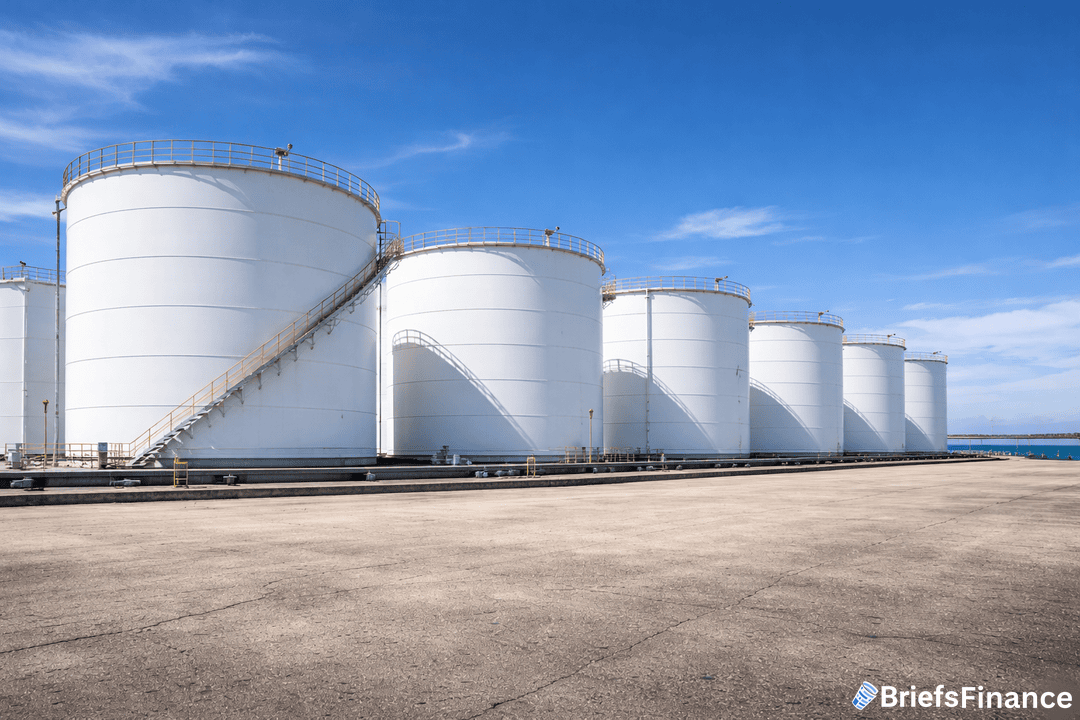
The biggest oil supply shock in history just hit the one-month mark, and the models for what comes next are starting to get attention at the highest levels.
The Supply Gap
Emergency reserves from several countries have been covering a shortfall of about 4.5 to 5 million barrels per day since the Strait of Hormuz went dark, but those buffers are running down fast.
Once the reserves are gone, the gap could widen to 10 to 11 million barrels per day - roughly 20% of global oil production disappearing from the market in what analysts are calling a supply shock without equal in the modern era.
For context, the 1973 Arab oil embargo cut about 5 million barrels per day from global supply and caused gas lines across America. The potential gap from a prolonged Hormuz closure would be roughly double that size, hitting a world economy that now consumes about 100 million barrels per day.
What the Models Show
Goldman Sachs says if the strait stays closed for another month, Brent crude will average above $100 per barrel for the rest of 2026. Their base case assumes some kind of deal reopens the strait by summer, but even in that scenario prices stay high into the fall as supply chains rebuild.
U.S. officials and Wall Street analysts are now starting to consider the possibility of $200 oil. Brent is currently trading around $102, while WTI sits near $104.
That is already enough to push global growth forecasts lower.
JPMorgan's commodity team has modeled a "worst case" scenario where Brent hits $150 by summer if no deal is reached. In the most extreme models - a full year of closure with no diplomatic breakthrough - some analysts have penciled in $200 oil, a level not seen since the inflation-adjusted peaks of the 1970s.
The Dallas Federal Reserve published research showing that every $10 increase in oil prices shaves roughly 0.1% off U.S. GDP growth over the following year.
At current levels, the drag on economic growth is already meaningful and getting worse with each week the strait stays closed.
Who Gets Hurt Most
Gulf states that depend on the strait for their own exports are facing the worst of it, with GDP impacts estimated at 5% to 8% for countries like the UAE, Qatar, and Kuwait that cannot ship their own crude through the blockade.
Asian importers - Japan, South Korea, and India in particular - have been scrambling for alternative supply from West Africa and the Americas, paying premiums of $5 to $10 per barrel above normal prices just to secure cargoes. European buyers are competing for the same barrels, which is driving up costs across the board.
What to Watch
The key date is April 20. That is when the last tanker that cleared Hormuz on February 28 reaches its final stop, meaning the pre-closure supply is fully gone and the world starts running entirely on reserves and alternative routes. If no deal is reached by then, analysts expect a sharp move higher in prices.
Energy traders are already positioning for that scenario, with options markets pricing in a meaningful chance of $120 oil by May.