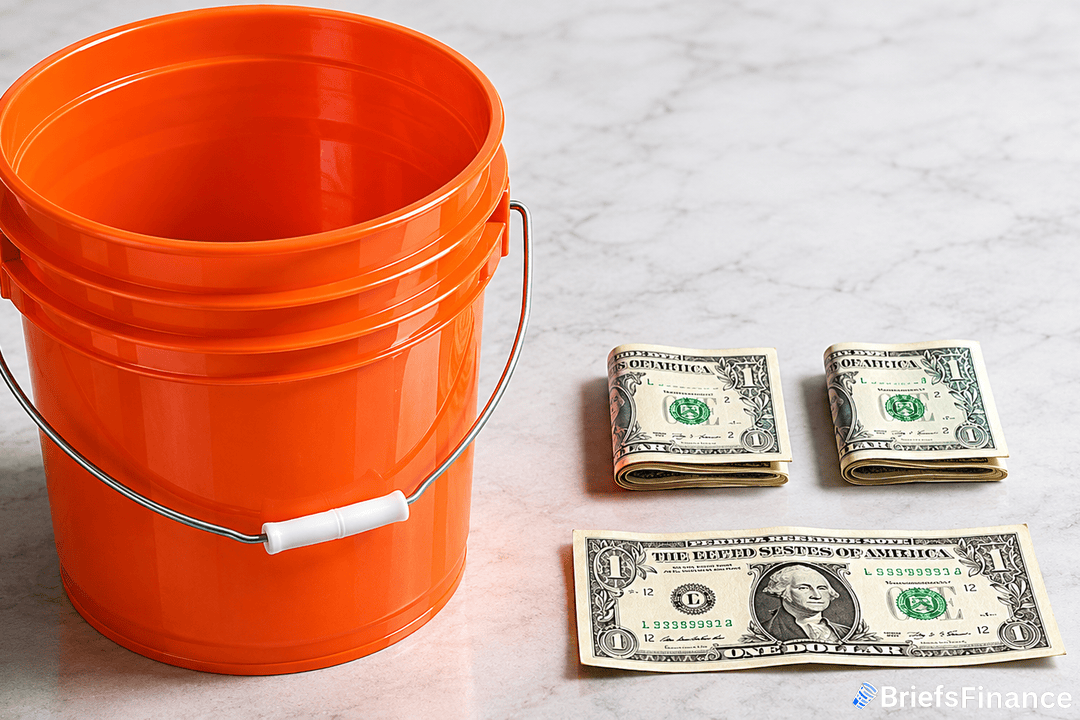
Every year, the Federal Reserve asks thousands of Americans the same question: if a $400 expense landed in your lap tomorrow, how would you pay it?
The answers, from the newest survey:
- 37% of adults said they'd have to borrow, sell something, or couldn't cover it at all.
- 12% said they couldn't pay it by any means.
Four hundred dollars is a trip to urgent care or a broken window, and more than one in three adults can't handle it without borrowing.
So, what's the solution? There's two.
Building an emergency fund that protects you from most of the issues life throws at you is step one.
If your car breaks down, window breaks, or you land in the hospital, you need cash you can dip into without going into debt or selling any investments.
The second step is wiping out every debt that charges you more than 10% interest.
Why? You can't build wealth if your Amex is charging you 22%+ a year.
The average S&P 500 return is around 10% a year historically.
So that debt is charging you more than you could be making if you started investing today.
Building an emergency fund and paying off debt is what enables you to then grow your wealth.
So let's break down how to do both and what investors should do after building up savings and paying down debt.
How Much Emergency Fund Do You Need? Start With $2,000
The idea of savings isn't to do it forever, but to save with intention.
You can't save your way to wealth, but you can save for:
- A new car
- A house
- The next iPhone
But before you save for things you want, you need to save for things that you need. And if an emergency happens tomorrow, do you have the money you need to pay for it?
So the real first target is $2,000, in its own account, separate from checking, where it can't get spent by accident.
Why $2,000? Because that's roughly the size of life's most common surprises: a car repair, a cracked phone, a trip to urgent care.
It's also a lot more than most people have.
By the numbers:
- 70% of Americans cannot afford a $1,000 emergency, per Bankrate's survey.
- A third said they'd go into debt to cover it.
- 18% of adults couldn't handle even a $100 emergency from savings alone, per the Fed.
$2,000 won't make you wealthy. It lets you have a bad day without it turning into a bad year.
After you've got the emergency fund down, you can then move on to saving three to six months of expenses.
That way in the long-term, you're protected from bigger things that may happen in life, like if you lose your job.
What Your Emergency Fund Is Not For
You have to keep your emergency savings account separate from everything else. Otherwise, you may dip into it and not even realize.
If that happens, the money will not be there when you need it.
Which means your emergency fund is not for:
- A watch, even on sale.
- A trip, even a cheap one.
- A "sure thing" investment, even one your coworker swears by.
- The stock tip going viral this week.
Money in this account has one job: sit there until something breaks.
Keep in mind: while it sits there, it will likely lose value to inflation, which is when the cost of things go up over time.
But this money isn't trying to grow. It's trying to be there on a bad day.
Remember what we said earlier: you're starting with $2,000, then moving on to save three to six months worth of expenses.
Notice how we did not say save every penny you have, forever.
Saving will not make you wealthy, because of inflation. But saving for a purpose keeps you protected and out of debt for when you really need the cash.
The Financial Danger Zone: Why One Bad Day Becomes Years
The people with no financial cushion live in what we call the Financial Danger Zone: earning money, spending money, and standing one unexpected situation away from financial disaster.
Here's what usually happens: your car breaks down, and with no cash, the $900 repair goes on a card at 22%.
One bad day just became years of payments. Debt at that rate is like climbing a mountain with a thousand pounds of chain on your back.
It seems obvious when you phrase it like that, but for most people, it's completely hidden.
Your paycheck covers the bills, the cards get their minimums, you go on living like it never happened, so nothing changes until the day something else breaks.
Now, the issues compound, and you're more in debt, and further away from wealth.
This is why the $2,000 comes before everything else, before investing and before upgrading anything. It's the wall between you and the Danger Zone.
Cut the Extras (Yes, Even Netflix, and Not for the Reason You Think)
Getting to $2,000 fast means sacrifice, so skipping nights out, impulse orders, and the subscriptions you forgot you had.
That includes Netflix, but not because of the monthly fee. Investing $15 a month won't change your life.
The hours are a different story. The Bureau of Labor Statistics found that Americans watch about 2.6 hours of TV a day on average, half of all their leisure time.
That's roughly 950 hours a year.
Try this tonight: pull up last month's statement and sort every charge into two piles, keeps me alive, and keeps me comfortable.
Rent, groceries, utilities and transportation go in the first pile. Everything else goes in the second, and during the push, the second pile is where the fund comes from.
Most people find a few hundred dollars a month there, which makes this task way less daunting.
And remember, this isn't forever, just while you're trying to save.
Automate It: 10% of Every Paycheck, the Day After Payday
Willpower is a terrible savings strategy, so don't build yours on it.
Set up an automatic transfer of 10% of your take-home pay (what actually lands in your account after taxes) into your emergency savings account, scheduled for the day after payday.
| Monthly take-home pay | 10% automatic transfer | Time to reach $2,000 |
|---|---|---|
| $3,000 | $300 | About 7 months |
| $5,000 | $500 | 4 months |
| $7,000 | $700 | About 3 months |
Irregular income? Same rule: 10% of every payment, gig payout or invoice, moved the day after it arrives.
Keep in mind: there is no shame in using the emergency fund. Your car will have a flat tire, or your kid will have to go to the doctor's office.
The goal is to refill it as fast as possible once you deplete it.
And whether you're refilling it or building it for the first time, once you have at least $2,000 saved, you can move on to step two: wiping out your high interest debt.
Paying Off Credit Card Debt: Every Debt Over 10% Has to Go
Ultimately, every high interest debt you have has to go.
Why? Because every cent you pay in interest is money that could have gone to building your wealth.
But instead, it went towards building someone else's wealth.
So, here's how you can start wiping out your debt: list every debt you have, with its interest rate next to it.
The interest rate is what the lender charges you each year for borrowing the money. On a credit card statement, it's the number listed as the APR.
Draw a line at 10%. Everything above the line has to go. Credit cards will go first, because the average card carrying a balance charges about 22%, and many charge more.
Why 10%? Because that's roughly what the stock market has averaged over the long run. Any debt charging more than that is a guaranteed loss that no investment can reliably beat.
In English: you can't out-invest a 22% credit card. Paying it off is the investment, and it pays a guaranteed return at the debt's exact rate.
Take an $8,000 credit card balance. The interest alone costs you every month, but the bigger cost is what that $8,000 could have become.
Invested at the market's long-term average of about 10% and left alone for 40 years, it would grow to roughly $360,000.
That happens through compounding, where the money you invest grows little by little the more you put in.
Investing has risk, and you can lose money. But right now, that same $8,000 is compounding in the other direction, for the bank.
So you need to wipe out that debt, and here's how:
- Keep making the minimum payment on every debt, so nothing gets worse.
- Put every spare dollar toward the debt with the highest interest rate.
- When that one is gone, move its whole payment to the next-highest rate.
Each payoff makes the next one faster.
But to do this right, you have to:
- Stop adding to the pile. Adding more fuel to the fire while you're trying to put it out just prolongs the flames.
- Celebrate every payoff, cheaply. Don't order bottle service at the club, but do something special, you've earned it.
- Keep your emergency fund intact, so the next surprise doesn't restart the cycle.
After a while, paying off debt will feel like a habit, but one that gives you more money to build your wealth over time.
Build Your Base First, Then Wipe Out Debt
To recap:
- Step one: $2,000 in a separate account named Do Not Touch, funded by an automatic 10% transfer the day after payday.
- Step two: every debt over 10%, highest rate first, minimums on the rest, roll the payments forward.
Why in this order? If you start with debt without an emergency fund, you may go further into debt when the next emergency strikes.
While you're building, it may feel a little strange. The majority of people live in debt, with very little savings.
But don't let the majority dictate how you use money.
Use money like the minority instead, and you'll be on your way to living debt free and growing your wealth.
The System Is Just The Start, But How Do You Actually Build Wealth?
Saving and paying off debt are just the start of your journey towards wealth.
You still need to figure out:
- How big should the cushion get after $2,000?
- When do you start investing, and how much of each paycheck goes where?
- What changes when your income changes?
- What assets do you buy, and when?
Most people already know they should save, pay off debt and invest.
What they don't have is a system that answers those questions in order, and a way to keep it running once the first burst of motivation fades.
Without one, it's easy to spend years saving a little, draining it, and starting over.
That's why we built Briefs Money.
What Briefs Money Is
Briefs Money is for people who want to stop feeling disorganized with money and start running a system.
The system comes from our founder, Jaspreet Singh.
He calls the thinking behind it the Minority Mindset: being willing to think differently than the majority of people, because the majority of people are not wealthy.
It teaches his Climb to Wealth system, a clear method for paying down debt, building savings and starting to invest, and it gives you the tools to run it.
You get:
- Climb to Wealth, the video course that teaches the whole system, one lesson at a time
- The Personal Finance Spreadsheet, so you can track and manage your money
- The Briefs Money Community
- Market Briefs, our free daily newsletter, plus the audio version
Want to learn more about Briefs Money? You can see everything it includes here.