Inflation is running hotter, and paychecks are not keeping up.
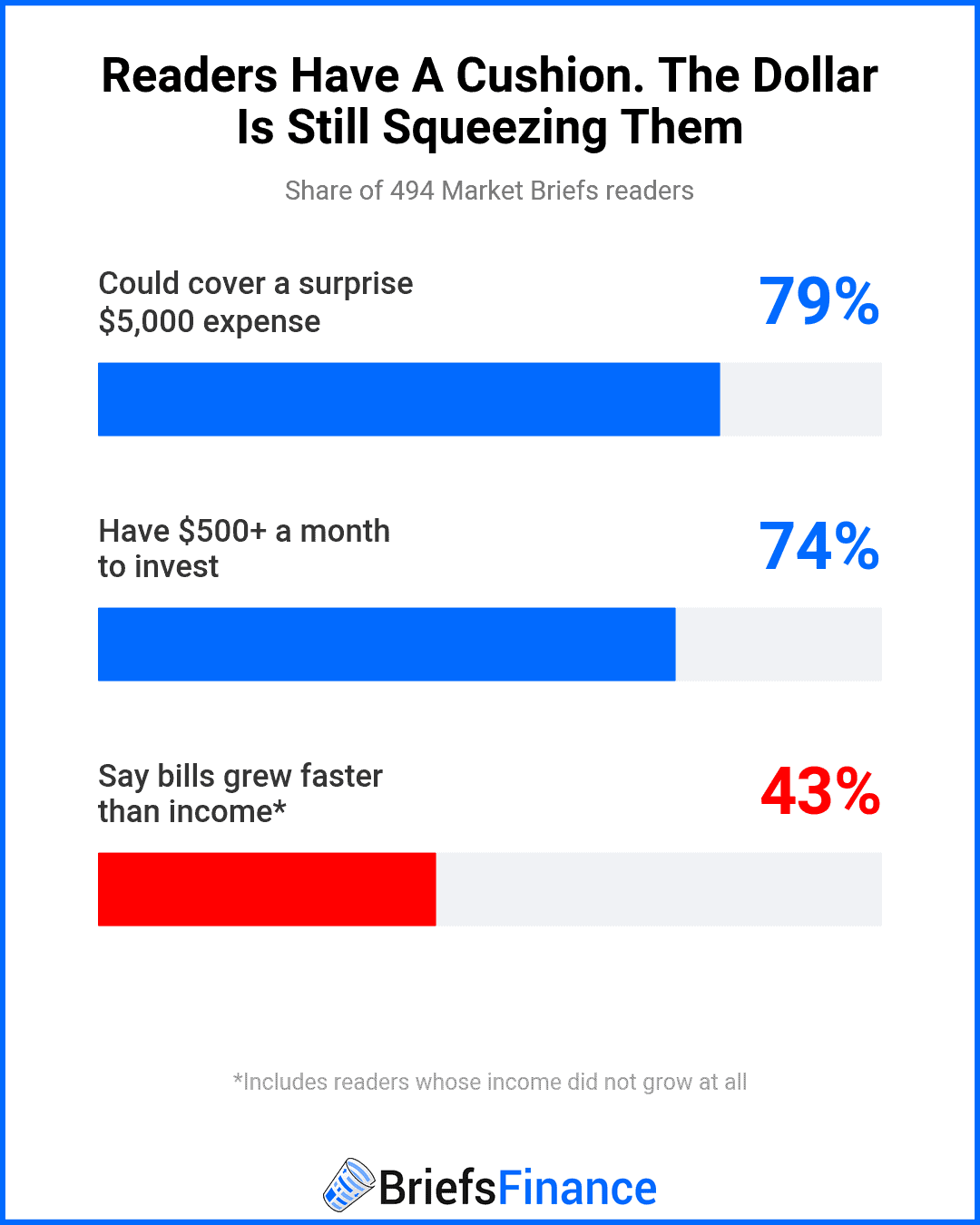
Four in five of the investors who took our survey could cover a surprise $5,000 bill tomorrow without borrowing, and three in four have at least $500 a month they could put to work.
But, nearly half of them still said their bills grew faster than their income over the past two years.
This comes as annual inflation sits at 3.4%, which means prices are going up, and the dollar is losing value.
The dollar losing value didn't happen overnight, either.
The national debt just crossed $40 trillion, gold has passed Treasuries as the world's top reserve asset, and when our CEO polled his audience, the dollar losing value ranked as their #1 economic worry.
"The stronger your dollar is, the cheaper your groceries are, the cheaper your cars are, the cheaper your electronics are," said Jaspreet Singh, CEO of Briefs Finance.
"But if people don't have trust in the dollar ... the prices of everything go up. Your paycheck doesn't buy as much, your savings don't buy as much."
So in mid September, 2026, we asked our readers how the dollar losing value is impacting their finances.
Here's what they said.
The Dollar Showed Up First In The Bills
Only 23% of readers said their income grew faster than their bills over the last two years. A third called it roughly even, while 32% said the bills won and 11% said their income didn't grow at all.
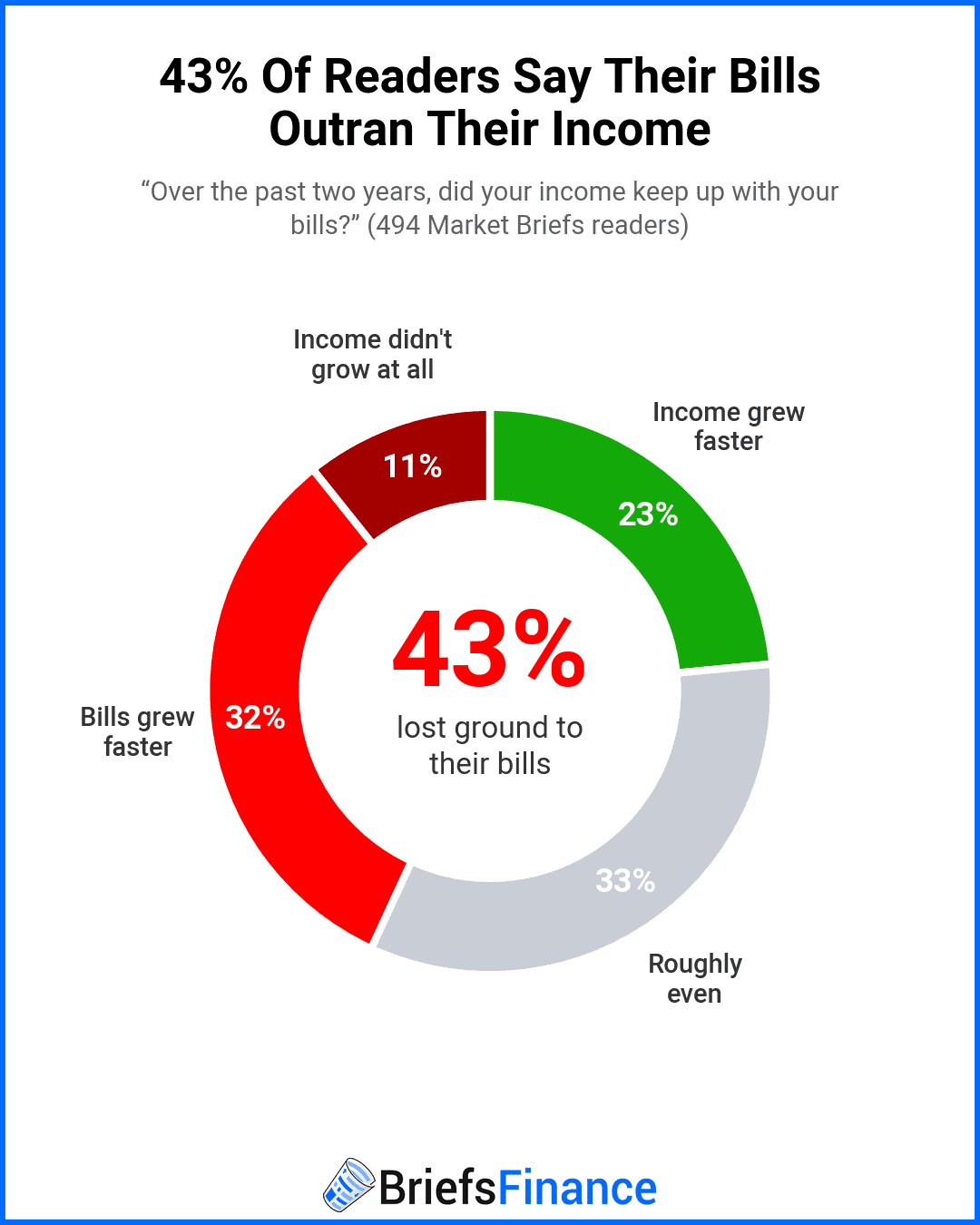
Put those last two groups together and 43% of readers lost ground, with the loss landing hardest in the prime earning years.
Nearly half of readers between 30 and 59 fell behind, compared with about a third of readers over 60.
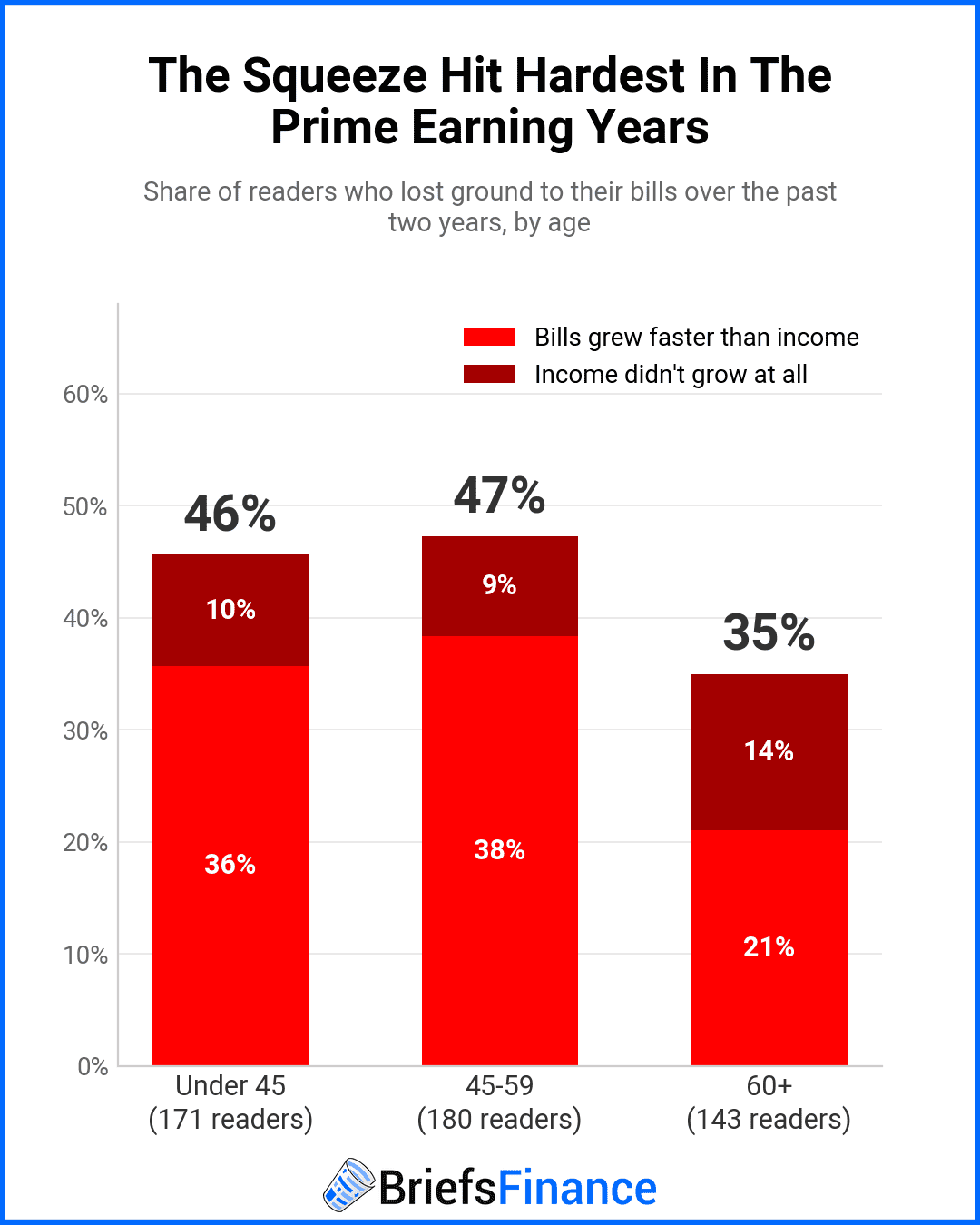
This is how a weaker dollar arrives. It doesn't come as one big bill; it comes as a paycheck that grows a little while everything it has to cover grows a little more, until one year the raise doesn't reach the end of the month.
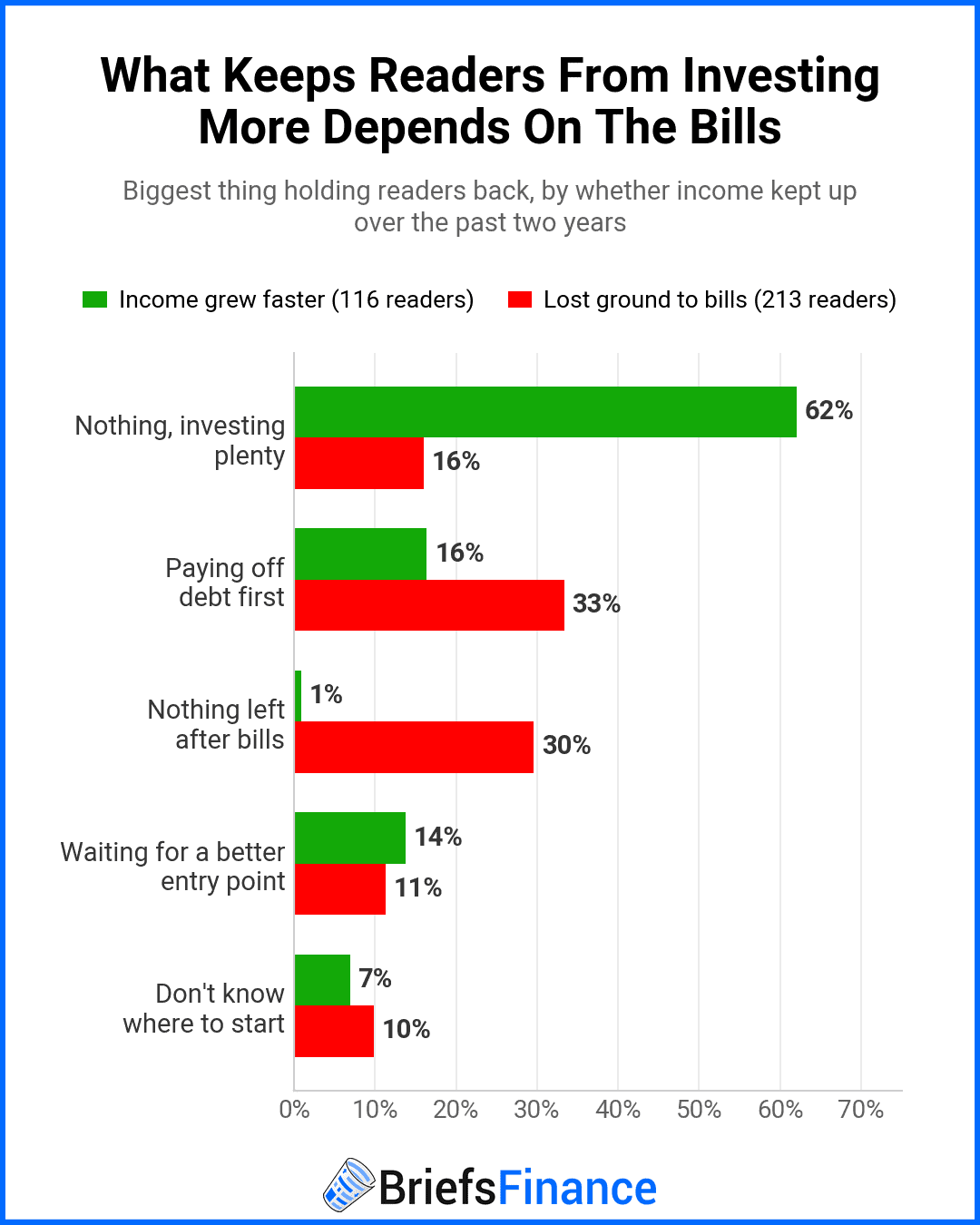
The strain shows in what's keeping readers from investing more: Among readers who lost ground, a third said they're paying off debt first and another 30% said there's nothing left after bills.
Among readers whose income outran their bills, 62% said nothing is holding them back at all.
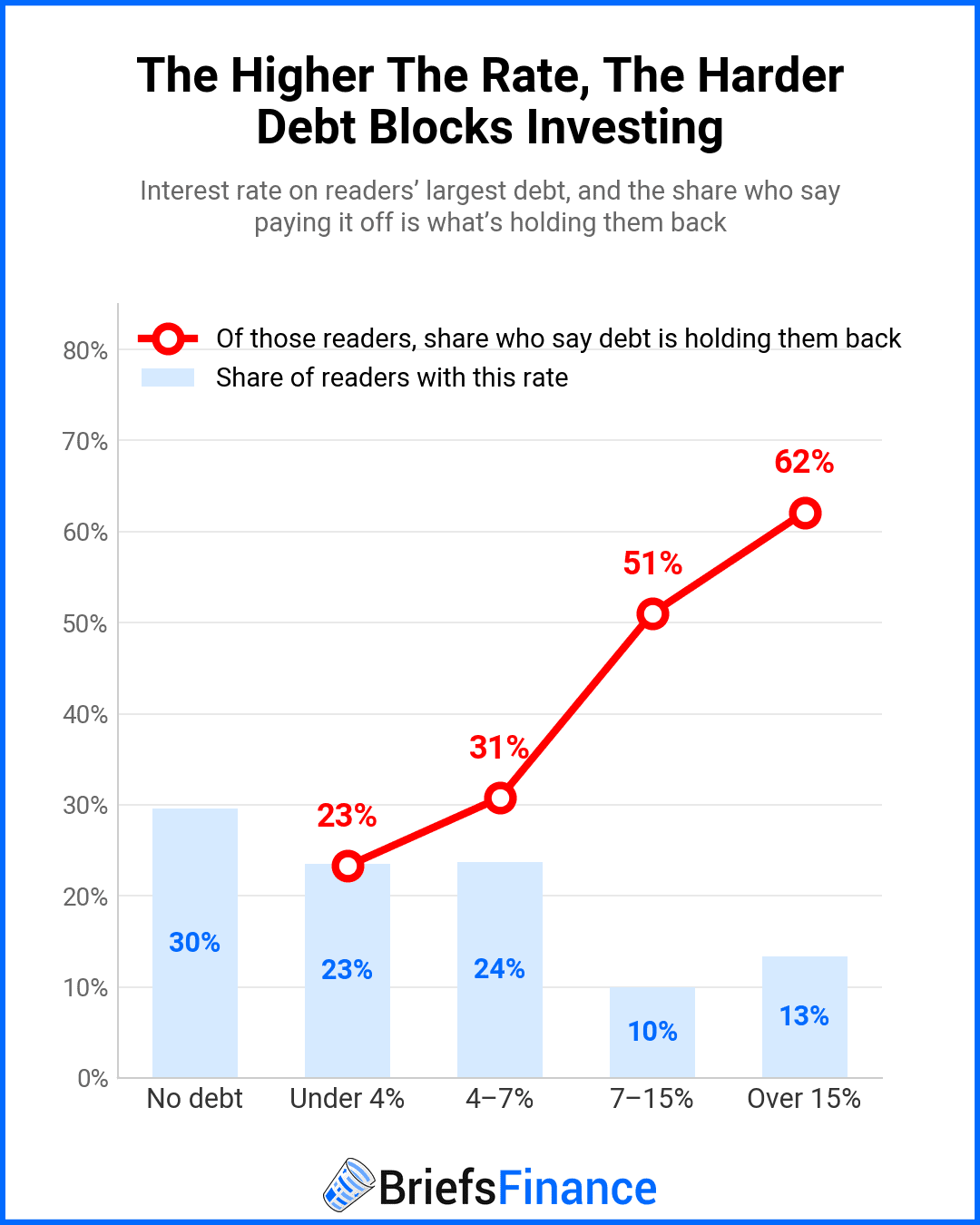
Debt is where the room splits, with more than half of readers either owing nothing or paying under 4% on their biggest balance while 13% pay over 15% on theirs.
Among that 13%, 62% say the debt is exactly what's keeping them out of the market, and every dollar going to interest at that rate is a dollar that never gets the chance to become an asset.
Our CEO Jaspreet Singh is taking on exactly this problem in a free live workshop on September 29th: how investors can profit from the dollar losing value instead of just absorbing it.
Readers Keep Little In Cash, And What They Keep Earns Under 4%
Cash is the one holding that takes the dollar's slide in full.
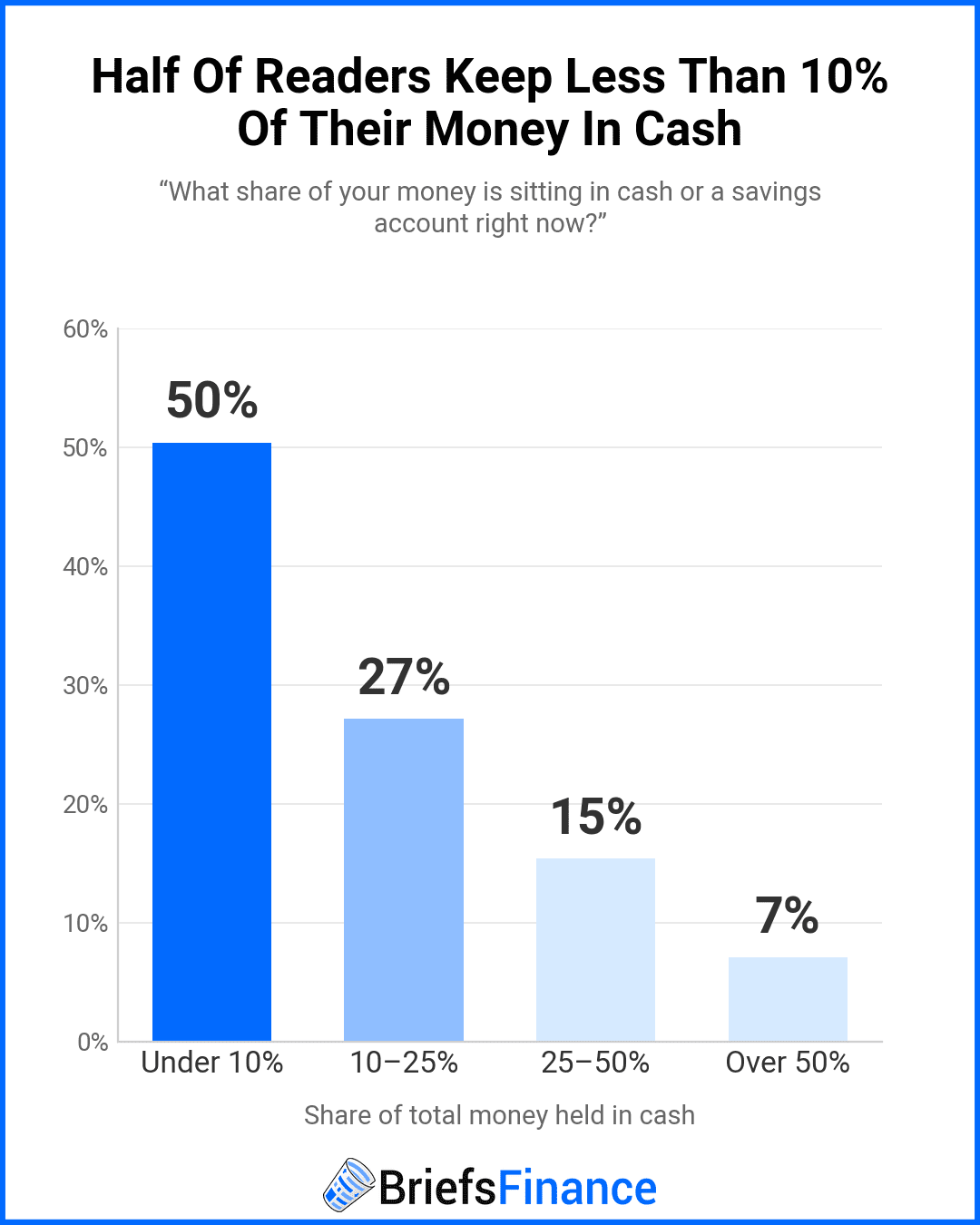
Half keep less than 10% of their money in cash or a savings account, only 7% keep more than half of it there, and just 5% hold nothing but cash.
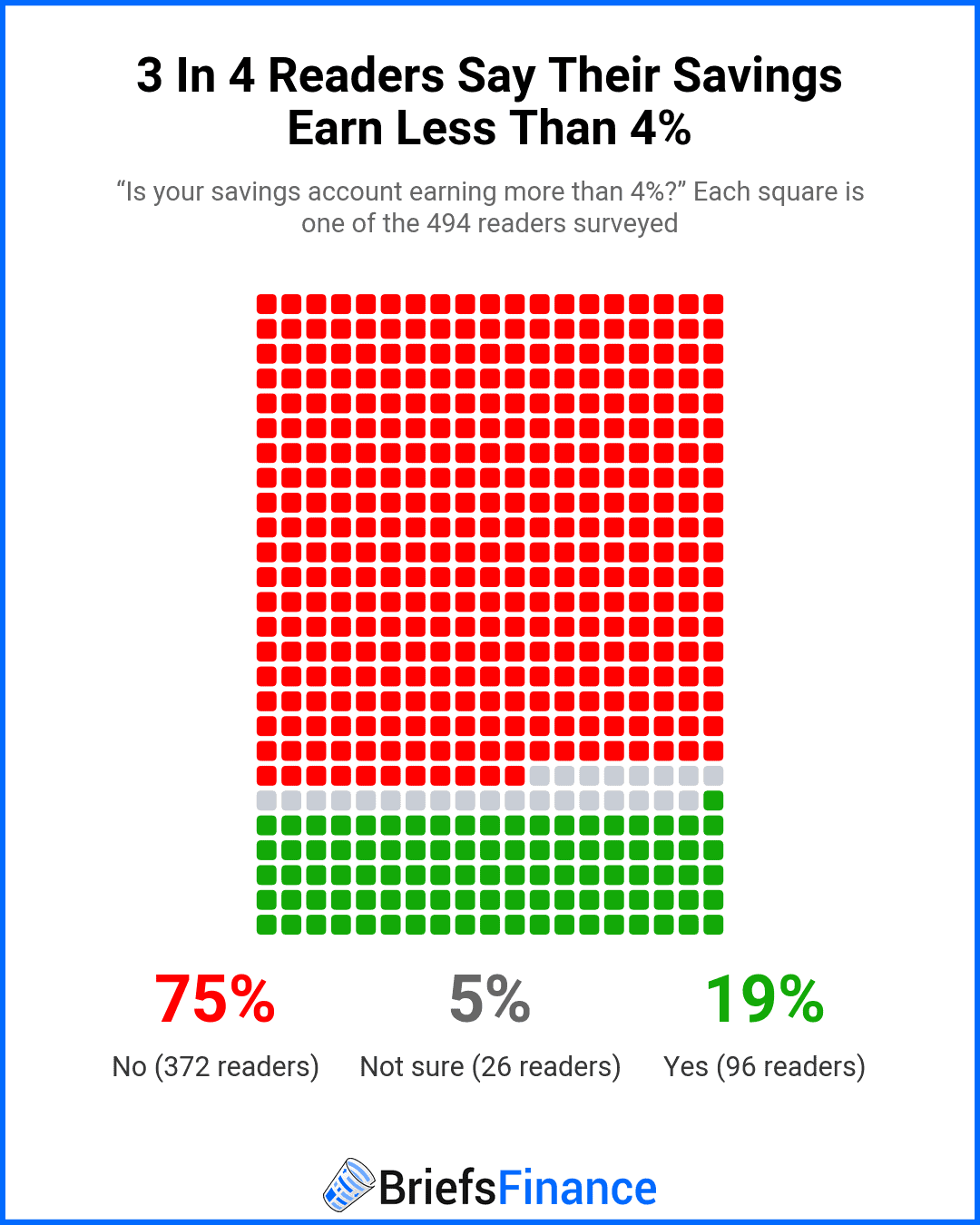
The cash they did keep is a different story. Three in four readers said their savings account isn't earning more than 4%, another 5% weren't sure, and just one in five said yes.
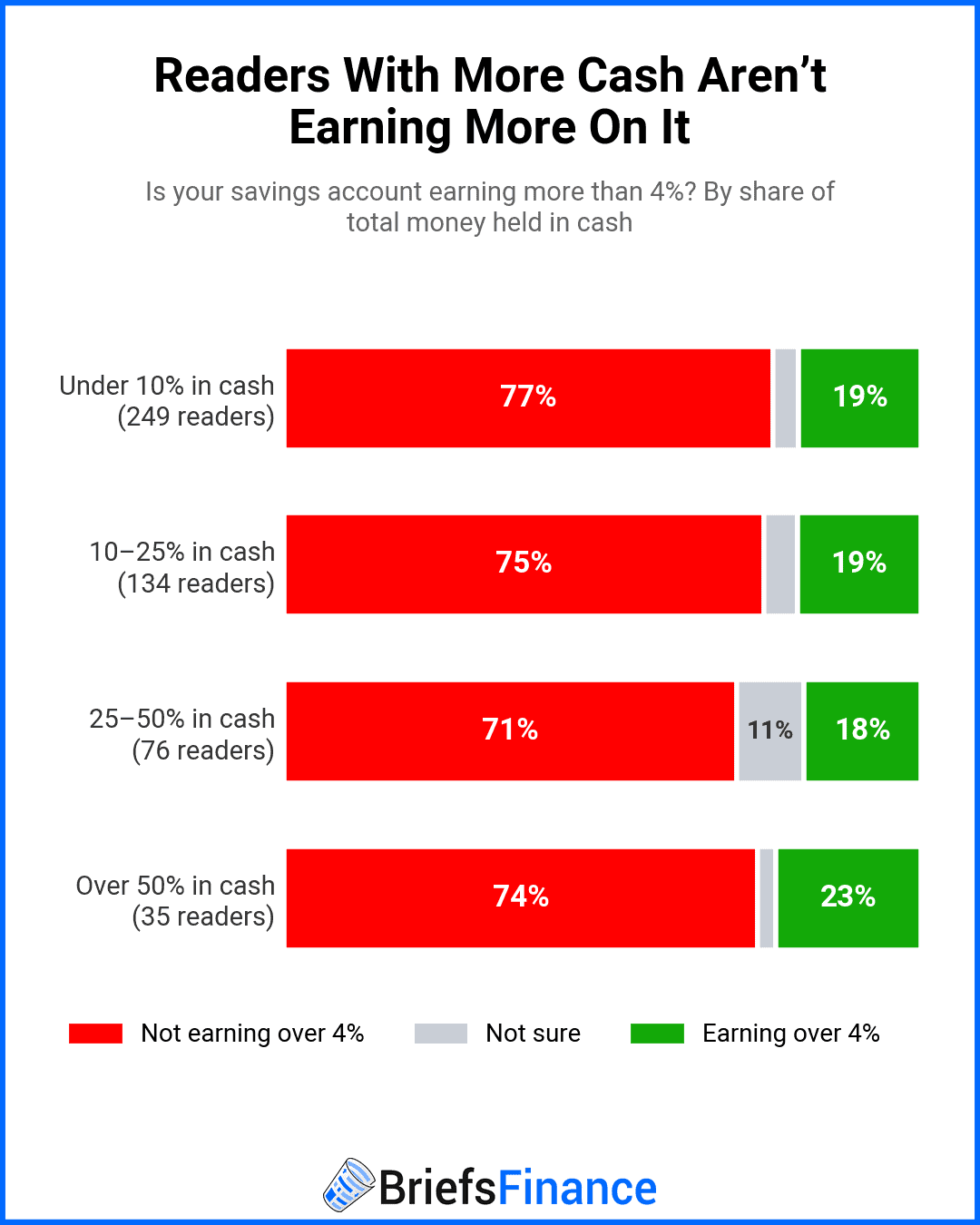
The answer barely changes with how much cash a reader holds. Among the 22% of readers who keep more than a quarter of their money in cash, 72% said no.
For most of the country, that's the default setting. The average savings account in the U.S. paid 0.37% in September, according to FDIC data.
Cash sitting at that rate doesn't hold still while prices rise - it loses value by almost the full rate of inflation every year, and the statement never shows it.
The Rest Of The Money Went Into Things That Aren't Dollars
For the typical reader, that leaves more than 90% of their money in assets, which tend to reprice when the dollar weakens rather than just sit there and shrink.
Here's what some of our readers own right now:
- Stocks or index funds: 87%
- Their home: 65%
- Gold or silver: 36%
- Crypto: 33%
- Bonds or CDs: 31%
- Rental property: 22%
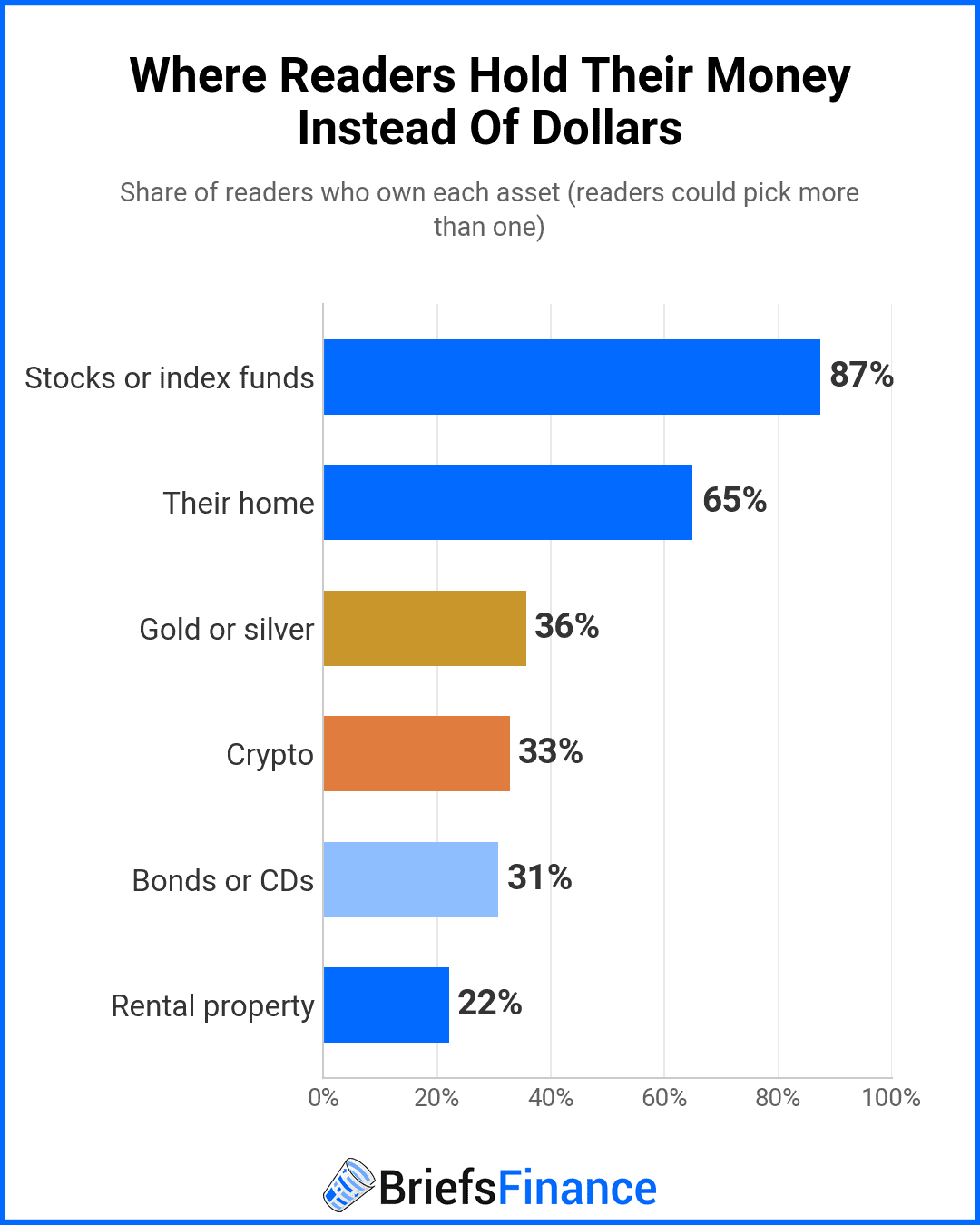
Gold and crypto are the two worth pausing on, because both are the classic bets that the dollar keeps losing value. Half of readers own at least one of them, and that share barely moves from one age group to the next.
What changes is the pick: 43% of readers over 60 own gold or silver and 24% own crypto, while readers under 45 flip it, with 41% owning crypto and 32% owning gold.
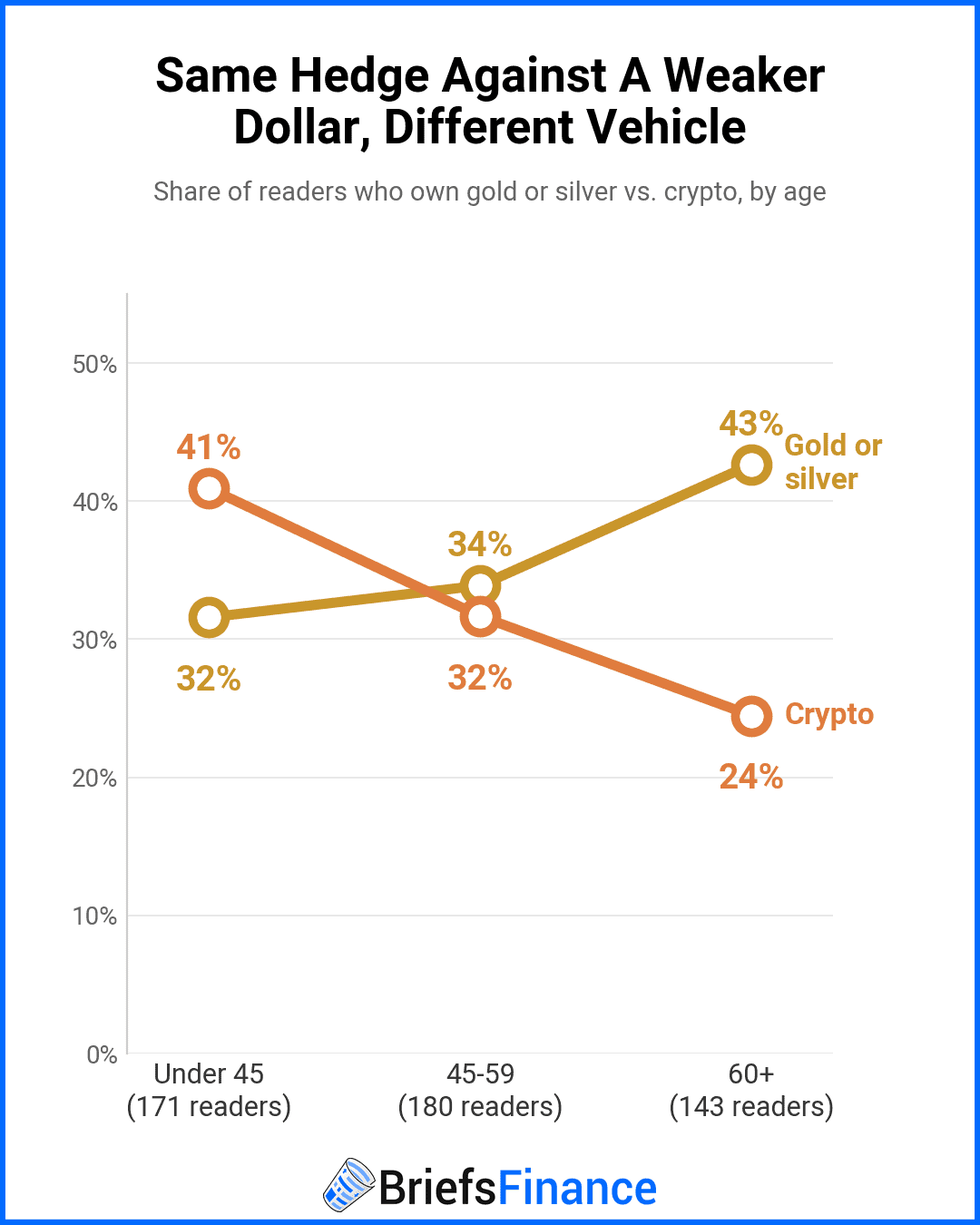
Same instinct, different vehicle: one generation wants to own something tangible and the other buys digital assets, but both are trying to hold something a printing press can't make more of.
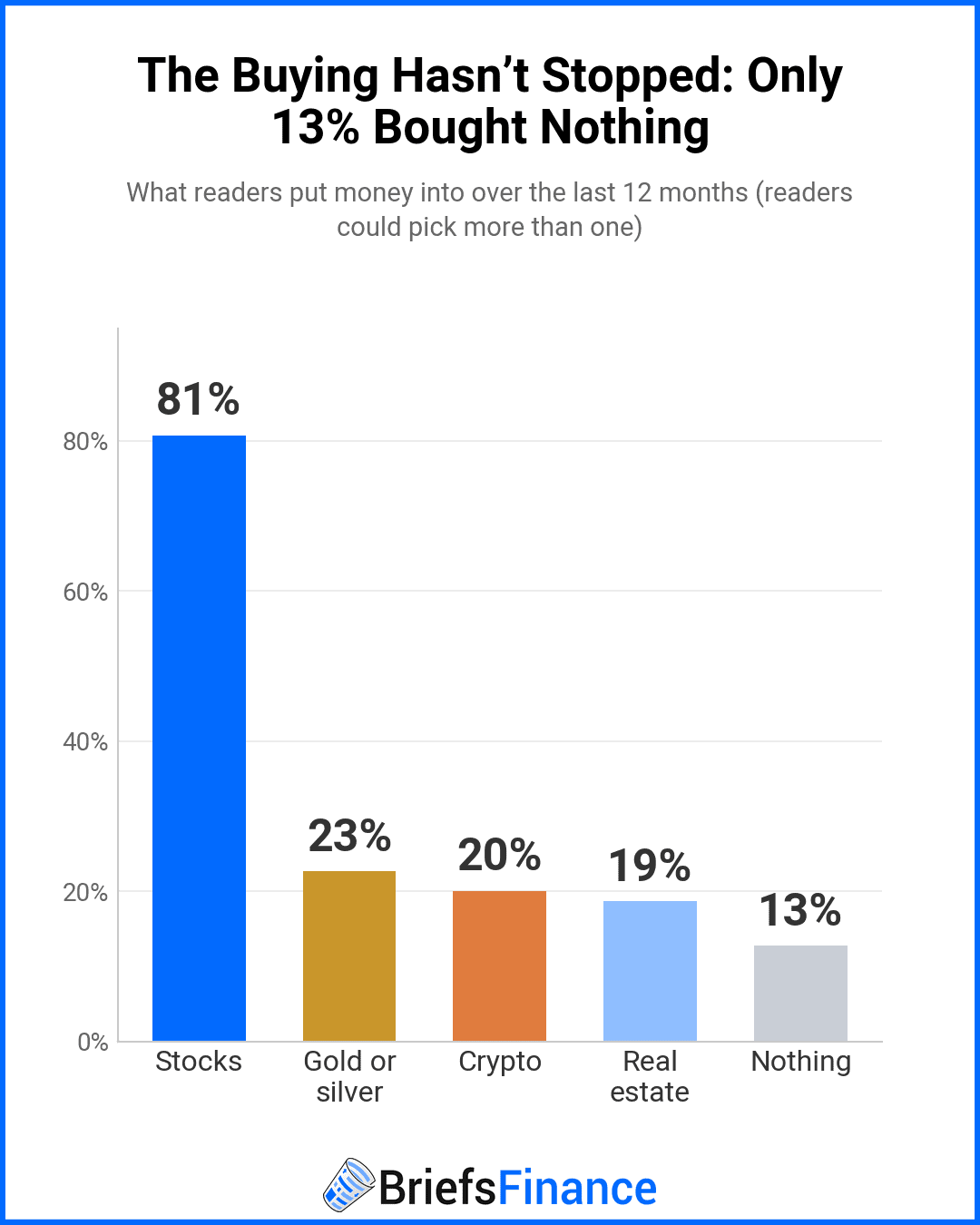
And the buying hasn't stopped. 81% of readers put money into stocks in the last 12 months, 44% bought gold, crypto or real estate, and only 13% bought nothing at all.
The Finish Line Moved To $150,000 A Year
A dollar that buys less doesn't just raise the bills - it raises the number it takes to feel safe.
We asked what annual income would make readers feel financially secure today and the median answer was $150,000, the single most common answer was $200,000, and four in five readers named at least $100,000.
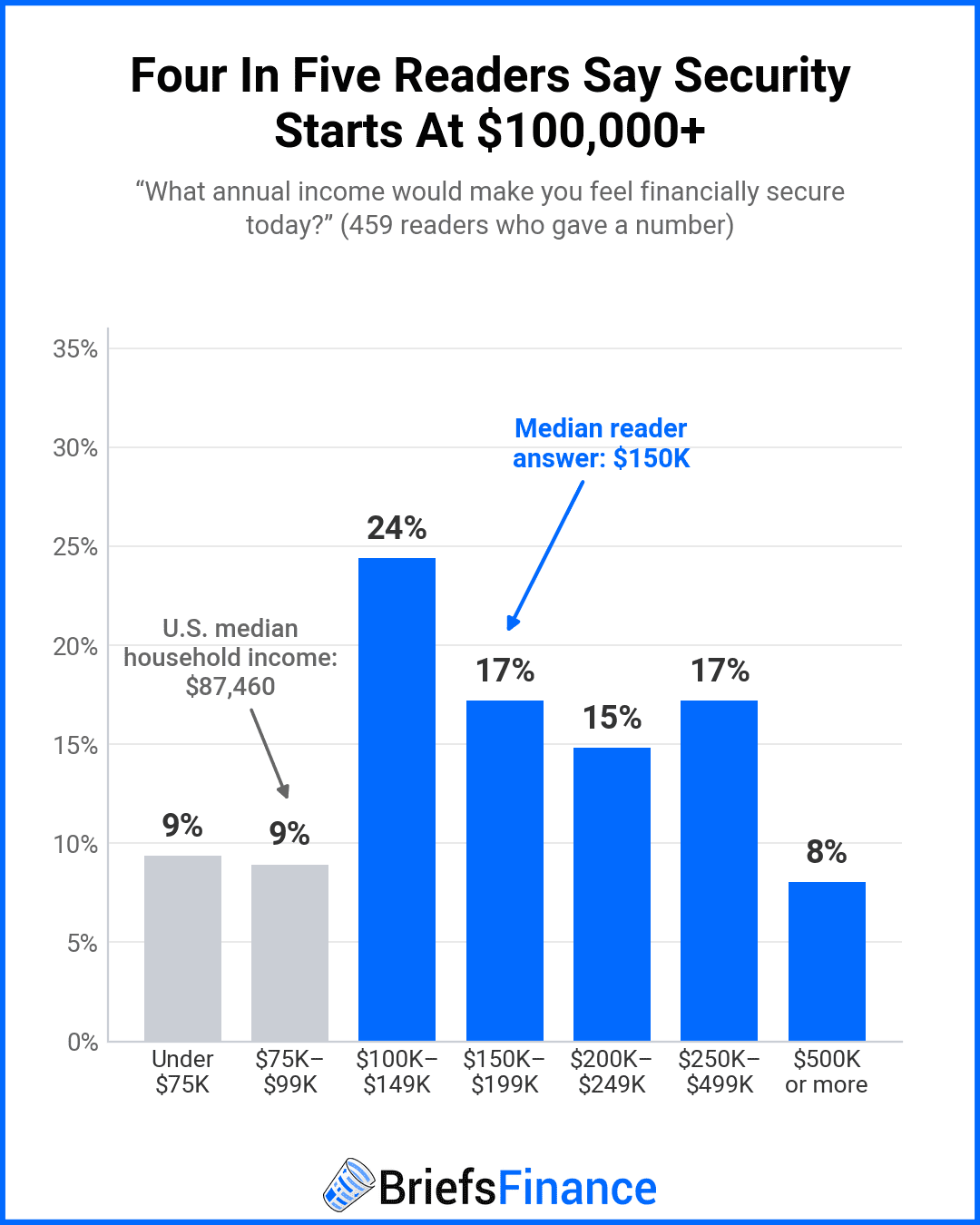
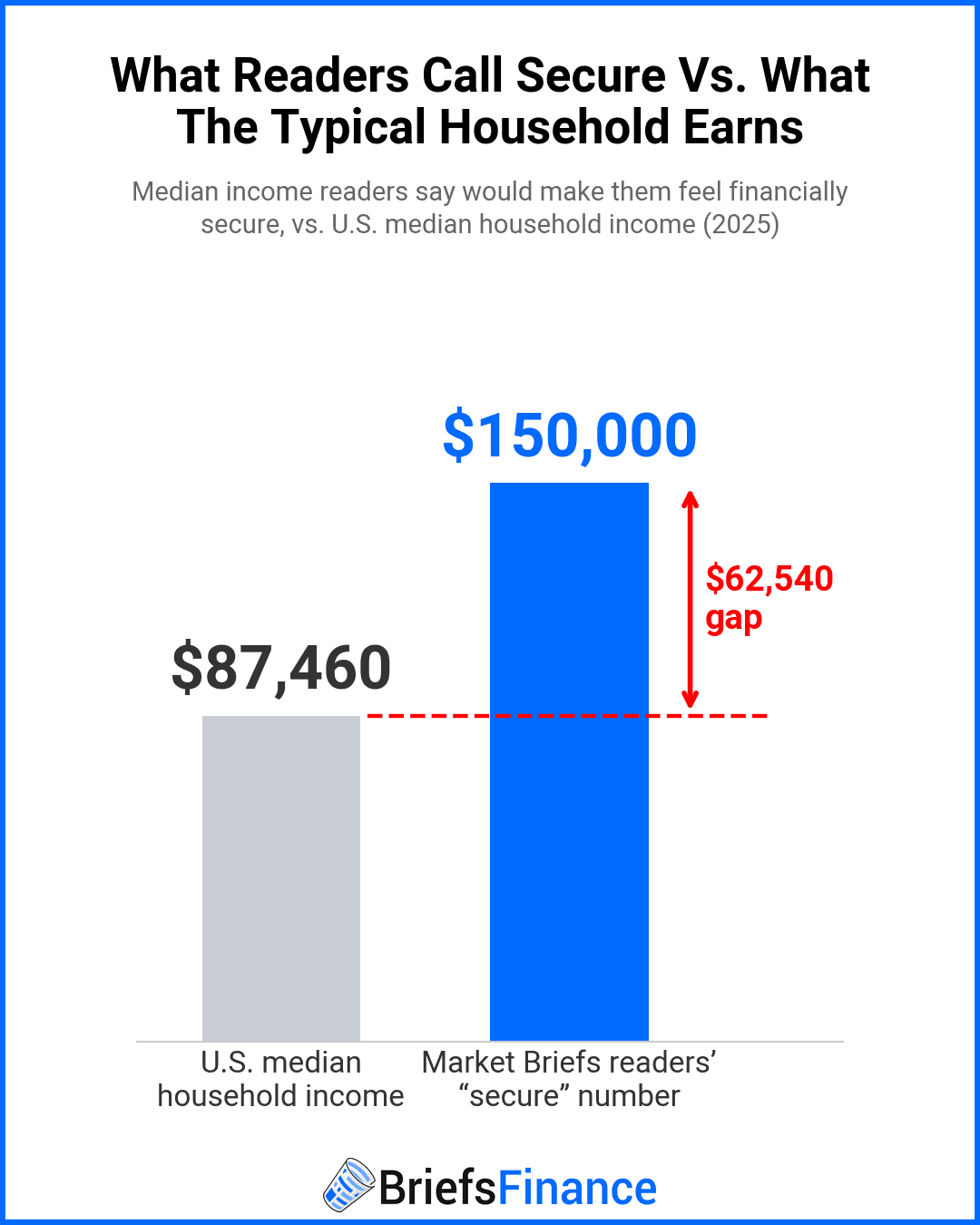
For comparison, the Census Bureau reported earlier this month that the median U.S. household earned $87,460 in 2025 - a record high, and still about $62,000 short of what the typical Market Briefs reader calls secure.
The number climbs through the working years and comes back down, with readers between 30 and 44 putting it at $150,000, readers between 45 and 59 at $200,000 and readers over 60 at $130,000.
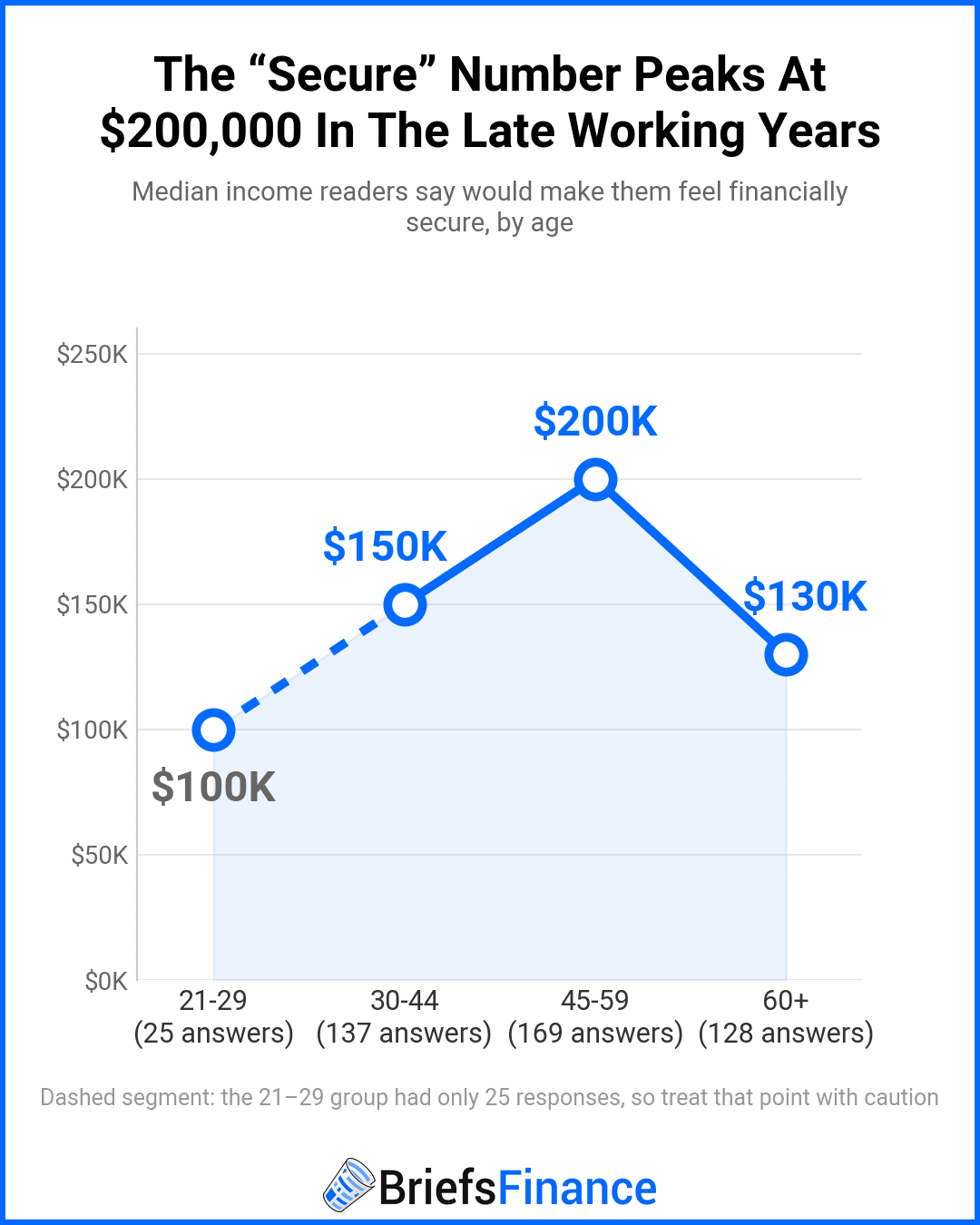
The 45 to 59 group set the highest bar, and it's also one of the two age groups where nearly half lost ground to their bills. The readers who felt the weaker dollar the most asked for the most to feel safe from it.
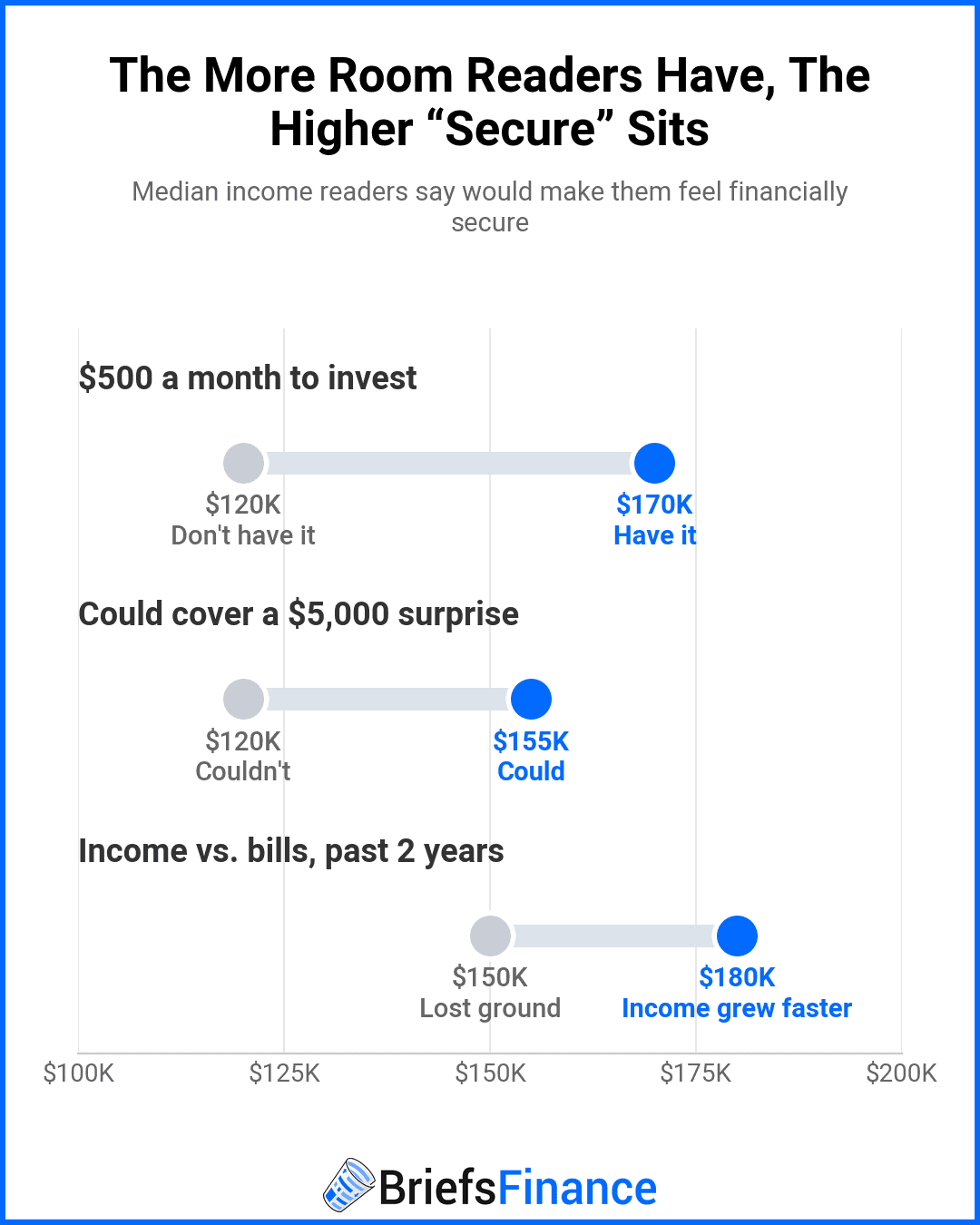
The answer moves with means too: Readers with $500 a month to invest said $170,000 would do it, while readers without that $500 said $120,000.
The more room a reader has, the further away "secure" seems.
Sixteen readers skipped the number entirely and wrote that they're already there. One retiree described a 2.75% mortgage with three years left and no other debt, another wrote that cash flow is king, and a couple said no income figure would do it - being debt-free would.
116 Readers Have Money On The Sidelines, Most Of It In Cash
Not everyone who isn't investing more is short on cash. 12% of readers said they're waiting for a better entry point, and another 11% said they don't know where to start.
That's 116 readers, and most of them have the means: 88% have at least $500 a month to invest, and 90% could cover a $5,000 surprise tomorrow.
A third of them also keep more than a quarter of their money in cash, and only 17% are earning over 4% on it.
So the better entry point they're waiting for is being paid for in dollars that lose value while they wait - the one holding in this survey that buys less simply by sitting there.
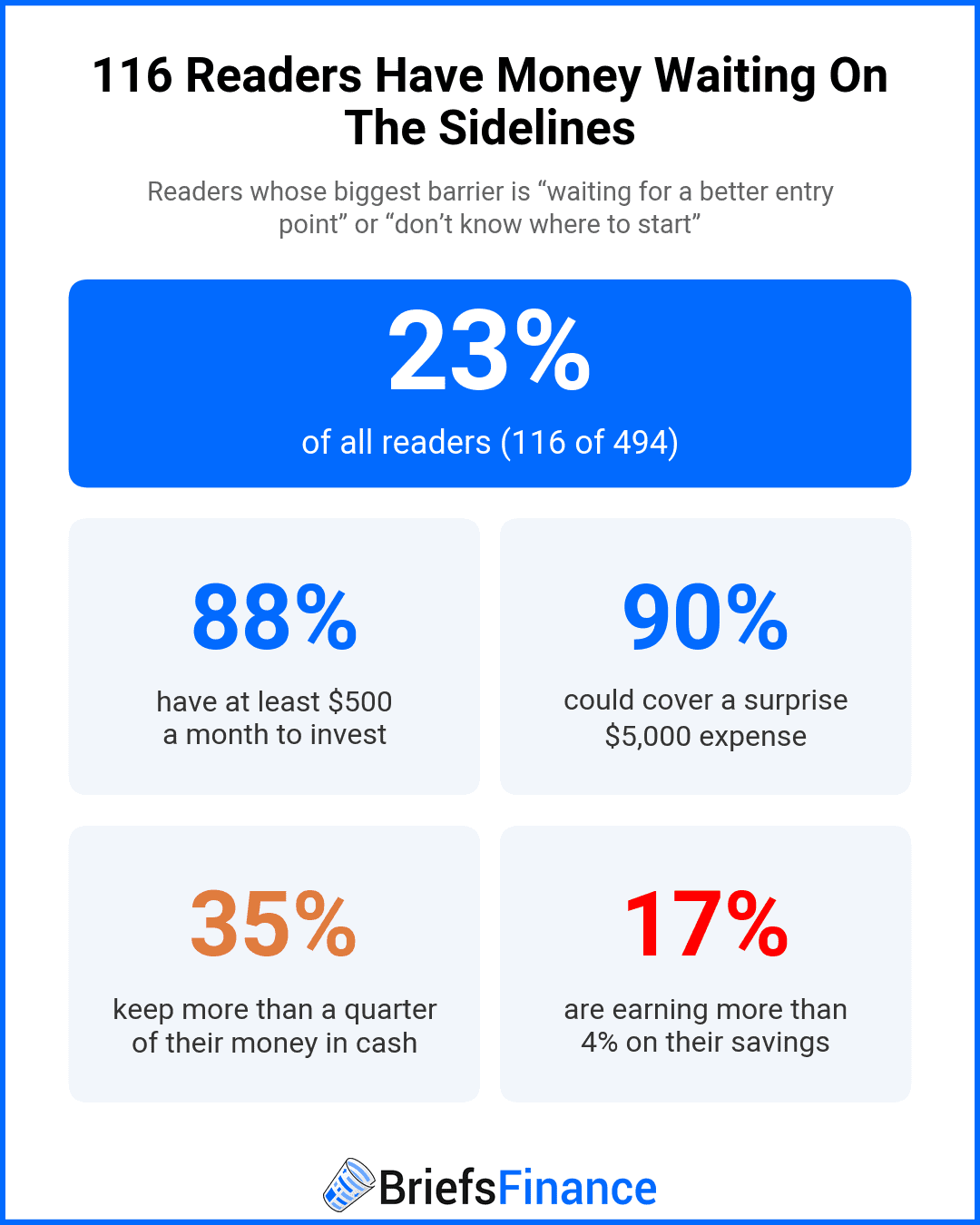
The difference between this group and the 32% of readers who said nothing is holding them back isn't money - it's knowing what to do with it.
That's the group the September 29th workshop is built for. Jaspreet Singh is walking through how investors can profit from a dollar that's losing value, live and free, and you can save your seat here.
The Gap Between Readers Getting Ahead And Readers Falling Behind
Readers whose income beat their bills don't own different things than readers who fell behind, and gold or crypto ownership sits at 53% in both groups.
What separates them is room. Among readers whose income grew faster, 97% put money into something in the past 12 months and 91% have $500 a month to invest.
Among readers who lost ground, by contrast, 60% have the $500 and nearly one in five bought nothing at all last year.
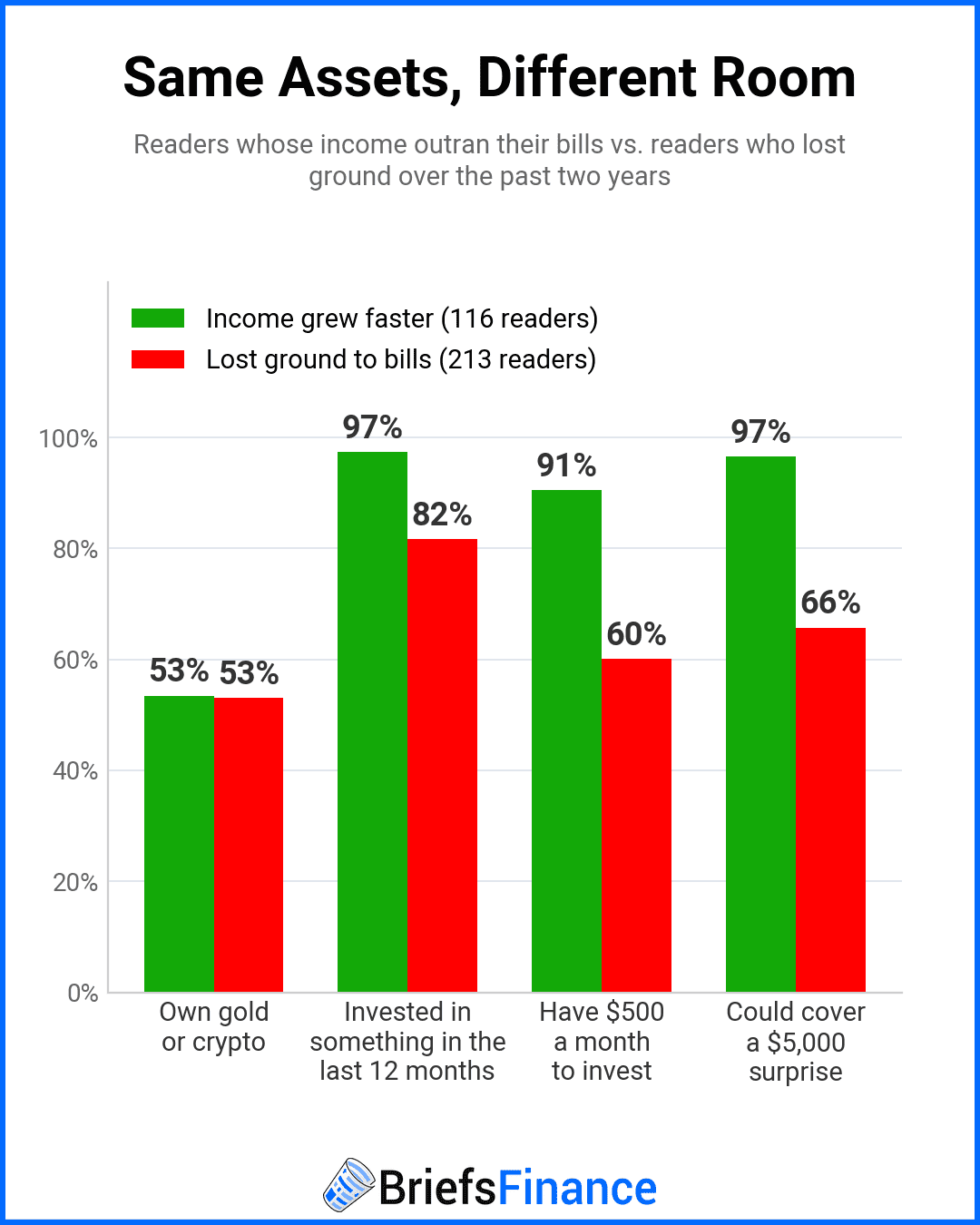
The weaker dollar raised prices on both groups equally.
The difference is what happened after: One group still had dollars left over to turn into assets, and the other watched those dollars get spent, at higher prices, before they could become anything else.
A dollar losing value costs every reader at the register. It only costs them a portfolio when it stops them from building one.
Jaspreet Singh's workshop on September 29th picks up right there: how investors can profit from the dollar losing value rather than just paying for it. It's live, it's free, and registration is open here.
Methodology: Market Briefs surveyed its newsletter readers from September 20 to 23, 2026. The survey went out to a list of roughly 350,000 subscribers, and 494 readers completed it. Results reflect readers who chose to respond and were not weighted, so they describe Market Briefs readers, not all Americans. Income figures come from the 459 readers who typed in a number; ranges were counted at their midpoint and monthly figures were annualized. Some questions allowed more than one answer, and percentages may not total 100 due to rounding.