According to the Census Bureau, the median American household earned $87,460 in 2025, the highest figure since the government started tracking household income in 1967.
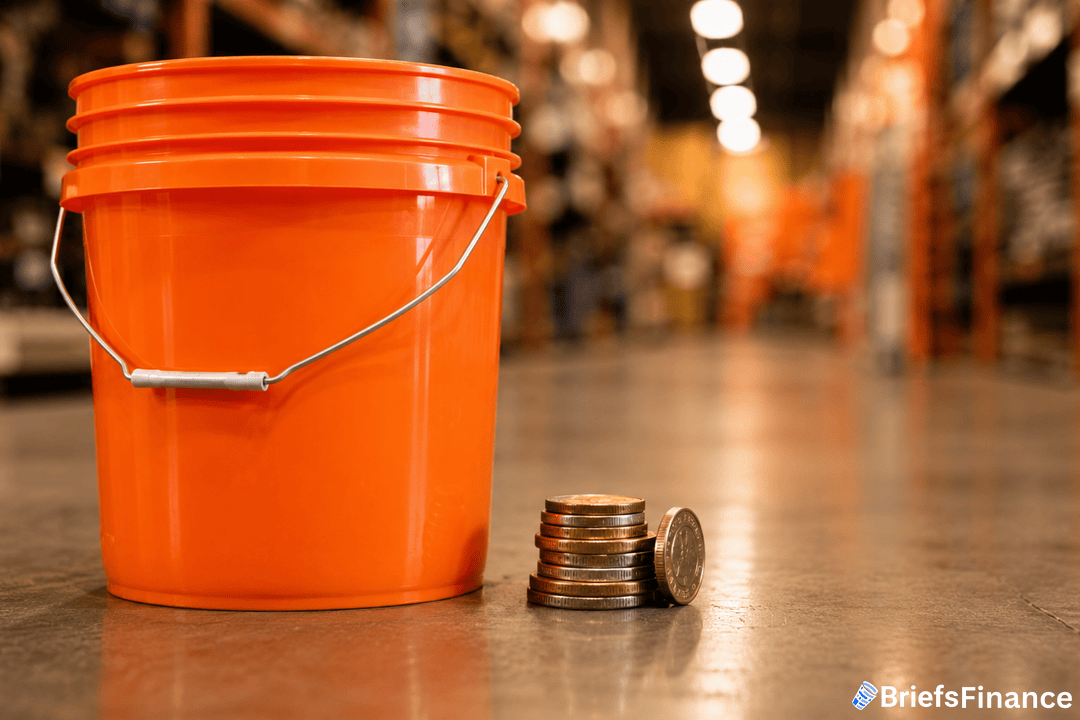
And 70% of Americans said they could not pay a surprise $1,000 bill from savings, according to Bankrate's latest survey.
So how can incomes be at a record high, and 70% of the country still not have $1,000 set aside?
The short answer: income isn't the only problem. The problem is what happens to the money after you get paid.
Most people get paid, then spend their money first on expenses: the car, the latest iPhone, a vacation. Then they think about saving, and if anything is left, maybe they invest it.
There's nothing wrong with spending money. But spending without investing is what keeps people living paycheck to paycheck, no matter how much they earn.
How? When your paycheck only goes to liabilities, there's nothing left to buy assets.
So let's break down what assets and liabilities are, how it keeps people from building wealth, and what Americans can do about it right now.
Assets vs. Liabilities: Why Record Income Still Leaves People Broke
If you earn the median household income for 40 years, you'll earn about $5.3 million over your career.
And despite all those earnings, seven out of ten people still couldn't pay a $1,000 bill from savings.
So where does the money go? Housing, food, your car, internet, Netflix, and some fun. Before you know it, the money is gone. These expenses are liabilities, which will never pay you.
On the flip side, a share of stock, for example, is an asset, because owning a share makes you a part owner of a real business.
The business can keep making money even when you are not working. If the stock goes up, you can sell it for more later. So you bought something that (hopefully) makes you money.
Note: you're never guaranteed to make money when you invest. But the goal with investing is to make more money.
But for most Americans, stocks rarely make it into the budget, because most Americans spend almost everything they earn on liabilities before even thinking about assets.
That's why a bigger income doesn't fix the problem. Money comes in, gets spent on things that only cost you, and never gets a chance to grow.
Here's a few more examples of assets vs liabilities:
| Puts money in your pocket (asset) | Takes money out of your pocket (liability) |
|---|---|
| Shares of a business, or an index fund that owns hundreds of businesses at once | A financed car. Kelley Blue Book says most new cars lose about 20% of their value in the first year, while you keep paying interest on the full price |
| Dividend stocks (a dividend is cash a company sends you just for owning its shares) | A credit card balance, which now charges about 22% interest on average for cards carrying a balance, according to the Federal Reserve |
| A rental property that pays you income every month | Clothes and gadgets nobody remembers by next month |
| A retirement account that grows for decades | Subscriptions you forgot you have |
The fix for this is simple, and it has more to do with changing your mindset than earning more money.
The iPhone Test: Buy the Product, or Own the Company That Sold It?
A new iPhone costs around $2,000, and the phone starts losing value the day it leaves the store. That makes the phone a liability: money went out, and nothing comes back.
Apple has sold more than 3 billion iPhones since the first one came out in 2007. That's 3 billion liabilities.
Now flip the purchase around. The same $2,000 could have bought shares of Apple instead, and a share of Apple means you become a small owner in the company.
Every upgrade, case and charger sold in an Apple store sends a slice of profit back to the people who own the company, through a rising share price and through dividends, for as long as they hold the shares.
Now, we're not telling you to never buy a new phone. The point is that the same $2,000 can buy the phone or buy a piece of the company, and only one of those pays you back.
The original iPhone went on sale in 2007 for $599. The day it launched, Apple stock was trading at about $4.37 a share, adjusted for the stock splits since then.
If you invested that same amount into Apple in 2007, and held it until September 2026, those shares would have grown to about $45,500, not counting dividends.
The iPhone? Worth almost nothing.
The Minority Mindset (and What It Is Not)
Most people just earn more money and hope that their spending problems get solved.
But most people that just increase their income without changing their mindset fall into something called lifestyle inflation.
This is the reason many people who earn 6-figure+ salaries still can't afford a $1,000 bill without going into debt.
Every time their income goes up, so does their lifestyle. So they buy a bigger house, a better car, a fancier watch.
So all that extra money they earned goes right back into buying more, and they're right back where they started.
Our founder, Jaspreet Singh, believes changing your mindset is the first way to fix this and start building wealth.
Here's how it works: if you copy what the majority does, you get what the majority has.
To get something different, you have to be willing to think differently than most people do, because most people are not wealthy.
What the Minority Mindset is not: it has nothing to do with your race, your background or where you started.
In everyday life, the Minority Mindset sounds like this:
- The majority asks, "Can I afford the monthly payment?" The minority asks, "What could this money have bought me instead?"
- The majority celebrates a raise by upgrading the car. The minority celebrates a raise by raising the automatic transfer into their investments.
- The majority thinks investing is for people who already have money. The minority knows people have money because they invested.
- The majority waits for the perfect time to start. The minority starts small, starts now, and lets time do the heavy lifting.
None of those moves require you to be a genius or to be rich. They take a mindset shift.
School Taught You How to Earn. Nobody Taught You How to Own
School taught you how to be an amazing worker: get good grades, get a good job, work hard, collect a paycheck.
But nobody explained what to do with the paycheck, how money grows, or why some people get wealthier while they sleep.
Why? School trains employees, and employees trade their time for money.
The moment an employee stops working, the money stops.
Get sick, get laid off, take too long a vacation, and the paycheck disappears, but your expenses don't.
Owners play a different game. When you own a piece of a business, the business keeps selling and keeps earning whether you showed up that day or not.
Most people go their whole careers without asking two questions:
- Who does my paycheck make wealthy? Every hour you work creates more value than you're paid, or the job wouldn't exist. The difference flows to whoever owns the company.
- How do I own that value? You don't need to start a company. Every asset that you buy pays you first, which means you can extract some of that value from the things you own.
That means you can't earn your way to wealth, because remember, you're exchanging your time for money. There's a limit to how much you can work, but no limit to how much you can own.
You can't save your way to wealth, because cash in a drawer buys a little less every year as prices rise.
You have to invest your way to wealth, by owning things that pay you.
The House You Live In Is Not the Asset You Think It Is
But what about a house? For decades a house has been an asset for millions of Americans, right?
Here's the reality: the house you buy is a liability.
There's a monthly mortgage payment, property taxes, insurance, repair bills, and more that need to be paid.
You don't see any of that money again.
But don't homes go up in value? Maybe.
Sure, you might be able to sell your house for more than what you paid for it, but in 30 years, think of how much you spent on it.
By the numbers, per year:
- Estimated mortgage payments: $26,500
- Estimated property taxes: $4,427
- Estimated homeowners insurance: $2,490
- Estimated maintenance and emergency repairs: $3,184
- Total: about $36,600 a year
Over 30 years:
- Mortgage payments: $795,000, and $452,000 of that is interest
- Property taxes: $133,000
- Homeowners insurance: $75,000
- Maintenance and emergency repairs: $96,000
- Down payment: $85,820
- Total: about $1.18 million
So a $429,100 house costs about $1.18 million to own for 30 years.
Just like with the iPhone, we're not telling you that you shouldn't buy a house. Buy one if you want to.
What we're saying is the majority of people treat their house as an asset, but it should be a place for you to live in, raise your family, and make memories.
Not something you are looking to make money on.
A rental property is different, because it pays you rental income every month. The building itself doesn't make a property an asset, but the consistent cash flow does.
Plenty of liabilities get sold as assets:
- The dealership calls the financed truck "an investment."
- The salesperson says the designer bag "holds its value," and the timeshare "pays for itself."
The test: does the truck send you money every month, or do you send the truck money?
If someone has to convince you something is an asset, it's probably taking money out of your pocket.
The Wealthy Buy Assets, and the Assets Buy the Boat
Again, does this mean you should never buy nice things? No.
Wealthy people buy plenty of nice things. The difference is the order they buy things in.
The majority buys the boat first, usually with a loan. Then they spend years paying for the boat, the loan, the storage, the maintenance, all covered with hours of their life.
The wealthy buy the asset first. They let the asset grow, let it start producing income, and then let that income buy the boat.
It's the same boat. Buy the boat first and it costs you your future. Buy the asset first and the boat gets paid for by money you put to work years ago.
This is also why looking rich is so expensive. Buy the nice things first and you'll look rich while making someone else rich: the lender, the dealer, the brand.
So many people never build wealth because they're afraid of missing out on the fun things in life today.
Building wealth is hard. You have to be willing to not buy the latest fancy gadget or to skip the vacation if you can't afford it.
Jaspreet Singh calls this the decade of sacrifice, buying more assets than liabilities for a decade that allows you to build the rest of your life.
It takes real work, it's not flashy, and it means putting in real work.
And you don't need much to start. You can start investing with as little as $100.
A one hundred dollar investment won't change your life, but buying that first asset will. You stop being a person who plans to invest someday and become a person who invests.
The One Question: Does This Put Money in My Pocket, or Take Money Out?
Before you buy anything, ask: does this put money in my pocket, or take money out of my pocket?
- A new car payment takes money out.
- Shares of the car company put money in.
- Another streaming subscription takes money out.
- Your first $100 in an index fund puts money in.
Ask the question every time and purchases that used to feel automatic start to feel optional. Money that used to disappear starts piling up, ready to be invested.
Once you change your mindset though, you're left with a different problem: what assets do you actually buy to build wealth?
Say you skip a $200 purchase this month. Does that $200 go toward the credit card charging 22%? Into savings for the next emergency? Into that first index fund?
The answer: it depends on where you are financially, and the steps, paying off debt, saving, investing, have to happen in a certain order.
Get the order wrong and you can spend years saving too little, draining the savings for every emergency, and starting over without ever getting ahead.
Most people already know they should pay off debt, build savings and invest.
What they don't have is a system that tells them what comes first, how much goes where, and how to keep the system running when life gets busy.
That's why we built Briefs Money.
What Briefs Money Is
Briefs Money is for people who are ready to create a system for their money.
That means understanding that money is a tool. It's not good or bad, but a tool to get the things they want in life.
It also means giving every dollar you earn a job, so before you spend, you know where every dollar you make goes.
It teaches Jaspreet's Climb to Wealth system, a clear method for paying down debt, building savings and starting to invest, and it gives you the tools to run that system.
You get:
- Climb to Wealth, the video course that teaches the whole system, one lesson at a time
- The Personal Finance Spreadsheet, so you can track and manage your money
- The Briefs Money Community
- Market Briefs, our free daily newsletter to stay up to date on the markets, plus the audio version
Without a system, most people fall into the same trap of spending every dollar they make, then chasing more dollars just to catch up.
But with Briefs Money, you can finally build a steady base for your money, and stop wondering where your cash is going, and start growing it.
Want to learn more about Briefs Money? You can see everything it includes here.