Free NewsletterPro Login

The EU Just Rewrote Its Merger Rules To Build European Champions

Published May 1, 2026
Share:
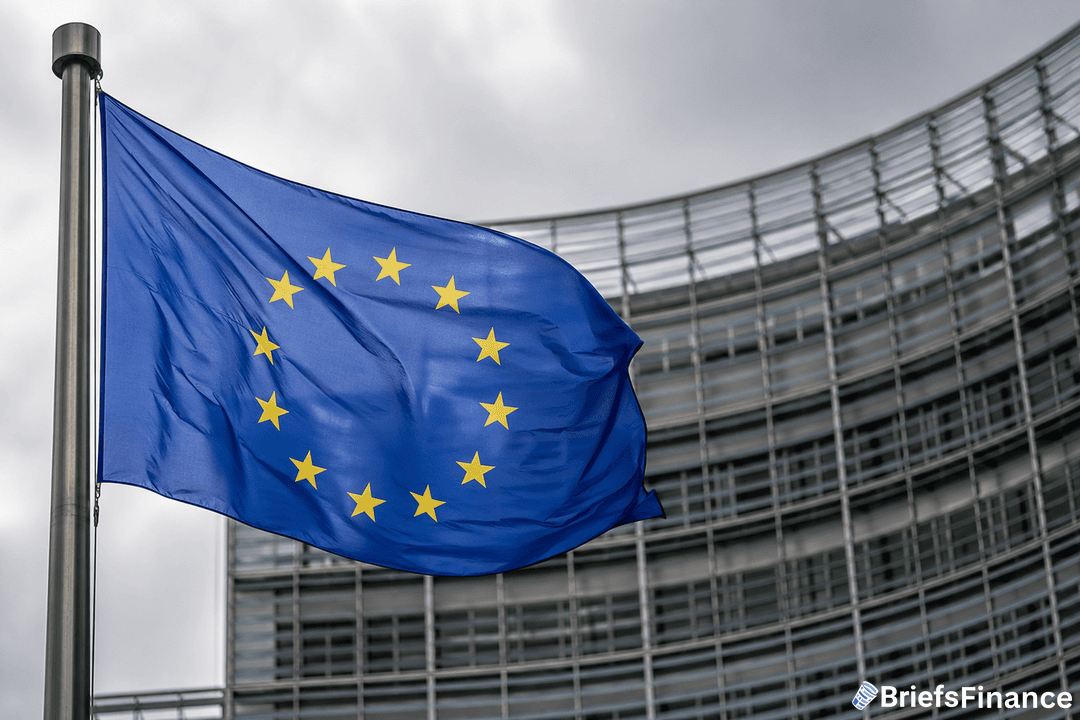
The European Union flag with yellow stars on a blue background waves in front of a modern glass building under a cloudy sky.
Summary:
  • The European Commission proposed the biggest overhaul of EU merger rules in two decades on Thursday.
  • The new draft tells regulators to weigh global competition, not just shopper prices.
  • The text is open for feedback until June 26 before it can take effect.

For 20 years, the EU blocked deals that might raise prices for shoppers. Brussels now says that view cost it ground against U.S. and Chinese giants.

So the rules are changing.

The shift could open the door to mega-mergers in fields from rail to telecom to banking, with bankers already lining up deals that died under the old test.

What Brussels Just Changed

The European Commission published a draft on Thursday that asks regulators to weigh "scale, innovation, investment and resilience" when they review deals.

That's a clear move away from the old test, which mainly looked at how a deal might lift prices.

Under the new draft, deals that "benefit the internal market and promote global competitiveness" get more room to clear, even if they would have been blocked before.

EU competition commissioner Teresa Ribera said the rules will still protect "strong, competitive markets without allowing an accumulation of power that can be abused."

EU chief Ursula von der Leyen said in a statement that Europe needs "bold, innovative companies that can compete on the global stage."

She added that the bloc has the talent but lacks the rules to build them.

Why The Pivot Now

Berlin and Paris have pushed for this since 2019, when Brussels blocked a planned rail tie-up between Germany's Siemens and France's Alstom over fears it would raise train ticket prices.

Both governments saw that deal as Europe's shot at building a rail Airbus big enough to take on China's state-backed CRRC.

The deal died, and so did that plan.

Six years later, with U.S. tech firms and Chinese state firms pulling ahead in chips, clean energy, and AI, the EU is starting to agree with Berlin and Paris.

The change builds on warnings from former ECB chief Mario Draghi and former Italian prime minister Enrico Letta, who said Europe's gap with the U.S. and China was widening fast.

What It Means For Investors

This is less a pure deregulation play and more a policy bet on industrial scale, giving European firms a clearer runway to consolidate where size matters most.

Defense, telecom, pharma, and big industrial firms top the list, all sectors where European players have been losing share to bigger U.S. and Chinese rivals.

Bankers will likely test the new rules with deals that died under the old ones. Telecom mergers across borders are an obvious first move, since Europe has dozens of carriers while the U.S. has just three big national ones.

Banking is another field to watch, with French and Italian lenders long rumored to be eyeing tie-ups blocked by national rules.

The catch: the EU's antitrust chief already has critics inside the bloc who say loosening rules will hand more pricing power to a handful of giants.

The Draghi report found that Europe needs more than $800 billion a year in extra investment to catch up on tech, energy, and defense.

Forging bigger firms is one piece of that fix, with the new rules acting as the legal hook.

Worth Noting

The draft is open for feedback until June 26, leaving room for changes before the rules take effect.

The next batch of merger filings will tell us whether this is real change or window dressing.
Disclosure

Get Market Briefs delivered to your inbox every morning for free!

No fluff. No noise. No politics. Just finance news you can read in 5 minutes.

Blogs

April 29, 2026
What Is Blockchain? A Plain English Guide For Investors
  • Blockchain is a digital ledger that records every transaction on a public network.
  • Once a transaction is recorded, it cannot be changed or deleted.
  • It is the foundation of Bitcoin, Ethereum, and thousands of other cryptocurrencies.
Read More
April 29, 2026
How To Negotiate Bills: The Script That Saves You Hundreds A Year
  • Most monthly bills are negotiable, even though most Americans never try.
  • A simple phone call with the right script can lower your phone, internet, and utility bills.
  • The key rule is to be nice. Customer service reps have more flexibility than most people realize.
Read More
April 29, 2026
75 15 10 Rule: The Budget That Builds Wealth On Autopilot
  • The 75 15 10 rule is a budgeting plan: spend at most 75% of your income, invest at least 15%, and save at least 10%.
  • It works by making sure you pay yourself before you spend.
  • Once your savings target is hit, you shift the 10% over to investing, becoming a 75/25 plan.
Read More
April 29, 2026
How To Rebalance Portfolio: The Strategy That Forces You To Buy Low And Sell High
  • Rebalancing means adjusting your portfolio back to your target allocation when it drifts too far.
  • The two main methods are time-based (rebalance once a year) and threshold-based (rebalance when allocation drifts more than 5%).
  • If you are still adding money, you can rebalance by directing new money instead of selling.
Read More
April 29, 2026
How To Buy Treasury Bonds: A Beginner's Guide
  • Treasury bonds are loans you make to the U.S. government. They are considered the safest investment in the world.
  • You can buy them at TreasuryDirect.gov directly or through any major brokerage.
  • There are three main types: T-Bills, Treasury Notes, and Treasury Bonds. The longer the term, the higher the interest rate.
Read More
April 29, 2026
Forward Vs Futures Contracts: What's The Real Difference?
  • Both forward and futures contracts are deals to buy or sell something at a set price on a future date.
  • Futures trade on exchanges. Forwards are private deals between two parties.
  • Most regular investors do not use either. They are mostly tools for businesses and big institutions.
Read More
April 29, 2026
Alternative Investments Explained: What They Are And Why They Matter
  • Alternative investments are anything that is not a regular stock or bond.
  • The most common types are precious metals, crypto, real estate, commodities, and collectibles.
  • Most investors should hold 5% to 25% of their portfolio in alternatives, depending on risk tolerance.
Read More
April 29, 2026
How To Buy Bitcoin For Beginners: 3 Simple Ways
  • There are three main ways to buy Bitcoin: directly on an exchange, through a Bitcoin ETF, or through a Bitcoin miner stock.
  • Each has its own pros, cons, and tax setup.
  • Most beginners do best starting small and using dollar cost averaging.
Read More
April 29, 2026
How To Follow Smart Money: The 5 Market Shifts Framework
  • "Smart money" means big investors with deep research teams and fast information.
  • You can follow them by watching for 5 types of market shifts.
  • The goal is to spot where money is moving before it shows up on CNBC.
Read More
April 29, 2026
Insider Trading Meaning: What It Really Is (And Why Some Of It Is Legal)
  • Insider trading means buying or selling a stock based on facts the public does not know yet.
  • Some insider trading is legal. Some is a federal crime that can send people to prison.
  • The SEC tracks every legal insider trade in a public file called Form 4.
Read More
1 2 3 19
Share via
Copy link













