Pro Login

The Market Was Down 2.5%. Then Trump Posted on Truth Social.

A stylized illustration of a cylindrical cup with blue arrows and lines indicating a swirling or rotational motion inside the cup.
Published Mar 3, 2026
Share:
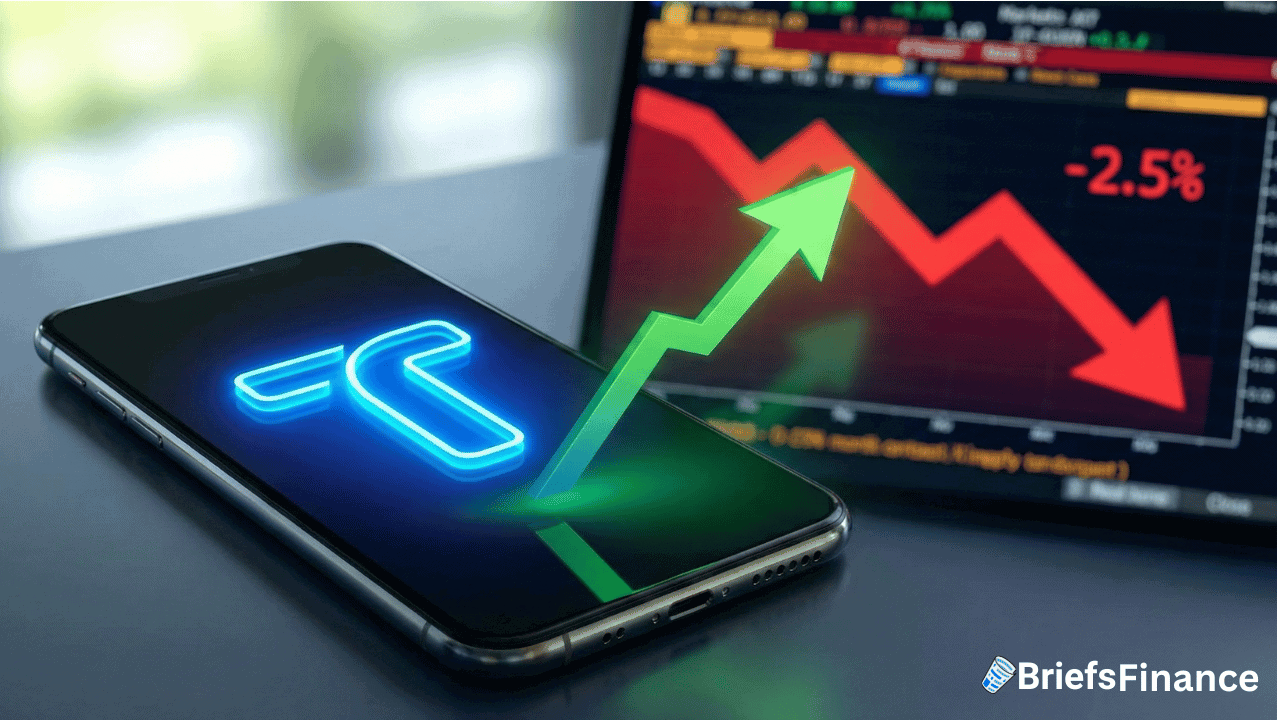
A smartphone with a glowing "T" logo and an upward green arrow stands before a screen displaying the Truth Social stock market chart, which shows a downward red trend line and a "-2.5%" label.
Summary:

  • Stocks plunged as much as 2.5% Tuesday before bouncing back to close down less than 1%.
  • The turnaround came after Trump pledged the US Navy would escort oil tankers through the Strait of Hormuz.
  • The recovery was real — but fragile. Every S&P 500 sector still finished in the red.

At their worst, markets were looking at their steepest single-day drop in months. Then the president posted.

How Bad It Got

Tuesday started ugly. The Dow fell more than 1,200 points at its intraday low. The S&P 500 dropped 2.5%. The Nasdaq slid nearly 2.7%. Fresh Israeli and US strikes on Iran overnight spooked investors who had mostly shrugged off the initial attack over the weekend — and this time, the selling was harder to shake off.

Airlines sank on soaring jet fuel costs and route disruptions. Gold, which had rallied to $5,400 Monday, reversed sharply and fell more than 4%. Even defense stocks, which had been the war trade's biggest winners, couldn't hold their gains.

What Turned It Around

Just after midday, President Trump posted on Truth Social that the US Navy would escort tankers through the Strait of Hormuz if necessary, and pledged to "ensure the FREE FLOW of ENERGY to the WORLD." Oil prices pulled back from their highs. Yields eased. Stocks bounced.

By the close, the S&P 500 was down 0.94%, the Dow off 0.83%, and the Nasdaq down 1.02% — still losses, but a far cry from the morning's damage. The NYSE noted that markets had been reasonably well-hedged going into Tuesday, and traders moved quickly to cash out those hedges once the Hormuz narrative softened.

Why "Recovery" Might Be the Wrong Word

Closing off the lows isn't the same as being fine. New York Fed President John Williams said Tuesday that the conflict will affect the near-term inflation outlook and increase economic uncertainty. The FOMC meets March 17. Every day of elevated oil prices between now and then makes a rate cut harder to justify.

Trump also said oil prices could drop "lower than even before" once the war ends. That's a promise Wall Street will believe when it sees it.

Disclosure

Get Market Briefs delivered to your inbox every morning for free!

No fluff. No noise. No politics. Just finance news you can read in 5 minutes.

Blogs

April 15, 2026
What Is a Put Option? A Simple Guide for Investors
  • A put option is a contract that gives you the right to sell a stock at a set price before a set date.
  • Investors use put options to protect their portfolio against losses or to profit when they think a stock will drop.
  • The most you can lose when buying a put option is the premium you paid for the contract.
Read More
April 13, 2026
What Is Free Cash Flow? How To Find It & Why It's Important
  • Free cash flow is the cash a company has left after paying its bills and putting money back into the business.
  • Investors use free cash flow to figure out what a company is really worth - and if the stock is a good deal.
  • You can find free cash flow on a company's cash flow report, one of three key reports every public company files.
Read More
April 13, 2026
Non Taxable Income: What It Is and Why Investors Care

Non taxable income is money you earn that the IRS does not tax - like Roth IRA cash, muni bond interest, and certain investment gains. The U.S. tax code taxes workers, investors, and business owners at very different rates. Tools like Roth accounts, muni bonds, and real estate write-offs can help you keep more of what you earn.

Read More
April 11, 2026
Nasdaq Index Fund: A Beginner's Guide to Investing in the Nasdaq 100
  • A Nasdaq index fund lets you invest in the 100 biggest non-bank companies on the stock market all at once.
  • You can access the Nasdaq through index funds, mutual funds, or ETFs like QQQ - each with its own fees, trading rules, and style.
  • Picking the right Nasdaq index fund comes down to three things: who runs it, what is in it, and what it costs.
Read More
April 11, 2026
What Is Wealth? It's Not What Most People Think
  • Wealth is about owning assets that grow and pay you - not just earning a high salary.
  • In a capitalist system, there are two ways to get paid: from your labor and from your capital.
  • Building wealth takes a shift in mindset, a money system, and the habit of investing before you spend.
Read More
April 10, 2026
Micron Stock: The AI Memory Play Most Investors Are Missing
  • Micron (MU) is the only U.S. company that makes HBM chips - the short-term memory layer that AI systems need to run.
  • By early 2026, data centers were using about 70% of all memory chips made in the world, creating an 18-month backlog for new orders.
  • Micron's DRAM - or short-term memory chip - revenue jumped 69% year over year, and the company shifted away from consumer products to focus almost entirely on AI.
Read More
April 10, 2026
What Is Working Capital? What Investors Need To Know
  • Working capital is current assets minus current liabilities - it shows if a business can pay its short-term bills.
  • You find it on a company's balance sheet inside its 10-K report.
  • Changes in working capital show up on the cash flow statement and affect how much cash a business really makes.
Read More
April 9, 2026
What Is a Meme Stock? A Simple Guide for New Investors

You've probably heard the term "meme stock" thrown around on […]

Read More
April 9, 2026
Enterprise Value Formula: What It Is and How to Calculate It
  • Enterprise value (EV) shows what a company is really worth - debt and cash included - not just its stock price
  • The enterprise value formula is: Market Cap + Total Debt - Cash and Cash Equivalents
  • Investors use EV with metrics like EBITDA to compare stocks more fairly than market cap alone
Read More
April 8, 2026
Return on Equity: What It Is and How to Use It
  • Return on equity (ROE) measures how much profit a company earns for every dollar of shareholder equity
  • The formula is simple: net income divided by shareholder equity
  • A higher ROE can signal a company that is good at turning investor money into profit - but it is not the full picture
Read More
1 2 3 17
Share via
Copy link










