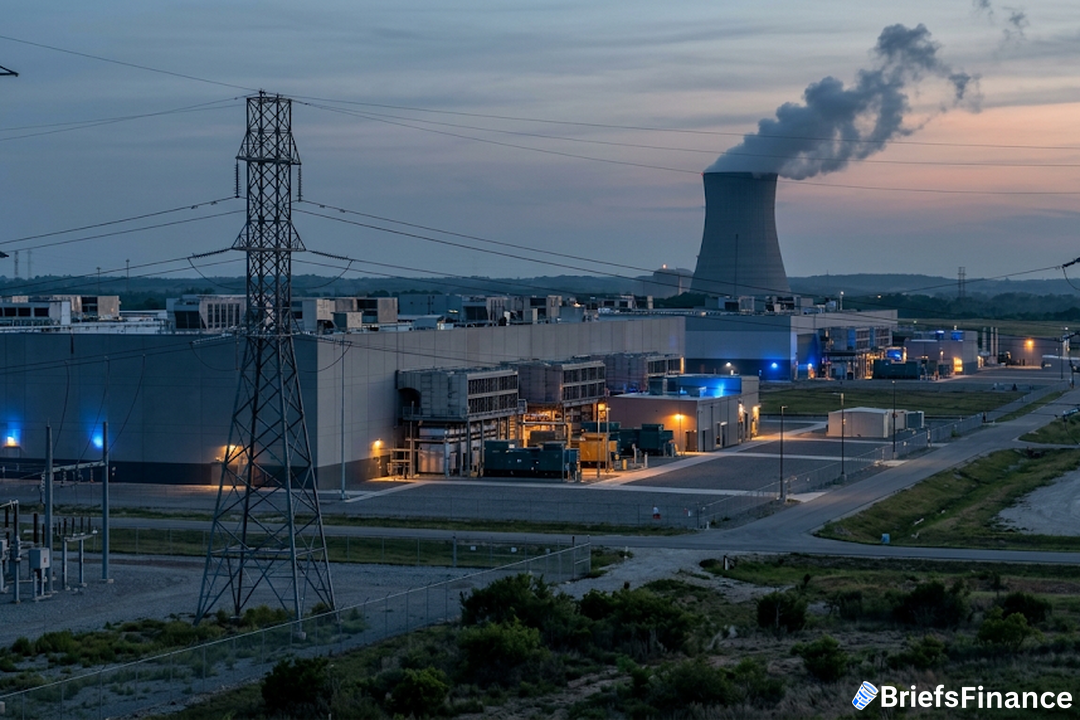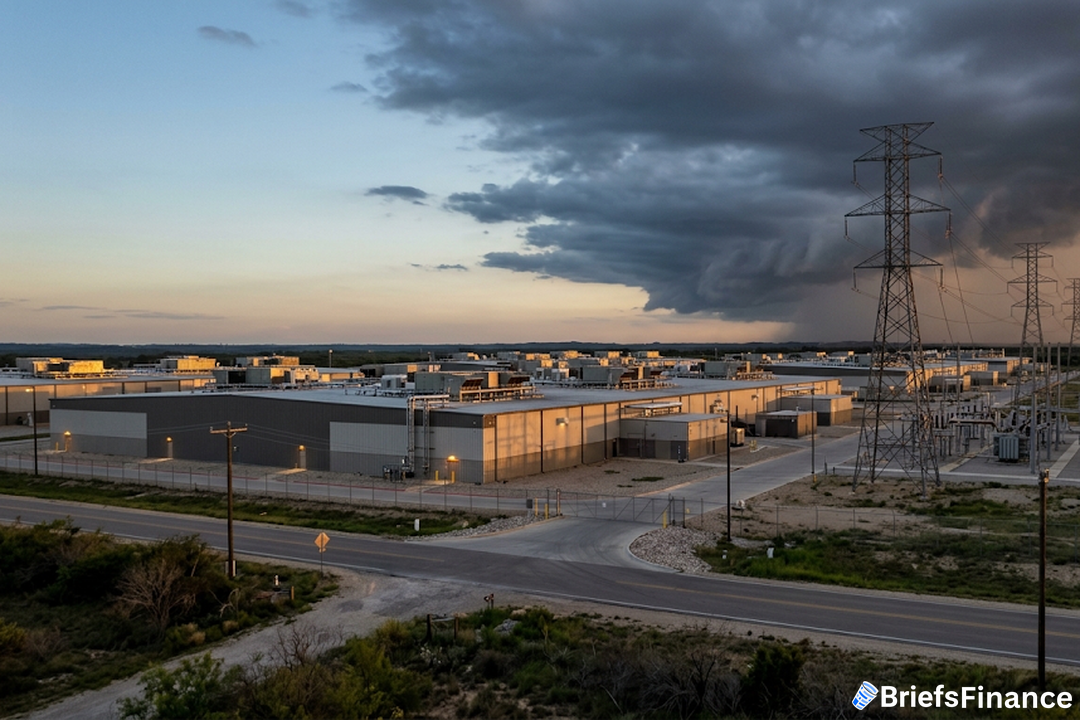
Picture this: Every major tech company in America suddenly needs the same rare ingredient to power their AI operations. And there's not enough of it to go around.
That's exactly what's happening with uranium in 2025.
Microsoft, Google, and Amazon are racing to restart old nuclear power plants. Countries are cutting off supplies. And the world's biggest uranium mines are producing less, not more.
Meanwhile, demand for AI is exploding.
This means that there could be a uranium boom in the near future - one that is creating potential opportunities for investors to profit.
Let’s break down the uranium supply crisis, the risks, and opportunities this market shift is creating right now.
If you research uranium stocks with ChatGPT or Claude, the Briefs Connector lets it pull each company's Briefs Score instead of guessing.
Understanding the Uranium Supply Crisis
The uranium market is experiencing what experts call a "perfect storm."
Five major forces are converging at once, creating a unique set of circumstances that could reshape the energy landscape for decades to come.
Force #1: A Nuclear Renaissance
Countries around the world want clean energy they can count on 24/7, and nuclear is emerging as the leading option.
Unlike solar and wind, which depend on weather conditions, nuclear power provides consistent baseload electricity that never stops flowing.
This reliability is exactly what modern economies need. Data centers can't afford downtime - hospitals and hyperscalers need to run constantly.
Nuclear energy delivers that consistency in a way that intermittent renewable sources simply can't match on their own.
Force #2: The Supply Shock
Over 50% of the world's uranium comes from just ten mines that are running low on high-quality material.
Current supply only covers 80-90% of what today's nuclear reactors actually need.
This gap has existed for years, with the shortfall being filled by drawing down government stockpiles and recycling old nuclear weapons material.
But those secondary sources are running dry.
And it's getting worse. The world's two biggest uranium producers announced production cuts in 2025:
- Cameco (Canada's largest) slashed its 2025 forecast from 18 million pounds to 14-15 million pounds.
- Kazatomprom (world's largest mine in Kazakhstan) is cutting 2025 production by 5% of global supply, with a 10% reduction planned for 2026.
That’s millions of pounds of uranium disappearing from the market at exactly the wrong time.
Starting a new uranium mine takes over a decade - you can't just flip a switch and produce more.
Mining companies need to secure permits, complete environmental studies, build infrastructure, and develop the actual mine.
By the time new supply hits the market, we could be years into a severe shortage.
Force #3: AI’s Energy Problem
The International Energy Agency reports that data centers consumed 415 TWh of electricity in 2024. That's enough power to run 3.4 million U.S. homes for an entire year.
By 2030, that demand will more than double.
Every ChatGPT query, every AI-generated image, every machine learning model training session requires electricity.
And as AI becomes more sophisticated and more widely adopted, those energy requirements multiply exponentially.
This is why tech companies are turning to nuclear power:
- Microsoft and Constellation Energy: 20-year deal to restart Three Mile Island (835 megawatt nuclear plant) by 2028.
- Google and NextEra: Restarting Iowa's Duane Arnold plant (601 megawatts) by 2029.
- Amazon and Talen Energy: Expanding megawatt outputs across various nuclear projects between 2025 and 2032.
These are massive, multi-billion dollar commitments from some of the world's most powerful companies.
Force #4: Geopolitical Pressure Tightens Supply
Geopolitics is tightening uranium supply even further, adding another layer of complexity to an already strained market.
The U.S. banned Russian uranium imports in August 2024 and allocated $2.72 billion to build domestic uranium supply.
This forces utilities to contract with Western suppliers at premium prices, as Russia was a major supplier to U.S. nuclear plants, so replacing that supply won’t be easy.
Geopolitics has also impacted other nations:
- France halted operations in Niger after political instability made mining operations too risky.
- Australia restricts uranium mining due to environmental concerns and Indigenous land rights.
- Namibia is exploring deals with China, which could take supply away from Western markets.
This is accelerating the push to build a domestic uranium supply chain in North America and beyond.
Now, opportunities for smaller mining companies positioned in friendly jurisdictions like Canada and the United States have a chance to grow, which investors may be able to take advantage of.
Force #5: Falling Interest Rates
With the Federal Reserve projecting rates to decline to 3.1% in 2026, lower rates could significantly benefit uranium mining companies, especially smaller operations.
Why does this matter? Junior mining companies (we’ll explain what that is later) often carry debt or need to raise capital to develop their projects.
When interest rates are high, financing is expensive and valuations get compressed.
When rates fall, these companies can borrow more cheaply, and investors apply less of a "discount" to their future cash flows.
Lower rates make it easier for small mining companies to get funding and grow.
Why Junior Miners Could Win Big
Here's where it gets interesting for investors looking at uranium stocks.
Junior miners - smaller companies with early-stage operations - are more sensitive to uranium price changes than major producers.
When uranium prices go up 10%, a major producer might see a 15% increase in profitability.
But a junior miner's valuation could jump 30-50% because their entire future is tied to those higher prices.
During the 2025 rally, juniors delivered 17.94% gains during strong months, far exceeding major producers who saw more modest returns. This outperformance makes sense when you understand the dynamics at play.
Early stage projects that aren't mass-producing uranium yet can see dramatic increases in value from relatively small price movements.
Their deposits become economically viable.
Projects that weren't worth developing at $50 per pound suddenly look attractive at $60. That revaluation happens quickly and dramatically.
The Acquisition Wave is Coming
Major producers are running low on reserves and acquiring juniors to keep up with demand. This is another catalyst that could benefit uranium mining stocks in the junior category.
Deals in 2025 include Paladin Energy's $789 million takeover of Fission Uranium and a three-way merger of 92 Energy, ATHA Energy, and Latitude Uranium.
These aren't isolated incidents. They're part of a broader trend of consolidation in the uranium sector.
Big mining companies need to replace their reserves. As they deplete their existing mines, they need new projects in the pipeline.
The fastest way to acquire those projects? Buy companies that already have them.
Junior miners sitting on quality uranium deposits become takeover targets, often at significant premiums to their current stock prices.
For investors, this creates a dual opportunity. You can potentially profit from rising uranium prices AND from the possibility that a major producer acquires the company you own shares in.
Investment Opportunities Worth Watching
NextGen Energy (NXE): The Tier-1 Play
For investors wanting exposure to uranium without taking huge risks on small companies, NextGen Energy might be worth considering.
NextGen's Rook 1 project is widely cited as the most important uranium project in the world.
Once a fully operational mine, Rook 1 is projected to produce around 20% of the world's uranium.
The project is in Canada, specifically in Saskatchewan's Athabasca Basin, one of the world's premier uranium mining regions.
Its proximity to the U.S. makes its production especially valuable for America's nuclear needs, particularly given the ban on Russian uranium.
It's currently awaiting approvals from the Canadian Nuclear Safety Commission, with the final hearing scheduled for February 2026. A positive decision essentially guarantees the mine gets built.
Denison Mines (DNN): The Innovation Play
Traditional uranium mining has existed for decades - this is essentially just digging into the Earth until miners find a source, then processing massive amounts of rock.
Denison Mines is challenging these conventions with innovation, specifically something called In-Situ Recovery (ISR). Instead of digging up tons of rock and processing it above ground, ISR dissolves the uranium underground and pumps it to the surface.
It's like using a giant chemical straw to extract only the uranium you want, leaving everything else in place.
This approach is expected to save significant costs compared to traditional uranium mining. Lower costs mean higher profit margins.
Higher margins mean more valuable companies and potentially higher stock prices.
Denison has hit every major regulatory milestone with this new process and has its final hearing for federal approval with the Canadian government on December 8th, 2025.
If approved, the stock could see a substantial surge before the end of the year as investors price in the validation of their technology.
Unlike NextGen though, Denison is far more risky.
As of late November 2025, its shares trade around $2.50 and the company has a $1 billion market cap, making it subject to significant volatility.
Small-cap stocks like this can swing wildly on news, sentiment, and broader market conditions.
The Risks You Need to Know
Let's be clear: Uranium stocks carry significant risks, and anyone considering these investments needs to understand what could go wrong.
Commodity Price Volatility
Uranium is a commodity, and commodity prices can be unpredictable. Demand going up doesn't always mean prices will rise in a straightforward way.
Lithium for example outpaced supply for years, but prices stayed under projections because China dumped reserves into the market to support their domestic battery manufacturers.
The same thing could happen with uranium if a major holder decides to flood the market with supply.
Kazakhstan, Russia, or China could decide to increase production dramatically or release strategic reserves. That would tank prices overnight, taking uranium stocks down with them.
Geopolitical Tensions
Rising tensions globally related to tariffs could disrupt the global supply chain and negatively impact even North American mines.
Trade wars create uncertainty, and uranium mining companies operate in a global market.
With much of this projected supply being Canadian, U.S.-Canada trade issues could create problems.
While relations are generally strong, nothing is guaranteed. Policy changes, new regulations, or trade disputes could complicate cross-border uranium sales.
Technology Competition
There's also the possibility that breakthroughs in other energy sectors - most likely renewables or energy storage - could pull attention and funding away from nuclear.
What if battery technology makes a quantum leap? What if fusion energy finally becomes commercially viable? What if ultra-efficient solar panels combined with cheap grid-scale storage make nuclear unnecessary?
Technology can surprise us - new innovations and energy forms could be adopted in the future.
If nuclear becomes obsolete before these new uranium mines even start producing, investors could be left holding worthless stocks.
Nuclear Safety Concerns
And nuclear safety is always a concern - one major accident could reverse this entire trend overnight.
Previous nuclear incidents are the primary reason the U.S. was nuclear-shy for several decades.
Chernobyl, Three Mile Island, and Fukushima created public fear and political opposition that shut down the industry's growth for generations.
If another major accident occurs, public sentiment could turn against nuclear power.
That's an existential risk that uranium investors need to acknowledge.
Frequently Asked Questions About Uranium Stocks
What are uranium stocks?
Uranium stocks are shares of companies involved in uranium mining, processing, or enrichment.
These companies extract uranium ore from the ground or process it for use in nuclear power plants.
They can range from small exploration companies to large producers operating multiple mines.
Why are tech companies interested in nuclear power?
AI data centers require massive amounts of reliable, 24/7 power.
Nuclear energy provides consistent baseload power that doesn't depend on weather conditions like solar or wind, making it ideal for energy-intensive AI operations.
Companies like Microsoft, Google, and Amazon need certainty that their data centers will always have electricity.
Are uranium stocks risky?
Yes, uranium stocks carry significant risks including commodity price volatility, regulatory challenges, geopolitical tensions, and the potential for nuclear safety incidents.
Junior miners especially can experience dramatic price swings. Investors should always do their own due diligence before investing and understand the risks involved.
What's the difference between junior miners and major producers?
Junior miners are smaller companies with early-stage operations and limited production.
Major producers are large, established companies with multiple operating mines and consistent revenue streams.
Juniors are typically more volatile but can offer higher growth potential when uranium prices rise.
How does the U.S. ban on Russian uranium affect the market?
The August 2024 ban forces U.S. utilities to source uranium from Western suppliers, creating increased demand for North American and allied producers.
This has pushed up prices and created opportunities for domestic mining companies, while also creating urgency around developing new supply sources.
How long does it take to start a new uranium mine?
Starting a new uranium mine typically takes over a decade from discovery to production.
Companies must complete geological surveys, environmental assessments, secure permits, build infrastructure, and develop the actual mine.
This long timeline means current supply shortages can't be solved quickly.
What role does government policy play in uranium stocks?
Nuclear energy requires regulatory approval, safety oversight, and often government support.
The U.S. government's $2.72 billion allocation to build domestic uranium supply and bans on Russian imports may impact the market in 2026.
Should I invest in uranium stocks?
That depends entirely on your financial situation, risk tolerance, time horizon, and investment goals. Uranium stocks are speculative investments with significant risks.
They may be suitable for investors with high risk tolerance looking for exposure to the energy transition, but they're not appropriate for everyone.
Always consult with a licensed financial advisor before making investment decisions.
The Bottom Line on Uranium Stocks
The uranium market is experiencing what many experts call a "perfect storm." Supply is shrinking due to production cuts and mine depletion.
At the same time, AI demand, the global shift to clean energy, and geopolitics is restricting trade and forcing countries to develop domestic supply chains.
This is a long-term shift with near-term catalysts.
The world needs uranium, just like it needs rare earth minerals and other critical resources.
Production and policies are now shifting to meet that demand, and we're only at the beginning of what could be a massive industry transformation that plays out over the next decade or more.
That's why investors may want to pay attention to uranium stocks this year and look beyond the next quarter and think about where the world is heading next.
Now here’s the thing: This article only scratches the surface of what is going on in the uranium market and the potential investing opportunities.
Want to see how individual uranium stocks grade? Turn on the Briefs Connector and ask ChatGPT or Claude - it pulls the Briefs Score straight from Briefs Finance.