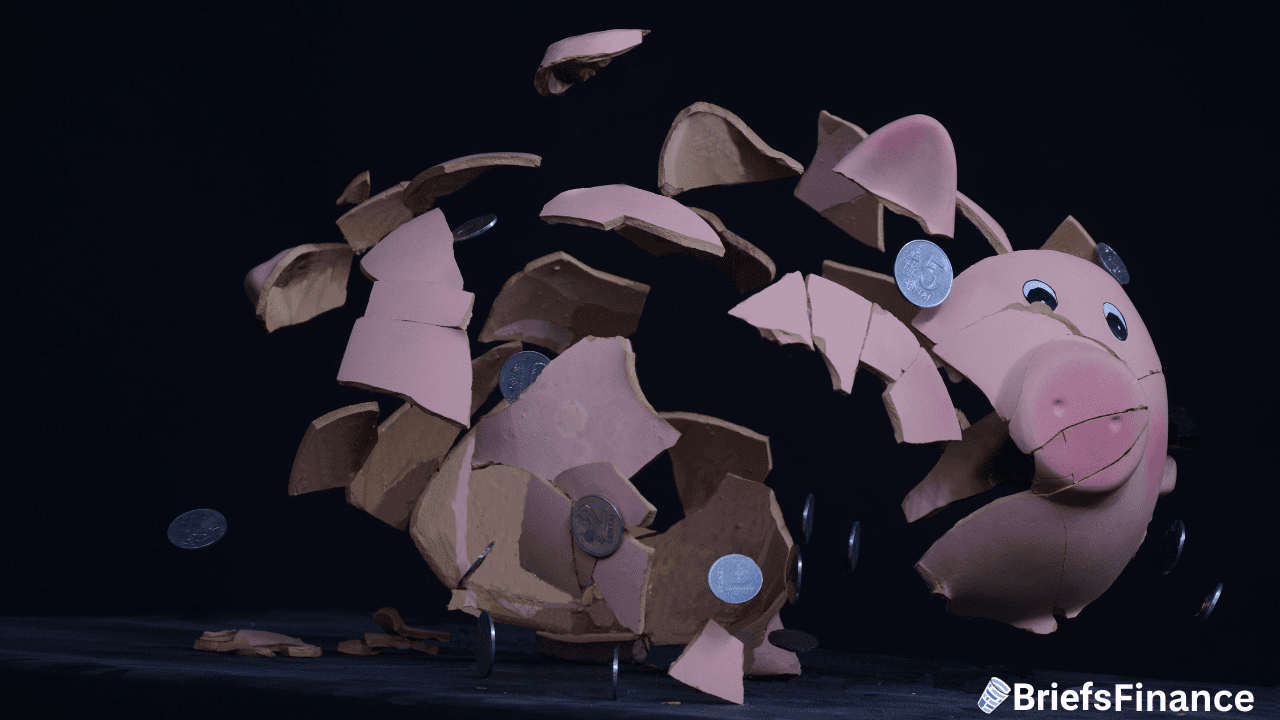
The Quiet Rotation Nobody Is Talking About
Over the last few years, the stock market has been glued to one thing: Tech stocks
However, smart money has started to quietly move away from potential high-growth tech stocks and into value stocks with dividends.
Where are we seeing the move? Institutional investors - and when these whales make a move, that signals something big could be coming next.
Not because dividends are suddenly exciting.
Because for many investors, volatility has become too risky.
Here's the thing about growth stocks, especially in tech: they can swing 5% up or down in a single day.
Experts are calling it "coin-flip volatility."
Every day you flip a coin and hope for the best.
Many investors don’t want volatility, they want certainty - so fear of the unknown can move markets more than an actual event.
Our analysts have identified where smart money may be heading next as a result:
Companies that have proven they can make money in any economic environment recessions, market crashes, pandemics.
Companies that don't just survive the chaos, they pay you while it's happening.
That's the core appeal of dividend stocks. And right now, there's a government shift making them even more compelling.
Keep in mind: This is only one shift impacting the market today. There are dozens of other market shifts, each with their own specific opportunities.
Watch or listen to this free podcast with our Head of Investment Research where he breaks down how we spot market shifts and potential investment opportunities.
The Law That's Changing the Dividend Game
In 2025, Congress passed the One Big Beautiful Bill Act(OBBBA).
Buried inside this legislation is something called 100% Bonus Depreciation.
Here's what it means in plain English:
Companies that own a lot of physical assets - data centers, equipment, buildings, infrastructure - can now write off the full cost of improvements and new construction in year one, instead of spreading those deductions over many years.
Note: Not everything can be written off - but this bill has expanded what can be.
And it has a very specific effect: It leaves more cash available to return to shareholders as dividends.
In other words, the government just made dividend checks larger for certain types of companies.
The bottom line: The OBBBA is effectively subsidizing dividend payments for companies with heavy physical assets.
Why Dividend Kings and Aristocrats Are in the Spotlight
Not every dividend stock benefits equally here. The real opportunity lies in what investors call Dividend Kings and Dividend Aristocrats.
These aren't just companies that pay dividends. They're companies that have raised their dividend - year after year - through wars, recessions, and market crashes.
- Dividend Kings: 50+ consecutive years of dividend increases
- Dividend Aristocrats: 25+ consecutive years of dividend increases
Think about what it takes to raise your dividend every single year for 50 years.
It requires a business with a wide moat - a durable competitive advantage that keeps competitors out and profits flowing in.
These are the companies that are now sitting at the center of two converging trends:
- Investors fleeing volatility in search of stability.
- A new tax law that rewards companies with physical assets.
That overlap is exactly where the opportunity lives.
What's Driving the Institutional Money Back In
Here's something else worth noting: Some of these dividend-paying companies had been removed from major investment funds in recent years due to ESG (Environmental, Social, and Governance) requirements.
Funds were actively avoiding certain industries - tobacco, defense, and others.
But ESG restrictions are being rolled back.
And as they are, institutional money from pension funds, hedge funds, and asset managers is flowing back into companies that were previously off-limits.
That's creating more momentum for some of the most established dividend payers on the market.
A Glimpse at Where the Opportunity May Be
Our research at Market Briefs Pro identified several companies sitting at the intersection of this government shift and investor rotation - specifically, Dividend Kings and Aristocrats with the physical assets to benefit from the OBBBA's tax advantages.
Two names that stand out:
One is Altria(MO) - a Dividend King with 60 consecutive years of dividend increases and a current yield of around 7%.
It owns large manufacturing facilities and is seeing institutional money return as ESG restrictions ease.
Its shares have outperformed the S&P 500 so far in 2026 as of March 4th 2026, and that performance doesn't even include the dividend.
IBM (IBM) - a Dividend Aristocrat that quietly powers the banking and airline systems of the world.
It's not chasing the next AI hype cycle. It is the infrastructure.
Stable, essential, and sitting on the kind of data center assets that benefit directly from the new tax law.
Both are worth a much deeper look - which is exactly what our full Pro report breaks down.
The Risks You Shouldn't Ignore
As this market shift develops, here’s a few things to keep in mind:
Yield traps are real. A high dividend yield can mask a falling stock price. If a stock drops significantly, the dividend won't cover those losses.
Dividends aren't guaranteed. Companies can cut or eliminate dividends at any time. It's rare for Dividend Kings and Aristocrats - but it's possible.
Treasury competition. The 10-year Treasury bond currently pays around 4.5% with essentially zero risk. If yields push higher, some dividend stocks look less attractive by comparison.
Tax law can change. The OBBBA's write-offs exist today. A future administration could roll them back, which would reduce the tax advantages these companies currently enjoy.
If you’re interested in this shift, weighing the potential gains against the risk will make you a more informed investor.
The Bottom Line On 2026 Dividend Stocks
Top dividend stocks are not a new idea.
But the conditions around them are changing - and that’s leading to new potential investment opportunities.
- A new tax law is shielding more cash for certain companies to return to shareholders.
- Institutional money is rotating back into stable, income-producing businesses.
- And investors who've been burned by coin-flip volatility are looking for something that pays them to wait.
Want to find other market shifts and potential stocks to invest in?
Our Head of Investment Research breaks down exactly how we identify potential stock market opportunities and market shifts in this free podcast with our CEO Jaspreet Singh.