The first time your portfolio turns red, it feels like […]

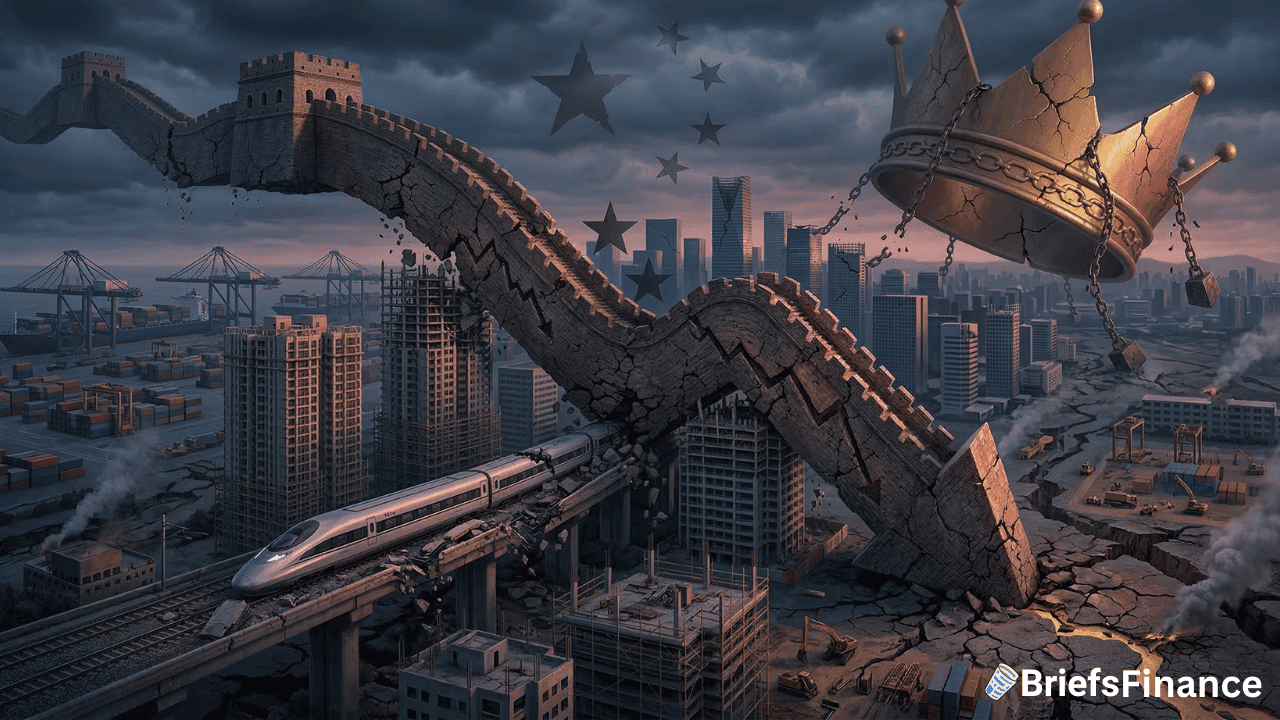
For three straight years, China aimed for "around 5%" growth. This year, it officially lowered the bar.
At the annual National People's Congress on March 5, Premier Li Qiang announced a 2026 GDP growth target of 4.5% to 5% — the most modest goal since Beijing began publishing such figures in the early 1990s.
The government cited "dramatically changing international trade and economic environment" as one reason. Li called it a "grave and complex landscape" — a notably candid framing for a Chinese government work report.
The property sector is the biggest drag. Real estate once accounted for 25-30% of China's GDP. It's now in its fifth straight year of crisis, with sales and investment still falling.
Youth unemployment hit 16.3% in January. Consumer confidence remains near pandemic lows. And for the first time in three decades, investment across housing, manufacturing, and infrastructure all declined last year.
The Iran war added a new wrinkle. China imports heavily from Iran and other Middle Eastern suppliers, and Beijing has reportedly ordered state refiners to pause diesel and gasoline exports to protect domestic fuel supplies.
Beijing isn't planning a big stimulus push. Instead, it's doubling down on AI, electric vehicles, and robotics — hoping new industries can offset the old economy's decline.
The problem, according to Rhodium Group data cited by CNBC: those emerging sectors added only 0.8 percentage points to GDP between 2023 and 2025. The property collapse, meanwhile, subtracted six.
The math is still a long way from working out.
The first time your portfolio turns red, it feels like […]
In mid-2025, Congress passed the "One Big Beautiful Bill Act." […]
Do You Have to Pay Taxes on Stocks? Short answer: […]
Everybody wants to know the secret to buying a stock. […]
Gold and silver hit new record highs in 2026 - […]
The term asset gets thrown around in finance quite a […]
Every public company has to share three financial statements with […]
The Quiet Rotation Nobody Is Talking About Over the last […]
When you hear investors talking about “the market” they’re most […]
What Is a Market Disruptor? A market disruptor is a […]