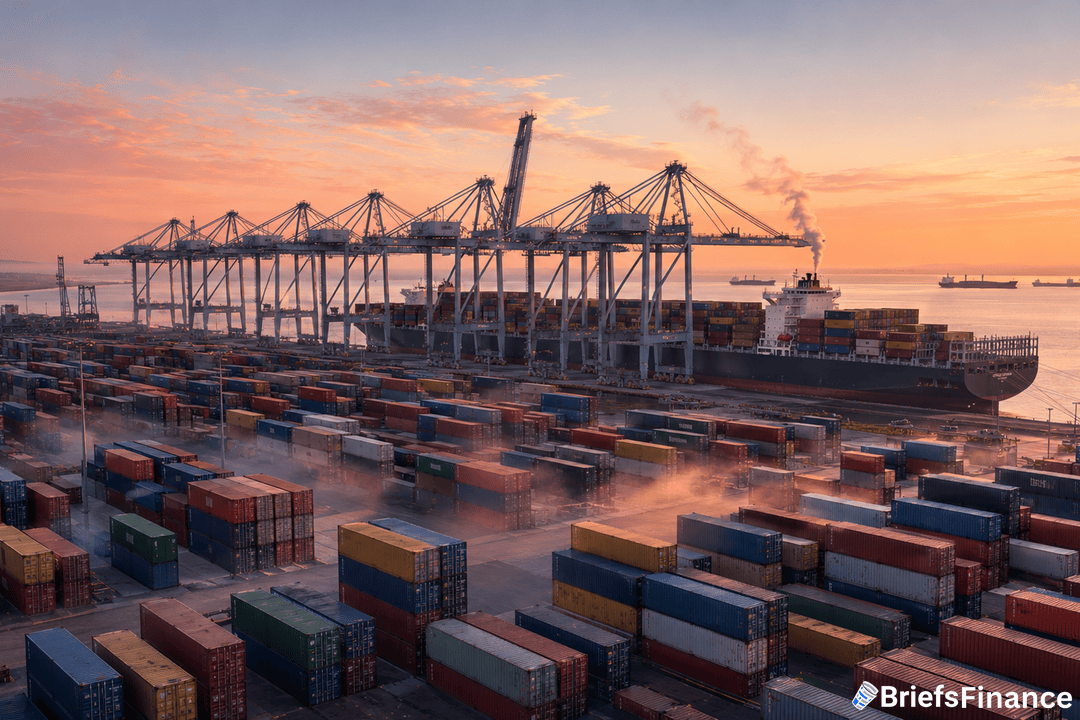
Most trade deals die in committee. The UK-Gulf deal looked headed that way too.
Then May happened. Both sides now say the deal is in the home stretch.
After three years of talks, that's a real shift.
What Just Changed
The six Gulf states sent their trade ministers to a virtual meeting with the UK on May 11. Both sides came out saying "significant progress" was made.
The Gulf bloc, called the GCC, includes Saudi Arabia, the UAE, Qatar, Kuwait, Bahrain, and Oman. The group's chief, Jasem Al-Budaiwi, is heading to London this week to keep talks moving.
This isn't a small deal. Trade between the GCC and the UK runs about GBP 60 billion a year, or about $75.5 billion.
For more on the trade and economic shifts that actually move markets, read Market Briefs in five minutes a day. You also get a free 45-minute investing masterclass when you sign up.
Why It Matters For The UK
Only three countries outside the EU buy more from Britain than the Gulf does. Those three are the U.S., China, and Switzerland. That makes the Gulf a bigger export market than most people guess.
A UK report from 2022 figured a strong deal could add GBP 1.6 to GBP 3.1 billion to UK GDP over the long run. It pegged another GBP 8.6 to GBP 15.8 billion in two-way trade by 2035.
For a country still hunting for post-Brexit trade wins, those are real numbers.
The political angle: Trade deals are slow and rarely deliver fast wins. But they show voters the country is open for business.
Why It Matters For The Gulf
The Gulf states are spending hundreds of billions of dollars to move past oil. Saudi Arabia's Vision 2030 is the most public push. But the UAE, Qatar, and Bahrain have their own plans running too.
A free trade deal with the UK gives Gulf firms tariff-free access to a rich market of 67 million people. That's a useful piece of the puzzle.
It also helps the Gulf draw British money into non-oil sectors. That's the real prize.
Which UK Sectors Win
Some UK sectors stand to gain more than others. Whisky, financial services, and luxury goods all sell well into the Gulf.
UK car makers could also benefit. Jaguar Land Rover, in particular, has a strong base of Gulf buyers. Tariff-free access means cheaper cars for those buyers, and bigger margins for the firm.
What To Watch
The next step is the actual signing. Both sides have said it's coming "in the near future," but trade deals have died at this stage before.
Think of it like a couple that's been engaged for three years. It's not done until the rings are on.
A deal in the next few months would be the UK's biggest trade win since Brexit. It would also be a clear win for the City of London, which still hopes to be a global hub for the Gulf's wealth funds.
For more on the deals quietly reshaping global trade, join Market Briefs. Signing up also gets you a free investing course as a bonus.