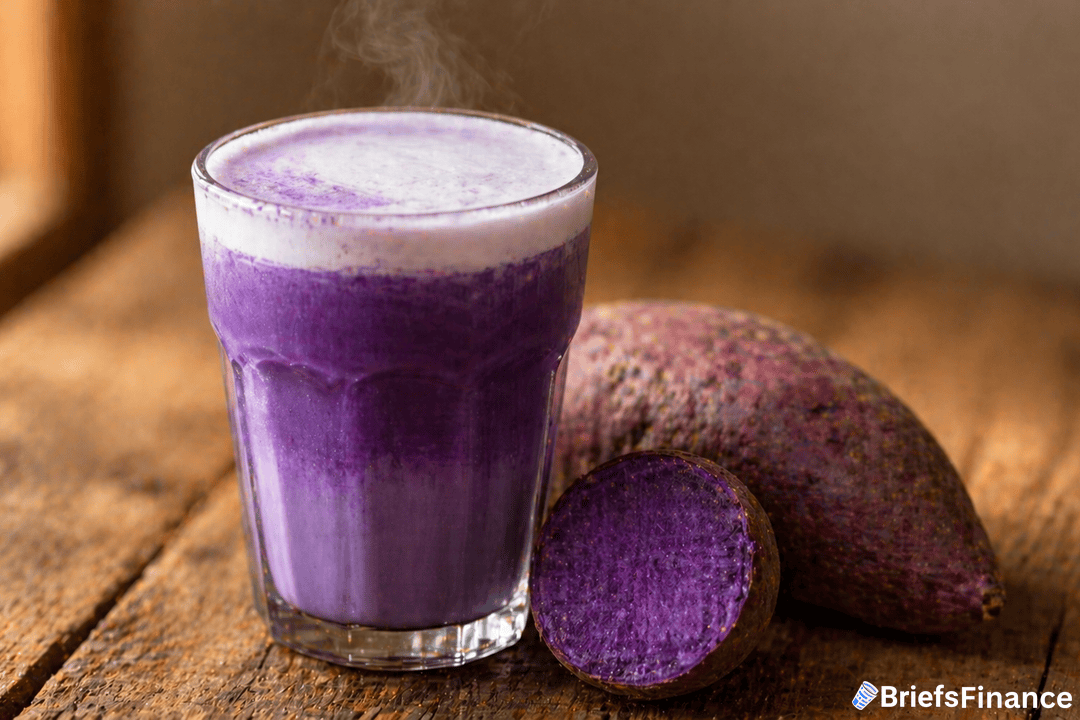
Starbucks put an Ube Iced Coconut Latte on the menu in 2025, and six months later Filipino restaurants in London were serving ube tsunami cheesecakes and ube martinis.
This March was the biggest month for ube limited-time offers across major U.S. chains, the Philippines now exports the purple yam to four continents, and farmers there cannot grow it fast enough.
A Purple Yam Goes Mainstream
Ube is a sweet, starchy purple yam that has been a staple in Filipino bakeries for generations, and it appeared on U.S. restaurant menus 230% more often over the past four years, according to food and beverage analytics firm Datassentials.
It is currently on the menu at 95 chains, with growth projected at another 74% over the next four years.
Starbucks expanded its 2026 spring lineup to include an Ube Matcha Latte and an Ube Vanilla Macchiato, while Peet's launched an Iced Vanilla Latte with Ube Dream Top.
Datassentials chief product officer Emily Tang told CNBC ube has a "very low barrier to trial," because it pairs with coffee, desserts and pastries, has a mild nutty flavor, and looks like nothing else on Instagram. There are 120,000 #ube posts on TikTok and over 750,000 on Instagram.
The Supply Crunch
Filipino farmers are not having a good time, with total ube production in the Philippines falling to 12,483 metric tons in 2025, down 1.63% from 2024 and well off the 14,150 metric tons grown in 2021, per Philippine Statistics Authority data.
The Philippine Root Crop Research and Training Center said climate change is making weather harder to predict and limiting the supply of healthy planting material.
The fix, for now, has been imports, with the Philippines, the home of ube, buying it from Vietnam to keep up with local demand.
Why Investors Should Care
Ube is the next entry on the list that already includes Japanese matcha, Dubai chocolate and boba, and each one followed the same pattern: a global chain runs a limited-time offer, social media takes it viral, supply gets tight, and prices rise.
Coffee chains spend a lot to be first to the next viral flavor, and the supply chain almost always struggles to catch up.
Worth Noting
Philippine ube exports rose roughly 20% last year to $3.2 million, with the U.S. taking about half. That is a small number today. It will not be small for long.