
- Blockchain is a digital ledger that records every transaction on a public network.
- Once a transaction is recorded, it cannot be changed or deleted.
- It is the foundation of Bitcoin, Ethereum, and thousands of other cryptocurrencies.

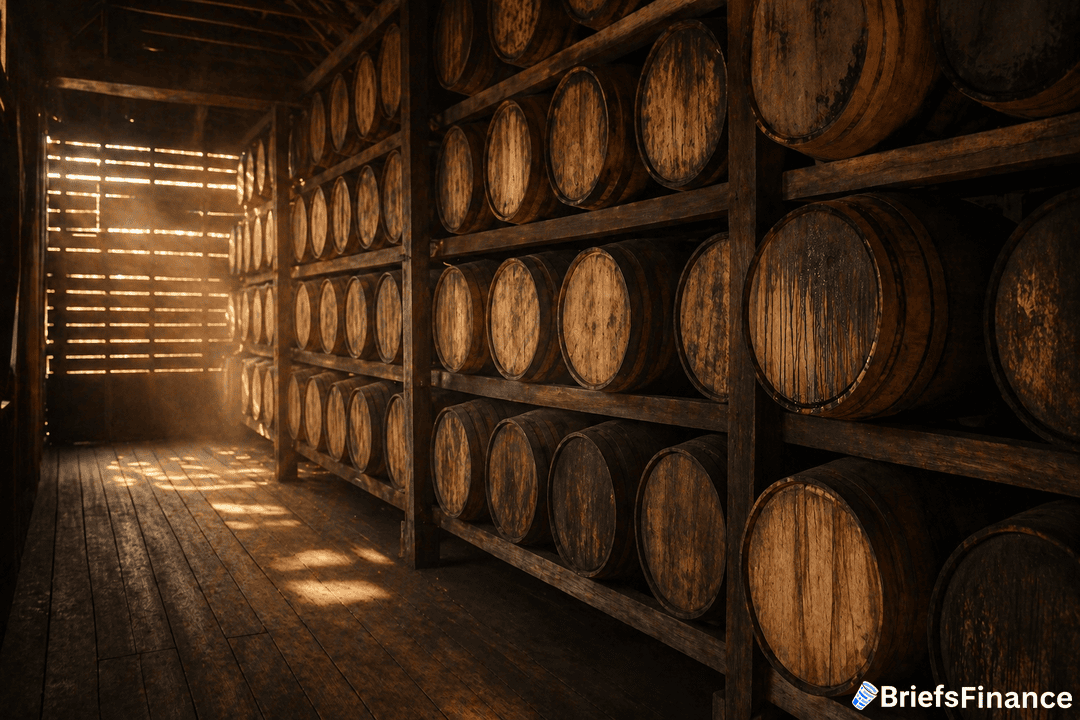
A state dinner doesn't usually move a market. This one might have just saved Scotland's most valuable export.
Hours after King Charles and Queen Camilla left the White House on Thursday, Trump took to Truth Social to lift the whiskey tariffs.
The post itself was short. Trump said he was "removing the Tariffs and Restrictions on Whiskey having to do with Scotland's ability to work with the Commonwealth of Kentucky on Whiskey and Bourbon."
In plain English: the 10% duty on UK alcohol imports is gone. The wooden barrel trade between Scottish and Kentucky distillers is open again.
Used Kentucky bourbon barrels are how most Scotch is aged. The supply chain runs both ways.
Then came the line his trade team probably didn't write for him. "The King and Queen got me to do something that nobody else was able to do, without hardly even asking!"
A 10% duty doesn't sound dramatic. Scotch operates on tight import math.
The U.S. is the single biggest market for Scotch by value, with UK industry data pegging exports at close to £1 billion a year. Distillers learned during the 2019 to 2021 trade fight, when a 25% tariff briefly hit single malts as part of an aerospace dispute, that even short tariff windows can wipe out years of sales.
That earlier round cost the industry more than £600 million in lost sales. The 10% duty replaced the 25% rate after Trump's reciprocal tariff package in April 2025. That package kept whiskey, beer, and wine on the list.
The math worked out to roughly a $5 mark-up on a mid-priced bottle of single malt at U.S. retail. That's the kind of number that decides whether an importer carries a brand or drops it.
The Scotch Whisky Association, the trade group for Scottish distillers, has lobbied for a deal for months. The group says the sector supports about 66,000 UK jobs.
The harder question is what counts as "removed." Trump's post covered the whiskey-and-bourbon trade specifically.
He didn't mention Irish whiskey, broader UK spirits, or the 25% tariff that's set to come back in June 2026 if a longer-term deal isn't struck.
For Scotch makers, the practical effect is right away. The 10% duty drops off, and Kentucky bourbon barrels cross the Atlantic without limits.
For Kentucky distillers, the same is true in reverse. Bourbon and rye get easier access to UK shelves.
The U.S. and UK alcohol trade has been a casualty of every recent transatlantic dispute. Lifting it through a state visit is not how trade policy normally works.
The King's reported favorite single malt is Laphroaig, an Islay distillery he gave a Royal Warrant in 1994. After this trip, it's about to ship to the U.S. without the surcharge.
Trump also took a swipe at UK Prime Minister Keir Starmer in remarks to Sky News after the visit. He praised the King and Queen but said his ties to Starmer were "another individual" matter.
The whiskey move shows that royal soft power can still get a deal done where talks between heads of government have stalled.









