There's the official Iran timeline. And there's what the people putting actual money on the line think will happen. The gap between the two is wide, and it's getting wider.
The Official Claim
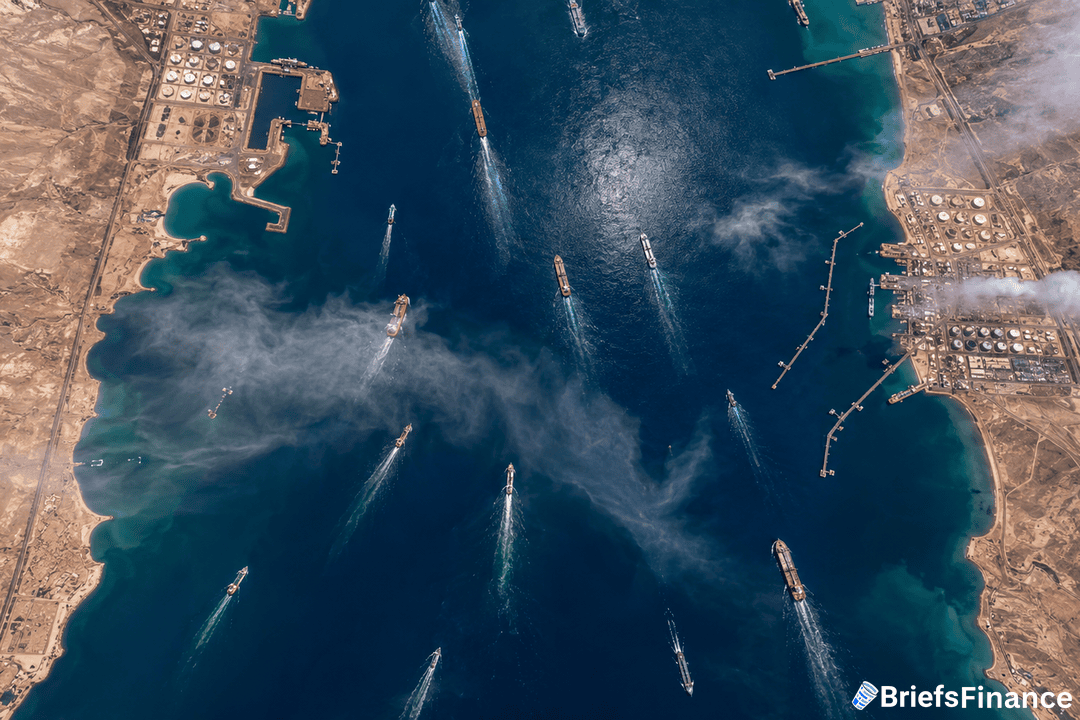
Reuters reported Wednesday that Iranian state television laid out a draft framework with the U.S. Under that framework, traffic through the Strait of Hormuz would return to prewar levels within a month of an agreement, with Oman helping manage the shipping flow.
The White House said no such framework exists. It called the report "a complete fabrication."
About 20% of the world's oil moved through Hormuz before the war started. So a one-month return to normal would be a massive shift. Similar reports of a Hormuz deal have already moved crude prices several times this month.
We track the headlines that actually move markets in Market Briefs every weekday morning. You'll also get a free 45-minute investing masterclass when you join.
What The Traders Are Saying
On the prediction market platform Kalshi, traders are pricing this very differently. They put a 38% chance that Hormuz flows return to normal by July 1. The contract counts "normal" as the seven-day moving average of strait transits crossing 60, using IMF PortWatch data.
That 38% is actually up from about 32% before Wednesday's headlines. The news moved the needle, but not by much.
Push the timeline to August 1, and traders get more confident. Odds rise to 60%, up from a 50-50 split before the reports landed.
The catch: over the weekend, when a deal looked close, odds for a July return jumped as high as 50%. Then the White House denial came out, and the optimism cooled.
Prediction markets are a noisy data source. But they tend to move first when the real risk shifts.
What To Watch
Prediction markets aren't the same as a Wall Street consensus. But they tell you what people are willing to bet on when their own money is on the line. Right now, that group sees a less than even shot at oil traffic snapping back in a month, even if a deal happens.
Some buyers are hedging by lining up alternatives. The UAE is halfway through building a pipeline that routes around Iran. That move suggests the broader region isn't waiting on the diplomatic outcome.
The traders are pricing in friction. The Iranian press release isn't.
Want the market read that cuts through the noise? Join 350,000+ investors getting Market Briefs. It also comes with a free investing course as a bonus.