Iran's biggest weapon in this war is geography.
About 20% of the world's oil used to move through the Strait of Hormuz. Iran shut it.
The UAE is now building its way out of the problem.
The Pipeline That Routes Around Iran
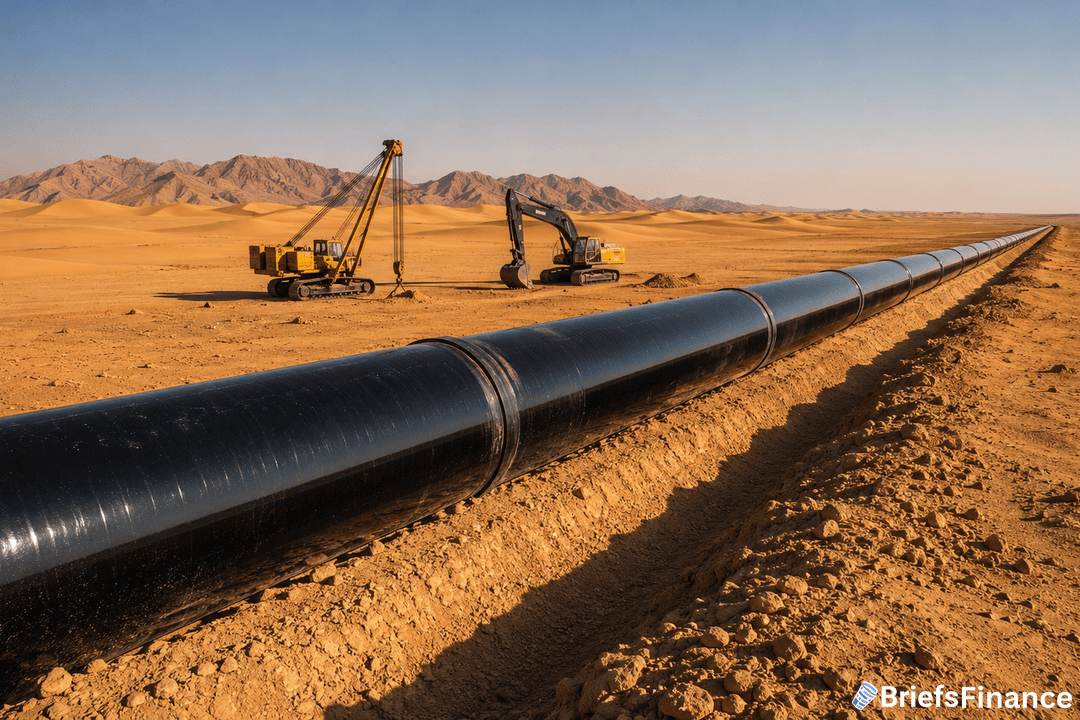
ADNOC CEO Sultan Ahmed Al Jaber said Wednesday that the UAE has built nearly half of a second pipeline. The line runs to the port of Fujairah, which sits on the Gulf of Oman past Iran's reach.
The new line doubles ADNOC's export capacity through Fujairah. It is set to come online in 2027.
The UAE's old pipeline already moves up to 1.8 million barrels a day. The second line was on the boards before the war started.
The war just put it on the fast track. The project is now seen as core to the UAE's energy plan.
For investors trying to read the oil market right now, Market Briefs cuts through it in five minutes a day, and signing up comes with a free 45-minute investing masterclass.
The Cost Of Hormuz Being Closed
The blockade has already pulled more than 1 billion barrels of oil off the world market, Al Jaber said. Another 100 million barrels are lost every week Hormuz stays shut.
Even if the war ended today, he said oil flows would need at least four months to get back to 80% of normal. Full normal isn't likely until the first or second quarter of 2027.
That's the back-end math markets aren't pricing yet. A deal would not snap supply back fast. The gap would keep oil futures high even on a truce.
What Washington And Abu Dhabi Are Saying
U.S. Energy Secretary Chris Wright said Friday that Hormuz's role in oil will fade as Gulf nations build more lines like this one. "This is a card you can play once," Wright said of Iran's blockade.
Al Jaber put it more sharply. He said letting one country "hold the world's most important waterway hostage" sets a dangerous precedent.
That matters for long-term oil exposure in any portfolio.
Why The Pipeline Is A Big Deal
About 20% of the world's oil moved through Hormuz before the war. The UAE alone sent around 2 million barrels a day through the strait, per the EIA.
Once the new line is on, the UAE can ship most of that from Fujairah. Saudi Arabia is also pushing hard on its East-West line to the Red Sea.
The Gulf states are not waiting around. They want to make sure no one can shut their oil off again.
Iran's grip on Hormuz has an end date. The clock is set for 2027.
Worth Noting
The market still treats Hormuz as a single point of failure. ADNOC says that point of failure ends in 2027.
The new line is on the way. The cost of a closed strait will not be the same again.
If you want the kind of read that turns moves like this into something useful for your portfolio, join Market Briefs, the daily newsletter plus a free investing course thrown in.