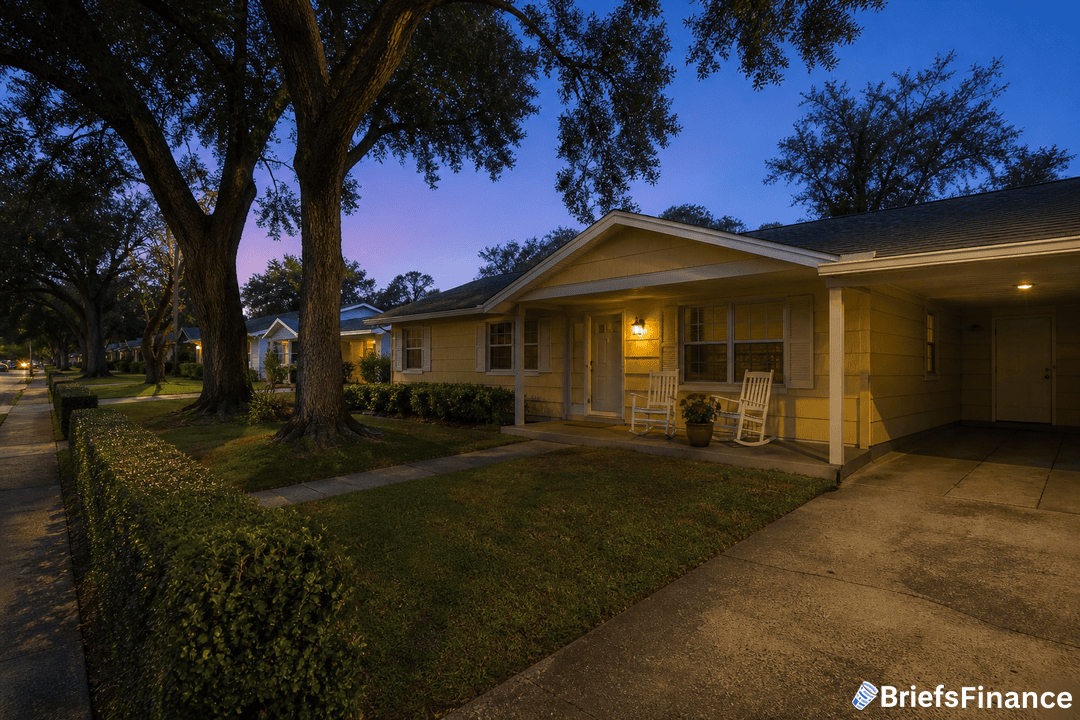
About a third of every home in the US belongs to someone over 65. That is a wave of for-sale signs waiting to happen.
It will not fix the housing market.
The Big Number Sounds Bigger Than It Is
People 65 and up own homes at a far higher rate than any other age group. Their share works out to over 31% of all owner-owned homes.
That is per the home builders trade group. When that group sells or hands the home to heirs, a lot of homes hit the market at once.
There is a name for it: the "silver tsunami." On paper, more homes for sale should mean lower prices.
The map says no.
The Homes Are In The Wrong Places
Older home owning skews to Florida and Arizona. Job hubs like New York and Boston skew the other way.
That gap is the whole problem. Zillow's team put it bluntly.
The empty-nest glut is in cheap markets where homes are already easy to buy. It is not in the cities where young workers are moving.
The Zillow guess is about 12.8 million empty-nest homes. Even at that scale, the wave will not "move the needle."
The trade group had the same take. New building and zoning fixes will matter far more.
Why The Wave Will Be Smaller Than It Looks
Homes sold by older folks tend to fetch less. That is partly due to fewer fixes and less upkeep.
So even when these homes hit the market, they sell for less. The homes next door tend to lap them on price.
Aging in place is also slowing the wave down. More older owners are doing fixes instead of moving.
A lot of homes also pass to heirs through wills. That keeps them off the listing sites.
Cotality, a data firm, says the flow will be slower than the headline says. Demand for old folks' homes is also cooling as more seniors stay put.
That puts a third squeeze on the wave. Even when homes do come up, the buyers who need cheap housing already passed those markets by.
Worth Noting
The "silver tsunami" reads like a supply story. The investor read is a place story.
A wave of homes in Ocala will not lower the price of a starter home in Brooklyn. The fix for prices still runs through zoning and new building, not age.
Investors who buy on the boomer wave alone may end up with cheap homes in places no one wants to move to. The map matters as much as the math here.
For now, the homes are coming, but the buyers are not waiting for them.