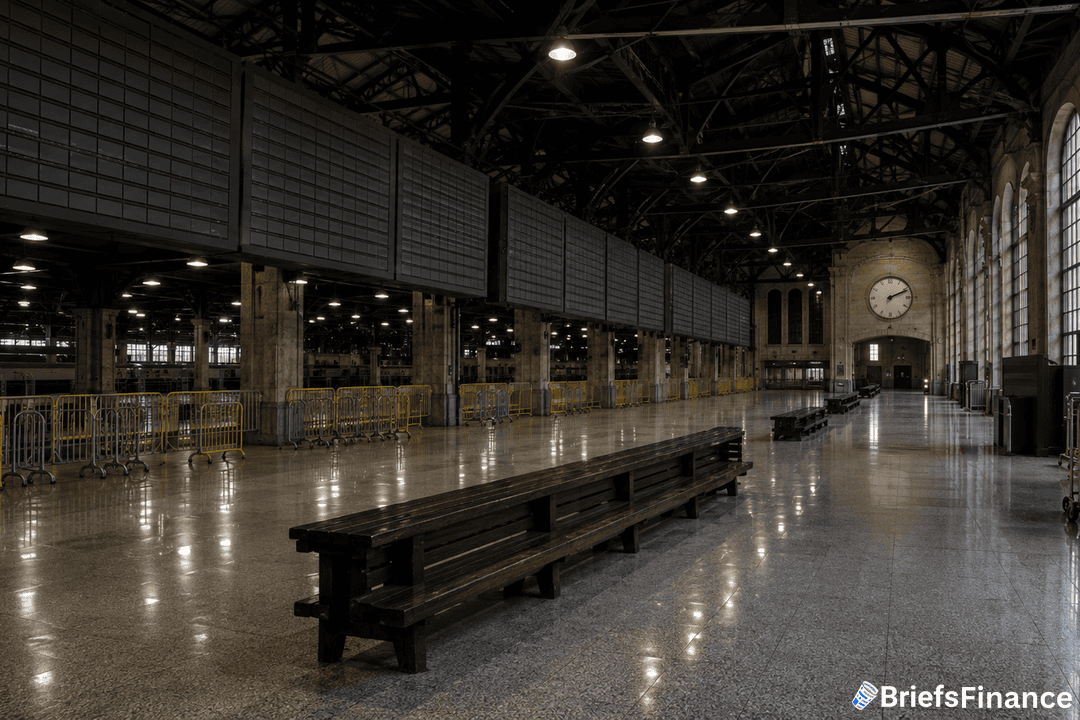
North America's biggest commuter rail system stopped running just after midnight Friday, and by Sunday it was still shut down with no new negotiations even scheduled.
The MTA's offer wasn't enough, and both sides remain far apart on salaries and healthcare premiums.
What Triggered The Walkout
Five unions representing about half of LIRR's workforce went on strike Saturday after months of stalled contract talks broke down over pay and benefits. President Trump's administration tried to broker a deal before the strike, but the unions were legally allowed to walk out at 12:01 a.m. Saturday.
The MTA says it offered "everything they said they wanted in terms of pay," while the unions say bigger raises were needed to keep up with inflation and rising costs on Long Island.
Kevin Sexton, national vice president of the Brotherhood of Locomotive Engineers and Trainmen, said the two sides are "far apart at this point." This is the LIRR's first walkout since a two-day strike in 1994.
Stories like this hit your portfolio in places you don't always think about. Market Briefs covers them every morning, and you'll get a free investing masterclass as a bonus when you sign up.
250,000 Daily Riders Face Disruption Monday
The LIRR moves about 250,000 people each weekday between Long Island and New York City, and a workweek shutdown would push most of them into either remote work or the region's notoriously congested roads.
The MTA has lined up limited shuttle buses to subway stations, but the plan was never built to handle a full day's ridership. The contingency feels like bailing out a bathtub with a coffee cup.
Some workers can shift to remote, but plenty can't, especially in construction, healthcare, schools and other in-person jobs that filled back up after the pandemic.
What to Watch
Gov. Kathy Hochul, who is up for reelection, blamed the Trump administration for ending federal mediation early, and President Trump fired back on Truth Social, calling it her fault and offering to "show you how to properly get things done."
Riders are stuck in the middle, with LIRR Commuter Council chair Gerard Bringmann saying in a statement that approving the unions' raises would push next year's planned 4% fare hike up to 8%.
Labor relations expert William Dwyer at Rutgers said the politics are tight, since Long Island is a critical vote for Hochul in November and a long strike combined with a fare hike would hurt her at the polls.
That's the pressure heading into Monday morning.
Sign up for Market Briefs and get the daily news plus a free 45-minute investing course thrown in.