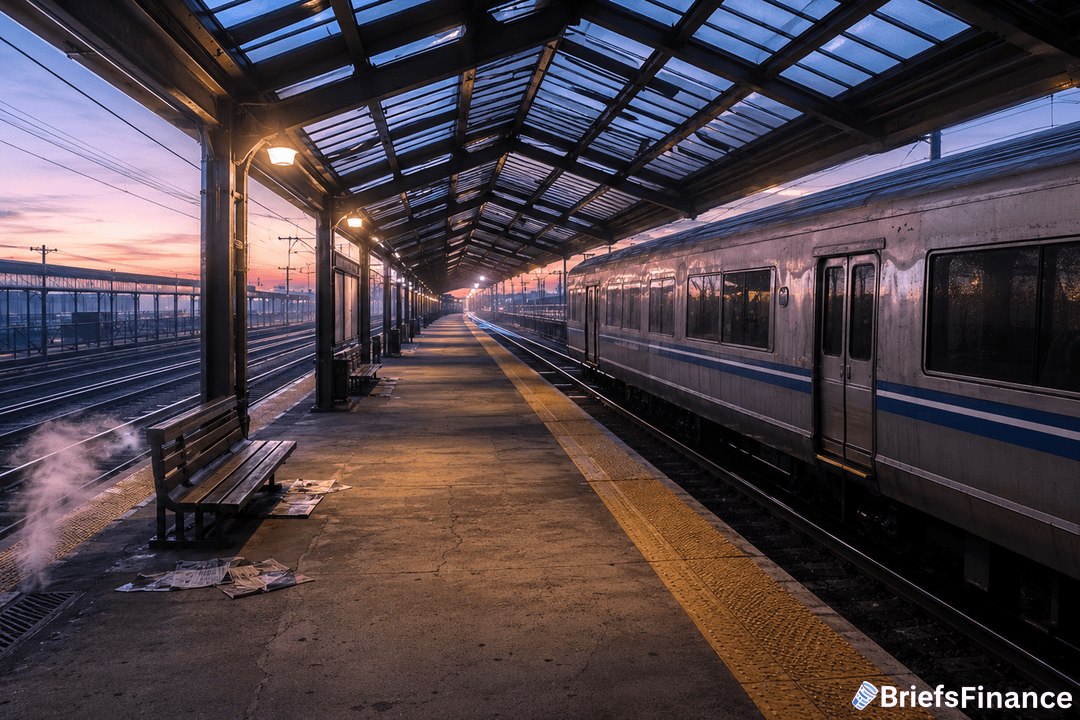
The country's busiest commuter rail line just went dark, with the Long Island Rail Road stopping service at 12:01 a.m. Saturday after the MTA and its unions ended the night without a deal. The last time this happened was 1994.
About 300,000 people use the LIRR every weekday, and as of this morning most of them are looking at an Uber bill or a long bus ride.
Year Four Pay And Healthcare Are The Stuck Points
The fight is over the last year of a four-year contract.
The MTA and five unions agree on raises for the first three years, but year four is where the talks broke. The union wants 5% in the final year, plus pushback on a proposal to make new hires pay more toward healthcare premiums.
MTA Chair Janno Lieber said the agency can't raise pay further without an 8% fare hike or job cuts to balance the budget. He also pointed out that the average LIRR worker is already making around $136,000 a year.
The union sees it differently, with leaders saying federal review panels recommended higher pay than the MTA put on the table and the agency knows it.
If you want the daily read on big economic stories like this one, Market Briefs covers them in five minutes a morning, and you get a free investing masterclass thrown in when you sign up.
The State Comptroller Put A Number On The Damage
New York State Comptroller Thomas DiNapoli put a number on the damage on Friday, estimating up to $61 million a day in lost economic activity if the strike drags on.
That covers everything from missed restaurant tabs in Manhattan to overtime traffic-control costs on Long Island highways. The MTA itself is on the hook for as much as $550,000 a day in shuttle bus costs if it has to run the alternate plan into Monday.
For context, the last NJ Transit strike was a year ago and lasted three days, while the 1994 LIRR walkout lasted two. Both ended with a deal that looked a lot like what was on the table the day they started.
What to Watch
The first big test is Monday morning.
If trains aren't running by then, the strike stops being a Long Island story and becomes a New York City story. Roads choke, subways flood with overflow riders, and companies that were on the fence about returning to office quietly extend remote work again.
The political test comes next, with Gov. Kathy Hochul urging workers to log in from home. If the strike runs into next week and businesses revolt, the pressure on both sides will spike fast.
A two-day walkout barely shows up in the data, but a two-week walkout shows up everywhere.
For more stories that connect labor, transit, and the bigger economic picture, join 350,000+ investors reading Market Briefs every weekday morning. Subscribers also get a free 45-minute investing course as a bonus.
Source: Gothamist