The IEA's monthly oil report had one message Wednesday: don't expect this to end soon.
Global oil supply has lost 12.8 million barrels per day since the U.S.-Israeli war with Iran started ten weeks ago, which is roughly an eighth of the world's daily oil supply.
And peak summer demand season is just ahead.
The Biggest Supply Shock In History
Supply fell another 1.8 million barrels per day in April alone, draining global inventories at a record pace. Brent crude is now near $107 a barrel and WTI is just above $101.
Morgan Stanley's commodities team called this "the largest oil supply disruption in the history of the oil market." Saudi Aramco's CEO Amin Nasser and IEA chief Fatih Birol have described it in the same terms.
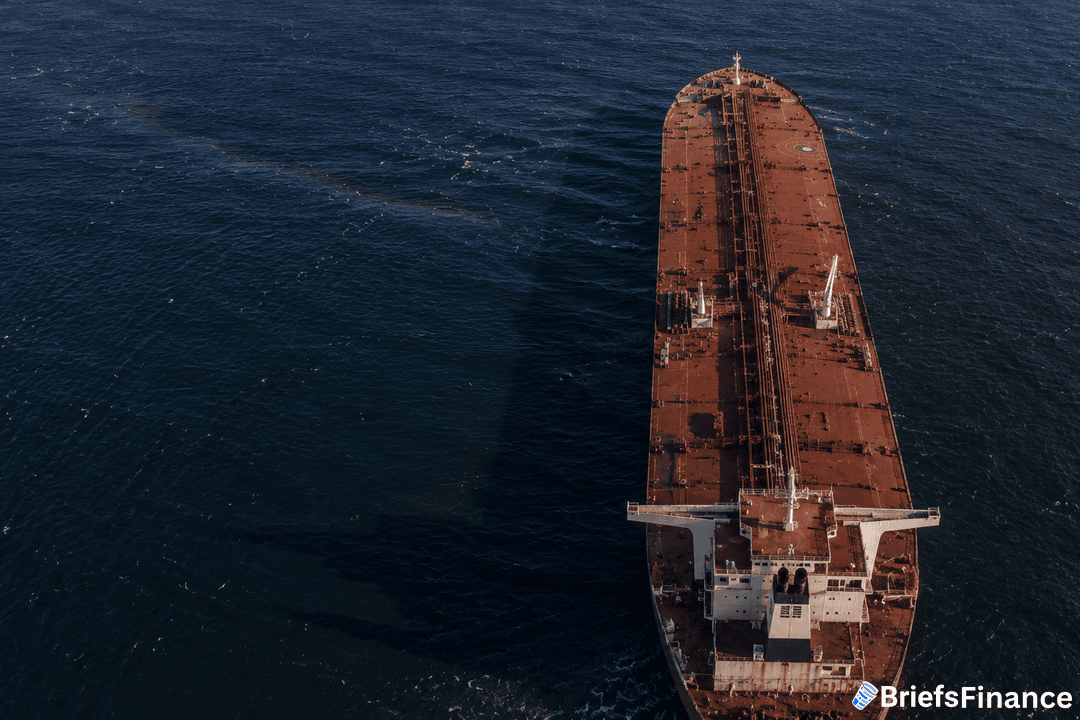
The reason it's so hard to fix: the disruption is centered on the Strait of Hormuz, the narrow waterway through which roughly a fifth of the world's oil flows. Damaged oilfields, refineries, and tanker routes can't be rebuilt overnight.
Governments are leaning on stockpiles to soften the blow. Commercial and government inventories have been drawn down to offset some of the losses, but that buffer is shrinking.
We track what oil moves like this mean for your portfolio in Market Briefs, delivered every weekday morning. Subscribers also get a free 45-minute investing masterclass when they sign up.
What That Means For Demand
High prices eventually cool demand. The IEA now expects global oil use to fall by 420,000 barrels per day by the end of 2026 versus last year, landing at 104 million barrels per day.
The first sectors getting hit are the ones that burn the most fuel: petrochemicals and aviation. Higher pump prices, a slower economy, and demand-saving measures from consumers do the rest.
OPEC+ tried to help. In its May 3 meeting - the first since the United Arab Emirates officially left the cartel on May 1 - the remaining seven members agreed to lift output by 188,000 barrels per day in June. That's less than May's 206,000 bpd hike and far short of the 12.8 million bpd hole in global supply.
The seven members lifting output are Saudi Arabia, Russia, Iraq, Kuwait, Kazakhstan, Algeria, and Oman. Even if every one of them maxed out production, they wouldn't come close to closing the gap.
What To Watch
Morgan Stanley expects another billion barrels of losses across 2026 as oilfields restart, refineries get rebuilt, and tankers reposition. That's a long path back, and the math gets harder as global stockpiles run lower.
For investors, the read-through is straightforward: energy stocks, airlines, and any company sensitive to fuel costs are all reacting to the same supply picture. The next big test is summer driving season in the U.S., when gasoline demand peaks and refineries already running thin get pushed harder.
Prices likely stay high until then.
If you want a five-minute morning read on oil, markets, and what's next, join Market Briefs. A free investing crash course is bundled with the signup.