Most Western automakers are trying to keep Chinese EV makers out of Europe. Stellantis is taking a different path.
The owner of Opel and Fiat is letting China's Leapmotor build cars at a Spanish factory. It's also in talks to hand the keys to a second plant over entirely.
A Two-Plant Plan
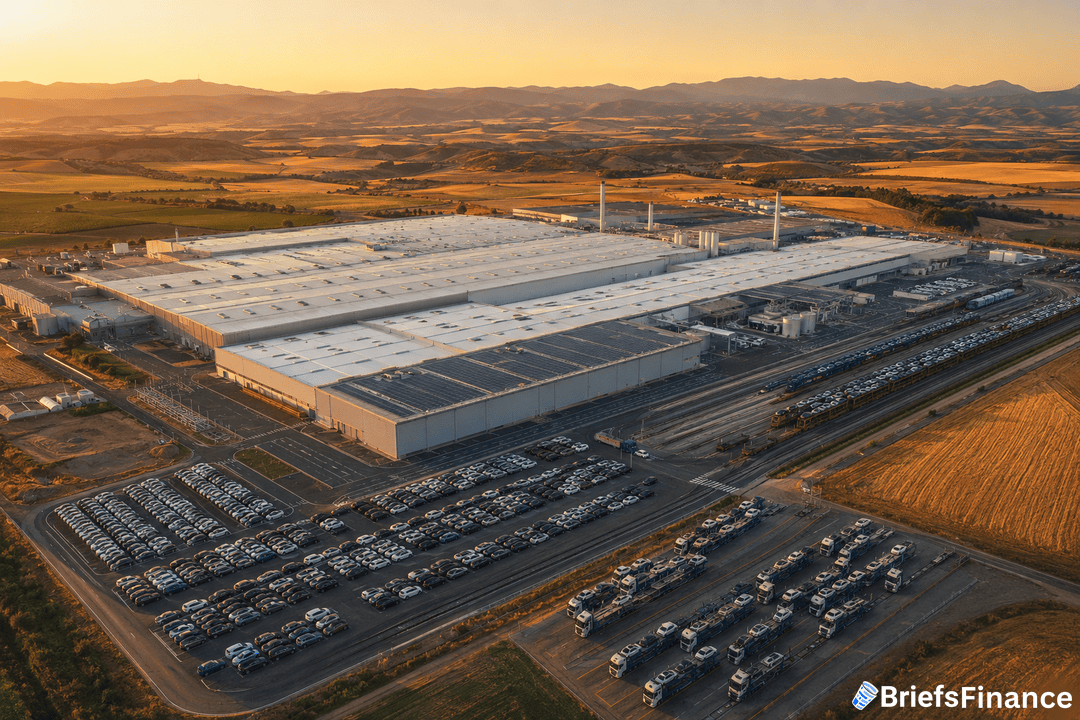
The Zaragoza plant in Spain will start producing Leapmotor's B10 electric SUV later this year. The same factory is also lined up to build a new Opel electric SUV by 2028, using parts sourced through the Stellantis-Leapmotor joint venture.
More than 10 million Opel Corsa cars have rolled off the Zaragoza line since 1982, making it one of the longest-running auto sites in Spain.
Then there's Villaverde in Madrid, where Stellantis is in talks to transfer ownership to Leapmotor International's Spanish arm.
A new Leapmotor model could roll off that line as soon as the first half of 2028, replacing the Citroen C4, whose run there is set to end.
Why Stellantis Is Playing Along
Stellantis bought a roughly 21% stake in Leapmotor in October 2023. The two then set up Leapmotor International, with Stellantis holding 51% and Leapmotor holding 49%.
That joint venture has the rights to sell and build Leapmotor cars outside Greater China.
The deal gives Stellantis access to cheap Chinese EV technology at a moment when European brands are losing ground on price.
Leapmotor delivered a record 71,387 vehicles globally in April, up about 74% from a year ago. The Chinese maker is aiming for 1 million vehicles for the full year of 2026.
The Localization Bet
Vehicles built at the Spanish plants will count as Made-in-Europe, which sidesteps the tariffs the EU has placed on Chinese-imported EVs.
Leapmotor International already has more than 850 sales points across Europe and shipped over 40,000 cars on the continent in 2025.
The joint venture has also expanded into Mexico, South America, the Asia-Pacific region, and the Middle East and Africa.
For Stellantis CEO Antonio Filosa, the deal is about keeping factories running with full order books. For Leapmotor, it's a clean path into Europe without import duties.
It's a bit like opening a kitchen inside your competitor's restaurant. Both sides win when the food sells.
What To Watch
The deal still needs definitive agreements and regulatory sign-off, with feasibility studies running before any formal contracts get signed.
The bigger test is whether other European automakers follow the same playbook or fight it. Volkswagen, Renault and BMW all have Chinese partnerships of their own and are watching how Stellantis plays this hand.