Free NewsletterPro Login

The Senate Just Banned Itself From Trading On Kalshi And Polymarket

Published May 1, 2026
Share:
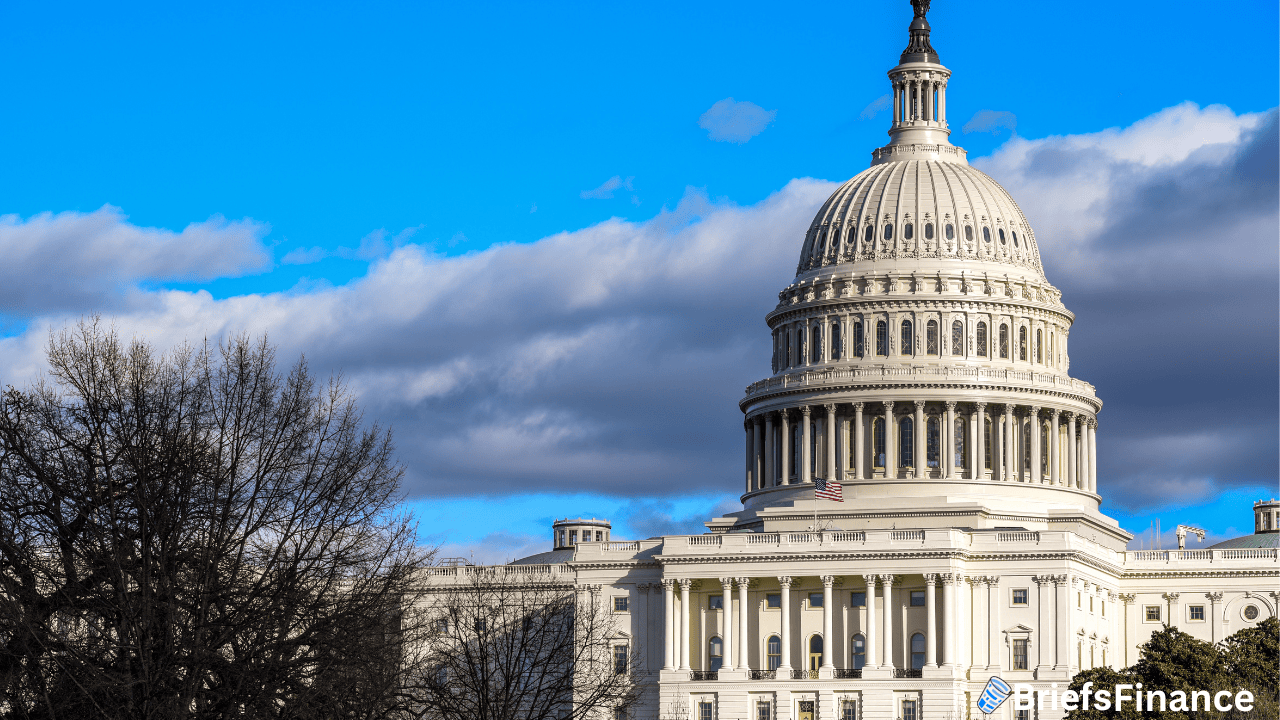
The United States Capitol building stands against a partly cloudy blue sky, with trees in the foreground and the BriefsFinance logo in the corner—a fitting scene as Polymarket and Kalshi debates intensify amid talks of a Senate trading ban.
Summary:
  • The U.S. Senate passed a rule on Thursday that bars senators from trading on prediction markets, effective right away.
  • Kalshi suspended and fined a Senate hopeful and two House hopefuls last week for betting on their own races.
  • An Army Special Forces soldier was arrested after winning nearly $410,000 on Polymarket using classified intel about the Maduro capture.

Prediction markets just had their first real Washington moment. It wasn't a friendly one.

In a single week, a soldier got charged, three federal hopefuls got fined for betting on themselves, and the Senate quietly stripped its own members of the right to play.

What The New Senate Rule Does

The Senate passed the rule by unanimous vote on Thursday. It blocks senators from placing trades on sites like Kalshi and Polymarket. Both let users bet on real-world events, from races to sports to military news.

The rule kicks in right away. There was no debate, no vote tally to fight over, and no carve-outs.

This is the first time the Senate has shut its own members out of a market this big since the STOCK Act tightened stock trading rules more than a decade ago.

The push had been building for weeks. Sen. Chris Murphy, a Connecticut Democrat, and Rep. Greg Casar, a Texas Democrat, held a press event in March to roll out the "Bets Off Act," a bill aimed at banning sitting members from trading on these sites.

That bill never moved. The internal Senate rule did.

The Two Stories That Forced The Issue

Two stories from late April pushed the Senate to move.

On April 22, Kalshi said it had suspended and fined three federal candidates. One was running for Senate, two were running for the House. All three were caught trading on their own races.

Betting on yourself when you control the outcome is the textbook version of insider trading.

The next day brought something bigger. The Justice Department charged Master Sgt. Gannon Ken Van Dyke, an Army Special Forces soldier, with using classified intel to wager on Polymarket.

The bets covered the U.S. mission that captured Venezuelan leader Nicolás Maduro. Van Dyke was personally part of that mission. He cleared roughly $410,000 in winnings, per prosecutors.

In short, a soldier with knowledge of a real military mission profited by betting on it before the public knew what happened.

Where Rules May Go Next

The Senate's rule only applies to senators. The CFTC, the office that oversees U.S. futures markets, governs the sites themselves.

A group of Democrats in Congress sent a letter to the CFTC on Thursday. They asked the agency to do four things:

  • Ban insider trading on the sites
  • Block contracts on elections
  • Block contracts on war and military missions
  • Block contracts on sports and government calls that lack a real economic hedge

That is the wider battle. The Senate's rule is the easy first step. Reining in what investors and citizens can bet on is the harder one.

Both Kalshi and Polymarket have grown fast over the past two years. Kalshi got the green light from the CFTC to list event contracts on U.S. elections in late 2024. Polymarket runs offshore for U.S. users but pulled in record volume during the 2024 race.

Together, the two sites have become a parallel data layer for traders, reporters, and lawmakers. The Senate just made it harder for one of those groups to use them.

Worth Noting

CNBC, which broke the news, has a business tie to Kalshi that includes a minority stake.

The sites are still open and running. The customers most likely to be regulated next are the ones who never sat in the Senate.

Disclosure

Get Market Briefs delivered to your inbox every morning for free!

No fluff. No noise. No politics. Just finance news you can read in 5 minutes.

Blogs

April 29, 2026
What Is Blockchain? A Plain English Guide For Investors
  • Blockchain is a digital ledger that records every transaction on a public network.
  • Once a transaction is recorded, it cannot be changed or deleted.
  • It is the foundation of Bitcoin, Ethereum, and thousands of other cryptocurrencies.
Read More
April 29, 2026
How To Negotiate Bills: The Script That Saves You Hundreds A Year
  • Most monthly bills are negotiable, even though most Americans never try.
  • A simple phone call with the right script can lower your phone, internet, and utility bills.
  • The key rule is to be nice. Customer service reps have more flexibility than most people realize.
Read More
April 29, 2026
75 15 10 Rule: The Budget That Builds Wealth On Autopilot
  • The 75 15 10 rule is a budgeting plan: spend at most 75% of your income, invest at least 15%, and save at least 10%.
  • It works by making sure you pay yourself before you spend.
  • Once your savings target is hit, you shift the 10% over to investing, becoming a 75/25 plan.
Read More
April 29, 2026
How To Rebalance Portfolio: The Strategy That Forces You To Buy Low And Sell High
  • Rebalancing means adjusting your portfolio back to your target allocation when it drifts too far.
  • The two main methods are time-based (rebalance once a year) and threshold-based (rebalance when allocation drifts more than 5%).
  • If you are still adding money, you can rebalance by directing new money instead of selling.
Read More
April 29, 2026
How To Buy Treasury Bonds: A Beginner's Guide
  • Treasury bonds are loans you make to the U.S. government. They are considered the safest investment in the world.
  • You can buy them at TreasuryDirect.gov directly or through any major brokerage.
  • There are three main types: T-Bills, Treasury Notes, and Treasury Bonds. The longer the term, the higher the interest rate.
Read More
April 29, 2026
Forward Vs Futures Contracts: What's The Real Difference?
  • Both forward and futures contracts are deals to buy or sell something at a set price on a future date.
  • Futures trade on exchanges. Forwards are private deals between two parties.
  • Most regular investors do not use either. They are mostly tools for businesses and big institutions.
Read More
April 29, 2026
Alternative Investments Explained: What They Are And Why They Matter
  • Alternative investments are anything that is not a regular stock or bond.
  • The most common types are precious metals, crypto, real estate, commodities, and collectibles.
  • Most investors should hold 5% to 25% of their portfolio in alternatives, depending on risk tolerance.
Read More
April 29, 2026
How To Buy Bitcoin For Beginners: 3 Simple Ways
  • There are three main ways to buy Bitcoin: directly on an exchange, through a Bitcoin ETF, or through a Bitcoin miner stock.
  • Each has its own pros, cons, and tax setup.
  • Most beginners do best starting small and using dollar cost averaging.
Read More
April 29, 2026
How To Follow Smart Money: The 5 Market Shifts Framework
  • "Smart money" means big investors with deep research teams and fast information.
  • You can follow them by watching for 5 types of market shifts.
  • The goal is to spot where money is moving before it shows up on CNBC.
Read More
April 29, 2026
Insider Trading Meaning: What It Really Is (And Why Some Of It Is Legal)
  • Insider trading means buying or selling a stock based on facts the public does not know yet.
  • Some insider trading is legal. Some is a federal crime that can send people to prison.
  • The SEC tracks every legal insider trade in a public file called Form 4.
Read More
1 2 3 19
Share via
Copy link










