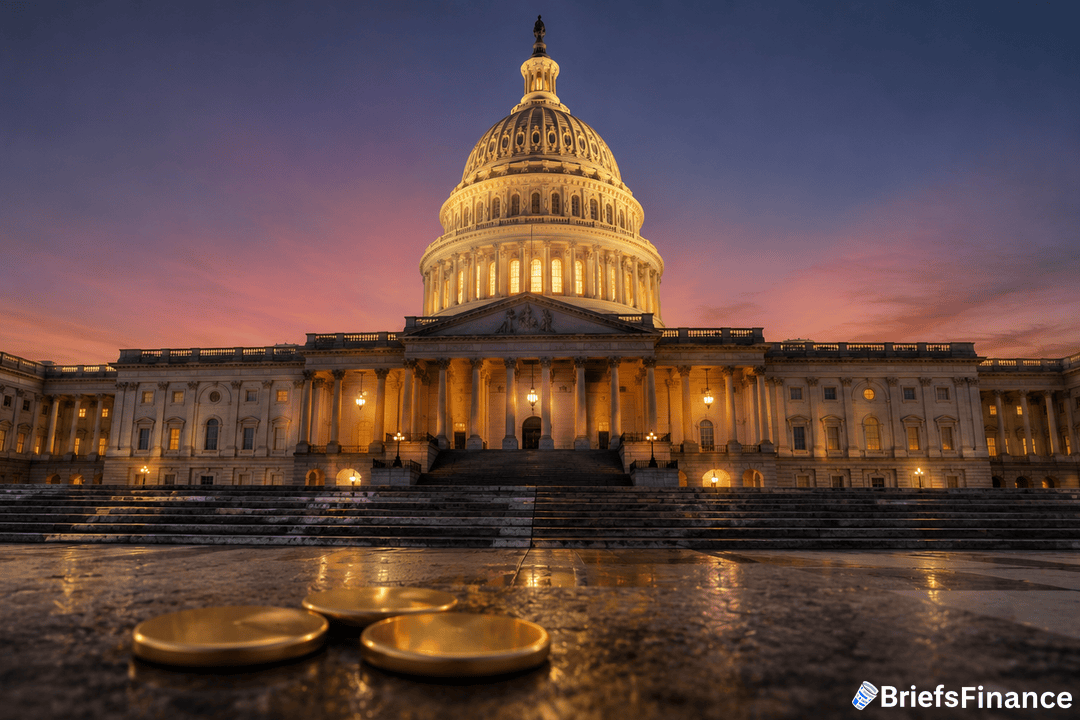
The crypto industry has spent years asking Washington for rules. On Thursday it got a step closer to actually having them.
What Just Happened
The Senate Banking Committee voted 15-9 to advance the Clarity Act, the first piece of broad crypto legislation to clear that committee. Two Democrats - Sens. Ruben Gallego of Arizona and Angela Alsobrooks of Maryland - joined every Republican to vote yes.
The bill now heads toward a full Senate vote, and would still need House approval before reaching Trump's desk. The House passed a different version of the bill last fall.
Past attempts at sweeping crypto rules have stalled before reaching this stage. The 15-9 result is the first time the Senate Banking Committee has moved a bill this broad.
The industry got what it had been lobbying for. Coinbase, Circle, and Ripple were among the public backers, along with venture firm Andreessen Horowitz and the White House.
Chair Tim Scott summed up the case for moving: "For years, the digital frontier was trapped in a regulatory gray zone. Developers, entrepreneurs and investors were left with uncertainty."
For plain-English breakdowns of what bills like this mean for your portfolio, join Market Briefs - delivered every weekday, with a free 45-minute investing masterclass when you sign up.
The Opposition: Banks, Cops, And Labor
The pushback isn't who you'd expect. Three blocs are fighting the bill, and none of them are talking about price swings.
Banks are worried about deposits. The Clarity Act could let crypto firms pay something that looks a lot like interest on stablecoins - dollar-pegged digital currencies - which banks say would pull money out of regular accounts and shrink the loan supply.
The crypto industry says rewards only kick in when stablecoins are spent.
Law enforcement says the bill is too soft on illegal money flows and would make bad actors harder to catch.
Big labor, including the AFL-CIO, says letting crypto into the mainstream threatens retirement and pension accounts.
Democratic senators tried to add amendments addressing some of these concerns - most were voted down, and Scott blocked others on procedural grounds.
Ethics Rules Still Unsettled
Trump and his family have personally made billions of dollars from meme coins and from their crypto venture World Liberty Financial. The Clarity Act doesn't address whether sitting officials can profit from the assets they're regulating.
Democrats and Republicans both said publicly that the ethics language still needs work.
Sen. Mark Warner, one of the Democrats trying to move the bill, summed up his own position with the most quotable line of the hearing: "I guess I'm right now in crypto purgatory, but I'm looking forward to getting all the way there."
What To Watch
The path is harder than the vote made it look. Two Democrats voting yes is not 60, and the Senate needs 60 to actually pass it.
The ethics piece is unresolved, and the House version is different.
If the final bill clears all of that, the crypto industry gets its first real rulebook. If it doesn't, it stays in purgatory.
Sign up for Market Briefs for the daily read on the market plus a free investing course as a bonus.