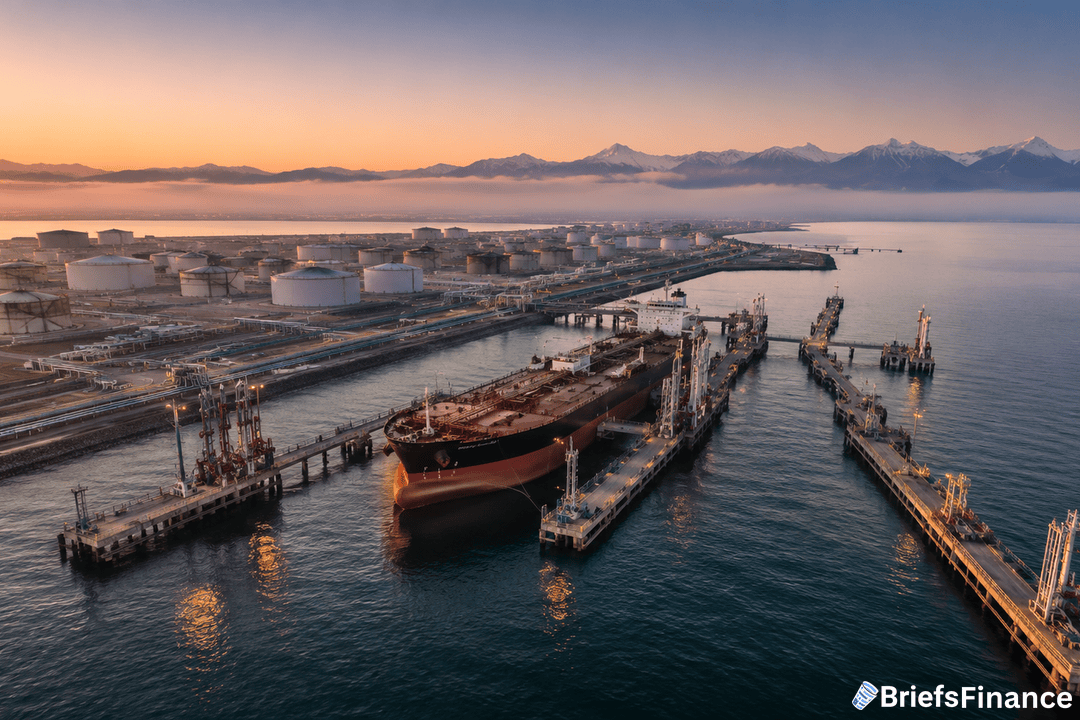
Russia is the world's second-largest seller of oil. Its biggest Black Sea port just shipped out a single crude tanker in seven days.
That one number tells you more about Russia's oil trade than any line from Moscow.
The Number That Stands Out
Novorossiysk usually ships out enough crude in a week to power a midsize country. In the seven days to May 10, it sent out exactly one tanker.
Russia's full crude exports fell to 3.64 million barrels a day on a four-week average. That is the first weekly drop since March.
The port matters because of what flows through it. Novorossiysk is the main exit point for Urals crude bound for Russia's biggest Asian buyers. Anything that slows it hits the Kremlin's oil cash flow.
Each weekday morning, Market Briefs breaks down what energy moves like this mean for your money in five minutes, plus a free class on investing when you join.
The Damage From Earlier This Year
The slowdown is not new. Ukraine has been hitting Russia's oil sites for months.
The Sheskharis terminal at Novorossiysk shut down for five days after an April 5 strike. Russia later paused shipments at its Baltic ports of Primorsk and Ust-Luga after more hits.
By mid-April, Russia's crude exports had fallen to 3.22 million barrels a day. That was the lowest level since August 2025. At one point in March, about 40% of Russia's oil shipping power sat offline.
But The Money Keeps Flowing
Here is the part that hurts Ukraine and its allies. Russia ships fewer barrels yet earns more for them.
Russia pulled in about $2.12 billion in weekly oil revenue from mid-March to mid-April. That was up from $2.07 billion the prior month. Global oil prices are high enough to soak up most of the lost volume.
Urals crude trades at about $95 a barrel out of Russia's Baltic and Black Sea ports. By the time it lands in India, the same oil fetches roughly $126 a barrel.
That math means strikes that knock barrels offline only dent the Kremlin's cash if prices fall with them.
What To Watch
China, India, and Turkiye are still doing most of the buying. Russian tankers are also hiding their real destinations more often, listing fake ports like Suez or Port Sudan on their papers. That makes the trail harder to track for anyone trying to count the cash.
As long as crude prices hold, lost barrels keep being more than made up for by richer ones.
Want this kind of read on the global economy each day? Join 350,000+ investors at Market Briefs and get a 45-minute course on investing as a bonus.