Wall Street called Nvidia the AI trade, but investors are voting differently. A memory-chip ETF that didn't exist five weeks ago has now pulled in more than $5 billion, racing in faster than almost any ETF on record.
The Bottleneck Has Moved
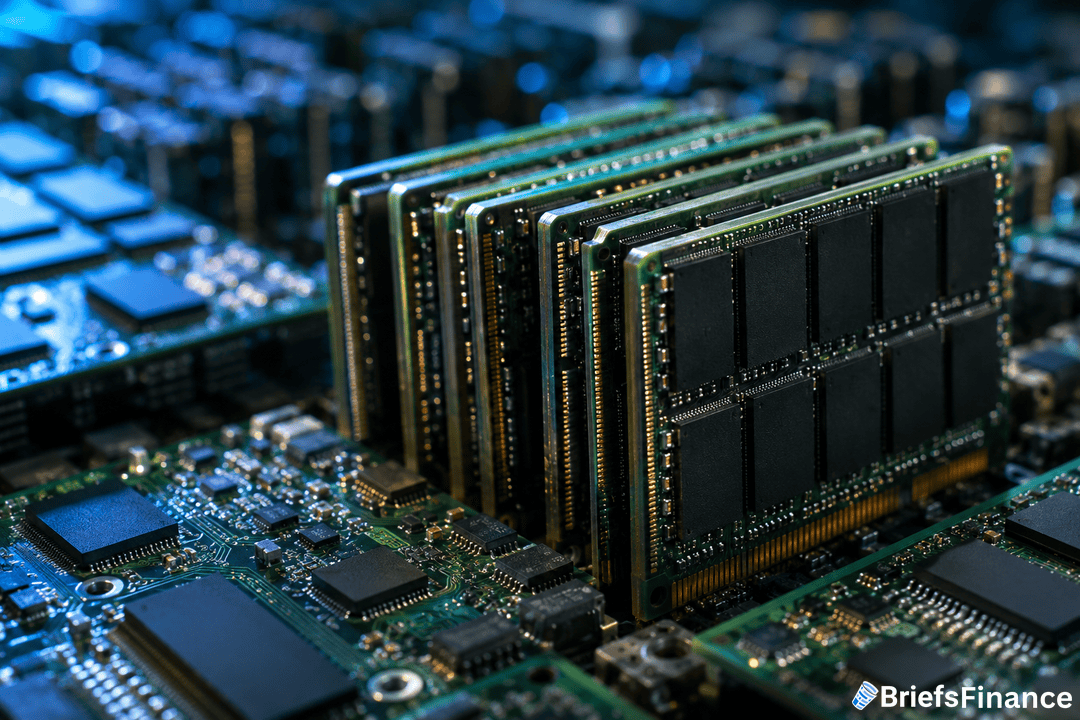
Memory is what holds the data AI models train on, and right now there isn't enough of it to go around.
Micron and Sandisk, two of DRAM's top holdings, have been setting new records on a near-daily basis as the ETF itself rallies about 70% since launch.
"Memory has been identified as the clear AI bottleneck and there's a shortage of these chips that's going to last not for a quarter but multiple years," Roundhill CEO Dave Mazza said by phone.
The dollars are agreeing with the pitch. DRAM has logged inflows every single trading day since launch, a 23-session streak that's nearly unmatched among recent ETF debuts.
The Real Reason Investors Are Piling In
Plenty of ETFs hold memory stocks, but most U.S. investors can't easily own the two biggest memory companies in the world.
SK Hynix and Samsung Electronics are based in South Korea, which means buying a broad Korea ETF brings a lot of stocks no one asked for, while a U.S. chip ETF spreads memory too thin to matter.
DRAM packages the global memory leaders into one ticker, and the options market has noticed. More than 90,000 contracts traded Thursday with calls outpacing puts by nearly two to one, pushing the fund into the top 40 by options volume in the entire U.S. ETF market.
Why Memory Is Suddenly The Trade
Every AI model that gets bigger needs more memory to load and serve it, which is why the biggest cloud buyers have been snapping up high-bandwidth memory faster than the chip makers can ship it.
That same shortage is showing up in console makers, phone makers, and PC makers, who all rely on the same suppliers and are now competing with AI buyers for the same parts.
When supply is tight and demand keeps climbing, the companies sitting on the chips usually win, and the ETF holding those companies tends to go with them.
The size of the move has surprised even longtime ETF watchers, since most thematic launches in recent years have struggled to clear $100 million in their first month of trading.
DRAM blew past that bar in days, and Goldman noted that the only funds in history to hit $1 billion faster were the launch class of bitcoin spot ETFs three years ago, the iShares LQD bond fund, the GLD gold fund, and JP Morgan's BBCA Canadian equity fund.
What To Watch
Memory used to be the boring corner of the chip world, but the numbers say it's now the trade investors most want to buy and the hardest one to access.
That gap is what DRAM is being paid to close. The fund closed Thursday up 11.57% at $51.94, and the options crowd is already betting that the run isn't over.